
The modern economy operates on a razor-thin margin where the difference between a global digital blackout and seamless connectivity often hinges on the precise arrival of a single specialized shipping container. In the high-stakes world of digital growth, a shipment of semiconductors or server hardware is no longer just freight; it represents the literal heartbeat of the global internet. When these components face even a minor delay, the resulting ripple effect can stall massive data centers and interrupt essential communications worldwide. Because trade disruptions and geopolitical friction are now constant realities, the outdated “just-in-time” delivery model has evolved into a more robust, tech-driven mandate where reliability is prioritized at any cost.
This transformation signifies a fundamental move away from viewing logistics as a secondary administrative expense. Instead, companies now treat the movement of goods as a core strategic asset capable of absorbing global shocks. In a marketplace where a single hour of downtime can lead to millions of dollars in lost revenue and damaged reputation, the integration of intelligent infrastructure has become the only viable path forward for the technology sector. The following exploration details how innovation is hardening the supply chain against an increasingly unpredictable world.
Why a Single Hour of Logistics Downtime Is Now a Multi-Million Dollar Risk
The vulnerability of modern digital infrastructure is most apparent when considering the precision required to keep data centers operational. A single missing component, such as a high-performance cooling unit or a specialized processor, can prevent an entire facility from going online, resulting in astronomical financial losses. In the current landscape, logistics providers are no longer just transporters; they are the guardians of uptime for hyperscale enterprises that cannot afford a second of latency.
Beyond the immediate financial impact, extended delays often lead to a loss of market trust and long-term contractual penalties. Geopolitical instability and regional trade barriers have made it impossible to rely on the static routes of the past. As a result, technology companies have discarded the leanest possible models in favor of a “reliability-first” strategy, recognizing that the cost of an extra day in storage is negligible compared to the catastrophe of an empty assembly line.
The Great Rebalancing: Shifting From Cost-Cutting to Strategic Resilience
For many years, the primary objective of logistics was the relentless pursuit of the lowest possible price point, often at the expense of structural stability. However, the frequent occurrence of global shocks has exposed the danger of these thin-margin operations, prompting a massive pivot toward strategic resilience. This shift is particularly critical for the technology industry, where products are not only high-value but also highly sensitive to environmental factors and rapid obsolescence.
Logistics is now viewed as a proactive defense mechanism rather than a reactive support function. This strategic rebalancing allows organizations to maintain continuity even when traditional shipping lanes are compromised. By investing in diverse sourcing and localized distribution hubs, tech firms are building a buffer that protects them from the volatility of the global market, ensuring that their growth remains steady despite external pressures.
Core Innovations Transforming Shipments Into Intelligent Infrastructure
The transition to a resilient supply chain is defined by the adoption of AI-driven predictive logistics, which uses massive datasets to forecast potential bottlenecks long before they occur. This technology enables providers to adjust routes in real-time, moving from a model of reaction to one of anticipation. Furthermore, the deployment of IoT sensors provides total visibility into the physical condition of cargo, monitoring temperature, humidity, and shock to ensure that delicate electronics arrive in perfect working order.
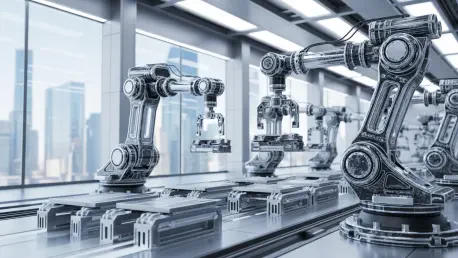
In the warehouse, high-speed automation and smart storage systems have redefined the speed of order fulfillment, allowing facilities to process complex shipments in a fraction of the time previously required. Cloud-based collaboration platforms have also removed the information silos that once slowed down international trade, creating a seamless flow of data between suppliers and customers. Finally, a commitment to circularity through reverse logistics has allowed companies to reclaim value from returned hardware, supporting sustainability goals while simultaneously boosting the bottom line.
Measuring the Impact: Evidence of the High-Tech Logistics Revolution
The practical benefits of this technological revolution are visible in major distribution centers across the globe, such as the automated hubs in Waalwijk, Netherlands. These facilities have demonstrated that integrating robotic storage can increase picking capacity fivefold, allowing for rapid scaling during sudden market surges. By removing human error from repetitive tasks, these centers maintain a level of precision that was previously unattainable, ensuring that the right components reach the right destination every single time.
Advanced tracking platforms, such as CARGOES Flow, have also provided concrete evidence of how transparency reduces operational overhead. By eliminating the “black box” nature of traditional shipping, organizations have successfully reduced the need for safety stock and excess inventory. This data-driven approach has proven that the most resilient supply chains are those that successfully combine digital tools with high-level strategic oversight to create a transparent, agile network.
Strategic Implementation: A Framework for Building a Hardened Supply Chain
Building a truly hardened supply chain required a structured approach that began with a comprehensive audit of all potential vulnerabilities. Organizations identified critical nodes where environmental risks or political instability necessitated enhanced monitoring or alternative routing. By deploying modular cloud solutions, they enabled real-time data sharing across their entire partner network, ensuring that every stakeholder had access to the same information without the need for massive localized IT investments.
The most successful frameworks also prioritized human-centric automation, focusing robotic efforts on manual labor to free up skilled professionals for high-value risk assessment. Additionally, establishing a robust reverse logistics system allowed companies to capture value from returned electronics, turning a potential waste stream into a profitable resource. Finally, continuous feedback loops were implemented to refine route planning based on real-world performance data, ensuring that the supply chain remained in a constant state of improvement.
The organizations that thrived during this era of transformation were the ones that recognized the necessity of these changes early. They successfully integrated digital transparency with human strategic planning to navigate a world where complexity was the only constant. These leaders ensured that their critical infrastructure remained robust, proving that a focus on resilience was the most effective way to secure long-term success. The transition ultimately demonstrated that the logistics industry was capable of evolving into a smarter, more sustainable system that supported the needs of a global digital society.