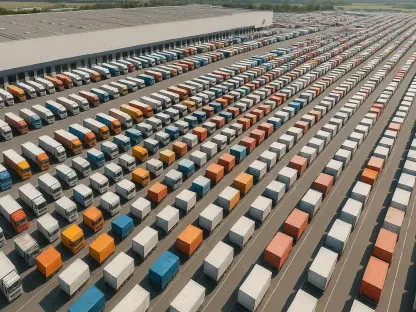

The logistical complexity of providing fresh produce to massive urban centers has evolved into a high-stakes race where every hour lost directly impacts food quality and the overall consumer experience. In the Berlin metropolitan area, the demand for rapid distribution to roughly 370 supermarkets and 580 smaller retail outlets necessitates a level of efficiency that manual labor can no longer sustain alone. To address these evolving challenges, REWE has launched a comprehensive modernization of its Oranienburg logistics center through a strategic partnership with Cimcorp, an automation leader. This initiative is not simply about replacing human workers with machines; it represents a commitment to technology-driven supply chain management where speed, hygiene, and reliability are core metrics of success. By integrating advanced gantry robotics and software, the facility has set a new standard for how perishable goods are handled, ensuring that the journey from the distribution hub to the consumer’s basket is as seamless as possible.
Engineering for Maximum Freshness
Speed Requirements: The Critical Link to Food Quality
The velocity of fulfillment is the primary metric by which the success of the Oranienburg center is measured, as speed directly correlates with the overall shelf life of sensitive fruits and vegetables. Because time is a decisive factor in the quality of these goods, the facility’s robotic architecture is specifically tuned to process orders with a level of rapid-fire efficiency that human teams could not achieve consistently. High-speed fulfillment ensures that retail stores across the Berlin region receive their deliveries within extremely tight windows, which stabilizes the broader supply chain and guarantees that consumers have access to top-tier inventory. This mechanical speed is supported by intelligent routing that identifies the fastest path for every crate, reducing bottlenecks during peak hours. By maintaining this pace, the center prevents the accumulation of ethylene gas, which accelerates spoilage, ensuring that every delivery arrives in optimal condition for the final retail customer.
Gantry Architecture: Advantages of Open Floor Design
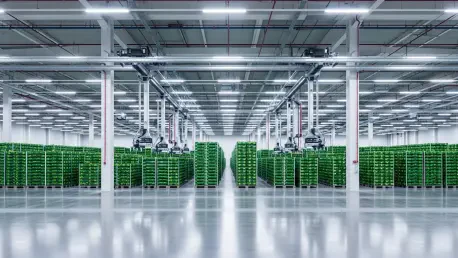
One of the most innovative features of the robotic system is its gantry-based design, which operates over an open floor space and eliminates the need for the heavy racking systems found in traditional warehouses. This architectural choice allows gantry robots to move across the entire storage area with multi-directional freedom, facilitating rapid picking and stacking without the constraints of narrow aisles. Furthermore, the absence of massive shelving units significantly improves the facility’s hygiene standards, as the open floor is far easier to clean and maintain on a daily basis. For a facility that manages fresh food, maintaining a sterile environment is a vital requirement that directly influences food safety and regulatory compliance. The modular nature of this gantry setup also means that the system can be expanded or reconfigured with minimal downtime, providing the flexibility needed to adapt to changing market trends or new crate dimensions as the industry continues to evolve in the future.
Advancing Operational Efficiency and Labor Standards
Software Coordination: Real-Time Transparency and Inventory Control
At the heart of the automated operations lies a sophisticated Warehouse Control System that acts as the primary intelligence for the entire Oranienburg distribution center. This software provides total transparency into the material flow, tracking every item from the initial inbound scan to the final dispatch stage. By implementing intelligent inventory management strategies such as First In, First Out (FIFO) and First Expired, First Out (FEFO), the system ensures that the most time-sensitive products are prioritized for delivery, drastically reducing the potential for product expiration within the warehouse. The software also includes built-in redundancies, such as dual-cell robot configurations, which allow for continuous operation even during scheduled maintenance or minor mechanical repairs. This level of digital oversight enables the logistics center to react in real-time to inventory fluctuations, ensuring that the supply chain remains fluid and that retail partners receive exactly what they ordered.
Workplace Ergonomics: Transforming Industrial Labor Roles
The introduction of robotics has addressed a long-standing challenge in the grocery industry: the physical toll that manual crate handling takes on the workforce. By delegating the repetitive and exhausting tasks of lifting and stacking heavy crates to robotic systems, the Oranienburg facility has significantly improved the ergonomic conditions for its employees. This shift has not only reduced the risk of workplace injuries but has also helped mitigate the impact of regional labor shortages by making warehouse positions more attractive and sustainable for long-term careers. Human staff are no longer required to perform back-breaking labor; instead, their roles have evolved toward technical oversight, system monitoring, and the management of automated workflows. This transformation of the workforce reflects a broader trend in the industrial sector where technology is used to enhance human potential, creating a safer and more intellectually engaging environment for employees who now manage the systems.
Sustainability and the Future of Retail
Environmental Stewardship: Logistical Optimization and Waste Reduction
The efficiency gains provided by the robotic gantry system extend far beyond the walls of the warehouse, contributing significantly to overarching sustainability objectives by optimizing how crates are stacked and organized. This precision ensures that delivery trucks are loaded with maximum space utilization, which directly leads to fewer vehicles on the road and a lower overall carbon footprint. This precision in logistical planning helps reduce fuel consumption and greenhouse gas emissions, aligning the distribution network with environmental standards. Furthermore, the accelerated speed of the supply chain plays a vital role in the fight against food waste, as produce arrives at retail locations with more of its shelf life intact. When fruits and vegetables stay fresh longer for the consumer, the volume of discarded goods decreases throughout the entire retail ecosystem. This holistic approach to sustainability demonstrates that technical efficiency and environmental responsibility are interconnected goals.
Industry Scalability: The Blueprint for Modern Grocery Distribution
The industry observed that the scalability of the Oranienburg robotic framework provided a definitive blueprint for the future of European grocery distribution. Retailers recognized that high-density automation was not only feasible for dry goods but was also highly effective for complex, time-sensitive fresh food categories. To maintain competitiveness, companies prioritized the adoption of modular gantry systems that allowed for rapid adjustments to inventory volume without requiring structural overhauls. This shift moved the industry toward a decentralized logistics model where data-driven precision minimized the impact of seasonal demand spikes. Furthermore, businesses integrated specialized training programs to transition their existing workforce into technical management roles, ensuring that the human element remained a vital component of the automated chain. By proving that robotic precision could solve the most pressing logistical challenges, the project established that the path to profitability was paved with investments in scalable, sustainable, and software-integrated infrastructure.