
The sheer velocity at which global supply chains operate has reached a point where traditional human-centered logistics can no longer keep pace with the hyper-accelerated demands of modern e-commerce consumers. To address this discrepancy, the integration of generative artificial intelligence with heavy-duty robotics has become the new benchmark for excellence in the logistics sector. By deploying billions of dollars into research and infrastructure, the industry is moving away from static automation toward dynamic, intelligent systems that can perceive, learn, and communicate. This transition is not just about moving boxes faster but about fundamentally rethinking how information and physical goods move across the planet. As machines begin to understand natural language and operate with unprecedented autonomy, the warehouse environment is transforming from a place of manual labor into a sophisticated hub of human-robot collaboration. This shift represents a massive bet on the future of productivity, where the synergy between silicon and sinew defines the limits of what a global distribution network can achieve.
Hardware Innovations and Financial Commitments
Smart Robotics: Integrating Generative Intelligence and Heavy Machinery
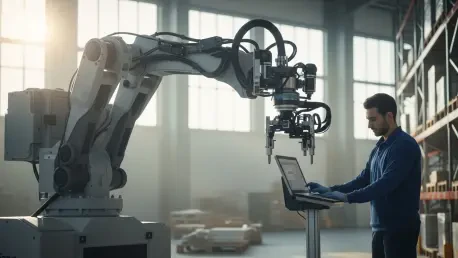
The updated Proteus autonomous mobile robot represents a significant departure from previous iterations because it utilizes generative AI to process verbal cues from human supervisors in real time. This capability allows for a more fluid interaction within the warehouse environment, as the robot can understand context-rich instructions rather than relying on pre-programmed digital paths. Alongside this flagship machine, the Hercules and Vulcan systems operate as the heavy lifters of the facility, capable of transporting massive inventory stacks with millimetric precision while navigating around human workers safely. These machines utilize advanced sensor arrays and computer vision to identify obstacles, ensuring that the flow of goods remains uninterrupted even during peak periods. By embedding conversational interfaces into heavy machinery, the technical barrier between complex robotics and floor employees begins to dissolve, fostering a workplace where technology acts as a responsive partner rather than a rigid tool.
Infrastructure Evolution: Financial Commitments and Strategic Deployments
To provide the necessary foundation for these advanced systems, a commitment of over $11 billion has been directed toward the modernization of fulfillment centers across the European landscape. This massive financial infusion is specifically targeted at upgrading existing facilities, such as the high-capacity site in Dartford, to support a fully integrated robotic ecosystem by the first half of 2027. This strategy is not merely about replacing older belts with newer motors but involves a total redesign of how inventory is ingested, sorted, and dispatched to local distribution hubs. Market analysts have noted that this aggressive spending reflects a long-term vision to stabilize operating costs against the backdrop of rising labor expenses and fluctuating energy prices. As these capital improvements take hold, the efficiency of the entire network is expected to rise significantly, allowing for faster delivery windows and a more resilient response to the seasonal surges of the retail market.
Human Element and Future Trends
Labor Transition: Bridging the Skills Gap through Retraining
The rapid scaling of this robotic fleet has sparked an intense dialogue regarding the future of entry-level employment and the necessity of high-level technical skills in the modern economy. While the company has navigated a series of corporate layoffs recently, the narrative from leadership emphasizes that the automation of repetitive tasks is essential to creating more sustainable and physically safe roles for humans. To address the potential displacement of traditional warehouse staff, thousands of apprenticeship positions have been established to train workers as mechatronics engineers and specialized robotics technicians. These programs are designed to transition the workforce from manual picking and packing to oversight and maintenance of the autonomous systems that now perform the bulk of the heavy lifting. This shift highlights a broader industry trend where the demand for general labor is declining in favor of specialized roles that require a deep understanding of AI-driven hardware.
Global Trends: Navigating the Long-term Impacts of Automation
Looking toward the broader economic horizon, the transition toward a robotic-centric supply chain suggests a period of significant social friction as traditional employment models are tested by rapid innovation. Industry forecasts indicate that the global population of AI-powered robots could reach several billion by 2050, offering a return on investment that often surpasses human labor in high-volume, low-margin environments. This projection presents a complex challenge for policymakers and educators who must prepare the next generation of workers for a job market where machines are the primary drivers of productivity. For young people entering the workforce, the path forward involves a departure from clerical or manual tasks toward roles centered on creative problem-solving and technical management. While the efficiency gains from these autonomous systems are undeniable, the speed at which they are being deployed continues to outpace the rate of legislative and educational reform in many regions.
Strategic Outcomes: Preparing for a Synergistic Industrial Future
The strategic deployment of AI robotics within the global logistics framework demonstrated that long-term operational success required a dual focus on technological capability and workforce adaptation. It became clear that simply investing in hardware was insufficient without a concurrent commitment to retraining programs that allowed human workers to evolve alongside the machines they supervised. To remain competitive in this shifting landscape, organizations should have prioritized the development of clear career pathways for displaced staff, ensuring that technical literacy was treated as a core competency rather than an optional skill. Furthermore, the integration of conversational AI into industrial environments showed that the future of human-machine interaction would likely hinge on natural communication rather than complex coding. Moving forward, the most successful implementations will be those that view automation not as a replacement for human talent, but as a catalyst for a more sophisticated and intellectually engaging type of industrial work.