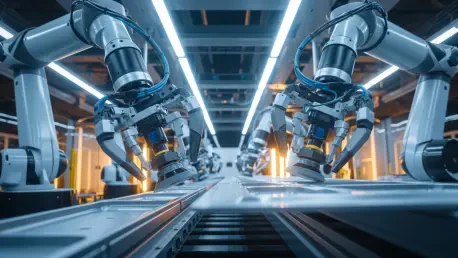

The traditional factory floor is currently undergoing a radical metamorphosis as rigid mechanical structures give way to fluid, AI-driven ecosystems that prioritize cognitive adaptability over simple repetition. This transition centers on a unified architecture where robots function as integrated nodes within a broader digital nervous system rather than isolated tools.
The Evolution of Intelligent Industrial Systems
The shift from collaborative robots to comprehensive platforms represents a fundamental change in manufacturing philosophy. Earlier systems required extensive manual coding, but the move toward integrated environments has simplified complex deployments.
Modern systems like the PalletizHD+ showcase how vision and motion control now exist within a single framework. This integration reduces the operational friction typically associated with fragmented, multi-vendor automation setups.
Core Technical Components and Performance Features
Intelligent industrial systems now rely on a synergy between high-performance software and adaptive hardware. This combination allows for a level of precision that was previously unattainable in high-speed manufacturing environments.
Key components involve proprietary software layers and specialized AI engines that optimize mechanical output. These tools work in tandem to ensure that efficiency remains high while maintenance needs stay low.
PalletizOS: The Unified Software Environment
PalletizOS functions as the brain of the operation, merging control and intelligence into a single interface. By adopting a smartphone-like logic, it removes the high barrier to entry for operators without specialized engineering backgrounds.
This unified environment enables rapid changeovers by streamlining how data is processed across the robotic system. It allows for a more intuitive management of complex industrial workflows and diverse product lines.
SwiftMove AI Motion Optimization
The SwiftMove technology introduces a layer of predictive intelligence that pre-calculates motion trajectories before a task begins. It facilitates the handling of 11 boxes per minute by stabilizing the arm during rapid transitions.
This efficiency directly impacts the bottom line by compressing the timeframe required to achieve a return on investment. It proves that software intelligence can effectively compensate for mechanical stress.
Scan&Go 2.0 and Physics-Informed AI
Advanced 3D vision combined with physics-informed AI allows Scan&Go 2.0 to tackle intricate tasks like sanding and welding. This system interprets the physical properties of a workspace rather than merely following a pre-set coordinate path.
Such adaptability is crucial for non-linear manufacturing environments where surface conditions may vary. It ensures high-quality outcomes in specialized industrial applications that require a delicate touch.
Current Trends in Autonomous Manufacturing
The industry is moving toward user-centric designs that prioritize rapid deployment and ease of use. This shift reflects a broader transition from standalone hardware to end-to-end intelligent automation solutions.
There is also a growing emphasis on reducing the payback period through AI-driven gains in throughput. Companies now demand systems that offer immediate productivity improvements with minimal integration costs.
Industrial Applications and Use Cases
High-speed palletizing and logistics optimization represent the primary use cases for these advanced systems. Automated stacking patterns ensure pallet stability without the need for manual calculations or human intervention.
Specialized tasks like welding and industrial sanding are also being transformed by physics-informed AI. These applications highlight the versatility of the technology across different manufacturing sectors.
Challenges and Implementation Hurdles
Maintaining mechanical stability at high speeds remains a significant hurdle for autonomous machinery. The balance between velocity and precision requires constant monitoring and real-time path adjustments to prevent errors.
Furthermore, integrating remote support and navigating complex regulatory landscapes pose ongoing difficulties. Ensuring safety standards while maximizing autonomy is a primary concern for current industrial leaders.
The Future Trajectory of Robotic Intelligence
Future breakthroughs in physics-informed AI will likely allow robots to handle delicate materials with unprecedented care. This evolution will redefine factory roles, shifting human labor toward strategic oversight.
As these systems become more intuitive, global adoption will accelerate across various sectors. Measurable industrial outcomes will be the primary driver of this technological expansion.
Summary and Final Assessment
The PalletizHD+ ecosystem demonstrated that the barrier between complex engineering and practical application was finally dissolving. The shift toward software-first robotics provided a clearer path for manufacturers to scale their operations with confidence.
This transformation marked a turning point where intelligence became the standard for industrial progress. Leaders recognized that the path to efficiency lay in software that understood the physical world as deeply as a human operator.