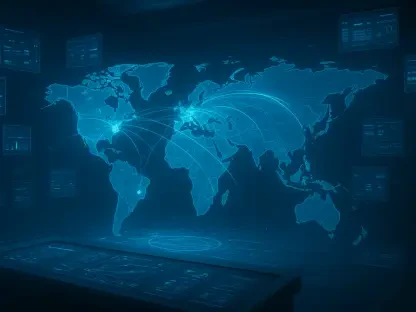

Western analysts are increasingly concerned that China’s control over critical minerals now relies as much on logistical networks and warehouses as it does on the mines themselves. This strategic pivot signals a move beyond mere extraction, focusing instead on the sophisticated management of the invisible pathways connecting remote mines to high-tech manufacturing hubs. Central to this evolution is a major agreement between Tiejie Logistics, a branch of the state-owned Baogang Group, and Wuchan Zhongda Logistics Investment Group. This partnership is designed to consolidate the physical and financial infrastructure required to move bulk commodities across international borders with surgical precision. By integrating these logistical “arteries,” Beijing ensures it maintains a tight grip on the entire supply chain, regardless of where the ore is physically located. The goal is to move from resource ownership to a broader system of dominance that controls the movement, storage, and financing of the world’s most critical industrial inputs.
The Foundation of China’s Logistical Power
A Strategic Alliance: The Industrial Powerhouse and Logistics Leader
The strength of this new logistical framework lies in the immense scale and specialized assets of the organizations involved in its creation. Tiejie Logistics operates under the umbrella of the Baogang Group, a massive state-owned enterprise that anchors the global rare earth sector through its deep ties with China Northern Rare Earth. This gives the partnership direct access to the source of materials that are essential for everything from electric vehicle motors to advanced defense systems. On the other side of the agreement, Wuchan Zhongda brings the logistical sophistication of a Fortune Global 500 conglomerate, offering a sprawling nationwide network and advanced financial services. By merging the raw resource access of the Baogang Group with the sophisticated asset management and distribution capabilities of Wuchan Zhongda, the state is creating a streamlined, end-to-end service. This synergy allows for the movement of strategic materials with a level of efficiency that individual private companies or fragmented Western suppliers struggle to match.
Optimizing the Flow: The Mine-to-Door Service Model
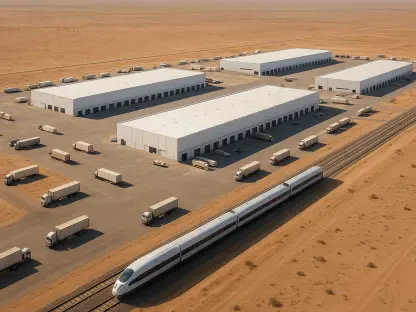
Modernizing the movement of bulk commodities requires more than just trucks and ships; it necessitates a reimagined service model that eliminates systemic friction. The Tiejie and Wuchan Zhongda partnership focuses on a “mine-to-door” approach, which replaces fragmented shipping stages with a unified system utilizing multimodal transportation. This strategy optimizes the transitions between rail, road, and sea to significantly lower the landed cost of minerals while increasing delivery speed. Furthermore, the establishment of strategic logistics hubs at key ports serves as a series of “valves” that manage the flow of goods into and out of the country. These hubs utilize shared and strictly regulated warehousing facilities, which provide the state with unprecedented oversight and traceability for every shipment. By centralizing these operations, the network can prevent local bottlenecks and ensure that strategic reserves are always available where they are needed most, effectively turning logistics into a precision-engineered tool of economic policy.
Broader Economic and Geopolitical Strategies
Dominating the Ecosystem: The Closed-Loop Integration
This transition toward logistical integration represents a broader shift in Beijing’s long-term strategy, moving from simple resource dominance to total industrial system dominance. Rather than focusing exclusively on the ownership of mineral deposits, the state is constructing a “closed-loop” ecosystem that binds logistics, warehousing, and trade finance into a single, controllable unit. This high level of vertical and horizontal integration makes the mineral supply chain exceptionally resilient to external market shocks or price volatility. It also provides government authorities with the exact tools needed to enforce export controls and licensing regimes with maximum effectiveness. By controlling the physical infrastructure through which minerals must pass, the state can selectively restrict the flow of strategic materials to international competitors during trade disputes. The logistical network thus becomes a powerful geopolitical lever, allowing for the tactical manipulation of global supply without the need for traditional diplomatic or military interventions.
Global Competition: Addressing the Entire Logistical Framework
To counter this consolidated influence, international stakeholders realized that focusing solely on mining was insufficient to ensure supply security. While previous Western strategies targeted individual segments of the chain, such as funding a processing plant or a single mine, the Chinese model proved the necessity of network strength. Policymakers eventually shifted their focus toward developing independent logistical frameworks that included dedicated rail lines, secure warehousing, and transparent financial platforms. Industry leaders recognized that decoupling required more than just new sources of ore; it demanded a systemic response that addressed the entire movement of goods from extraction to the end user. Governments began incentivizing the creation of alternative “arteries” to prevent any single entity from holding a monopoly over the transit of critical materials. These actions established a more diversified global landscape where logistical resilience became as important as the minerals themselves. By prioritizing the entire infrastructure, the global community sought to maintain a balanced and competitive market for the future.