
Rohit Laila stands at the intersection of complex logistics and humanitarian impact. With a career spanning decades in the supply chain industry, he has witnessed firsthand how technology and innovation can bridge the gap between global resources and remote communities in need. Today, he joins us to discuss the intricate coordination required to move massive quantities of aid across continents, focusing on a recent mission that delivered essential supplies from Europe to the heart of the Democratic Republic of the Congo. We delve into the logistics of multi-stage air transport, the necessity of strong global partnerships, and the critical role of safety and local expertise in overcoming infrastructure limitations.
Moving 100 tons of aid from Europe to the DRC requires a multi-layered logistics strategy; how did the infrastructure at the destination dictate the choice of aircraft and the overall route?
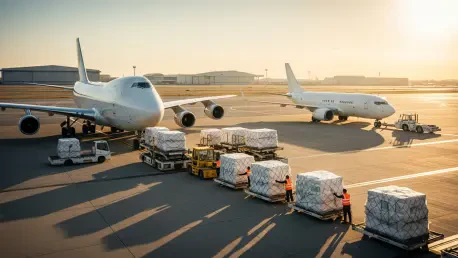
The logistics behind moving 100 metric tons of humanitarian supplies are fascinating because they require a deep understanding of local physical constraints. In this specific mission, the destination at Bunia Airport in the DRC presented a significant hurdle as the facility is unable to accommodate large, widebody freighter aircraft. To solve this, the operation utilized a heavy-duty Boeing 747F to transport the cargo from Liège Airport in Belgium to Jomo Kenyatta International Airport in Nairobi. Once the 100 tons arrived in Kenya, the cargo had to be transferred by the ground handler, Çelebi, onto a smaller Boeing 737-400 freighter for the final leg. This multi-stage solution was the only way to bypass the infrastructure limitations at Bunia while still moving a massive volume of goods.
In an operation involving so many different organizations, what role does collaboration play in ensuring such a massive amount of cargo reaches its destination successfully?
No single organization can address these massive humanitarian challenges alone, and this mission was a perfect example of the power of collaboration. The success of the operation relied on a symphony of coordination between Astral Aviation, global logistics providers like Scan Global Logistics and AVICO, and the humanitarian expertise of UNICEF. It involved a seamless handoff between an interline partner like Network, which handled the long-haul flight, and the local teams on the ground in Nairobi and Bunia. Sanjeev Gadhia, the chief executive of Astral, emphasized that these strong partnerships across the entire value chain are what make a resilient supply chain possible. When everyone works toward a common objective, the logistical hurdles of moving 100 metric tons across borders become manageable.
Given the sensitive nature of humanitarian relief and the complex environments in which these missions operate, how do teams manage the high standards of safety and regulatory compliance?
Maintaining the highest standards of crew welfare and cargo integrity is a non-negotiable priority, especially when operating in regions with shifting regulatory landscapes. Philip Omondi, the head of safety and quality, noted that the team worked in close coordination with aviation regulators and public health authorities in both Kenya and the DRC. This ensured full compliance with all operational, security, and biosecurity requirements throughout the entire journey. Such a high level of oversight is necessary to ensure that the relief supplies remain untainted and that the flight crews remain safe while performing these high-stakes deliveries. It is a rigorous process that involves constant communication with airport operators and ground handling partners to meet every safety and quality benchmark.
Astral Aviation has a long history of responding to crises across the continent; how does this experience with past public health emergencies influence the way current humanitarian missions are handled?
The airline has developed a specialized expertise through years of supporting emergency response operations, which creates a vital framework for missions like the one in Bunia. Anthony Mwangi, the head of charters, highlights their extensive history of transporting critical medical supplies, vaccines, and personal protective equipment during the Ebola outbreaks and the COVID-19 pandemic. They have also been deeply involved in cholera response operations, which requires a rapid and reliable supply chain. This background allows them to provide African solutions to African challenges, supported by global partnerships that understand the nuances of the local terrain. Having this “muscle memory” in logistics means they can act with speed and precision when communities need assistance the most.
What is your forecast for the future of humanitarian logistics in Africa?
I believe we will see a significant shift toward more integrated, African-led cargo networks that utilize strategic hubs to overcome local infrastructure gaps. The success of moving 100 tons of aid through a combination of widebody and narrowbody aircraft proves that flexible, multi-stage solutions are the future of the industry. We can expect to see even stronger cooperation between international logistics providers and regional airlines to create supply chains that are not only resilient but also highly specialized for medical and relief cargo. Ultimately, the future lies in these collaborative frameworks that prioritize humanitarian impact and leverage local expertise to reach the most inaccessible regions of the continent.