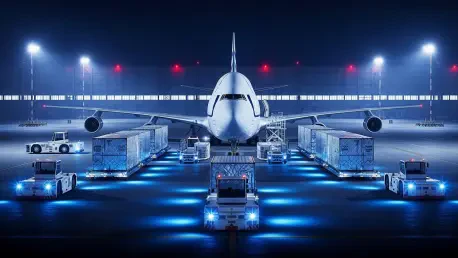

While the casual observer might only notice the sleek passenger jets departing for exotic destinations, the true pulse of global commerce beats within the sprawling, windowless warehouses of dedicated air cargo hubs. These massive facilities have evolved far beyond simple transit points to become high-velocity engines that support the backbone of international trade by connecting manufacturers directly to consumer markets. By enabling the rapid expansion of e-commerce and facilitating just-in-time production schedules, these specialized hubs ensure that the global economy operates at its peak efficiency. They have transformed into critical geopolitical assets that dictate the flow of wealth and the stability of supply chains across every continent. In an environment where a single day of delay can cost millions, the strategic importance of these logistics centers cannot be overstated. They represent a fundamental shift in how nations view their infrastructure, prioritizing industrial throughput over the traditional comforts of passenger travel and tourism.
High-Value Freight: The Economic Dominance of Specialized Air Infrastructure
Air cargo traditionally represents only a tiny fraction of the total weight of global trade, yet it consistently accounts for more than a third of its total monetary value. This striking concentration of wealth is driven by the transport of high-value, time-sensitive goods such as advanced semiconductors, critical pharmaceuticals, and high-end electronics. Because businesses prioritize speed and security for these specific items, air cargo hubs serve as the primary nodes for industries where even minor delays result in massive financial losses or critical supply shortages. The demand for these goods is often inelastic, meaning that despite the high cost of air transport, the necessity for rapid delivery outweighs the expense. This reliance creates a specialized ecosystem where the airport is not merely a landing strip but a sophisticated processing center for the world’s most vital technologies. The economic weight of these operations provides a stabilizing force for regional economies, attracting auxiliary businesses that thrive on the proximity to fast-moving international freight lanes.
To maintain this specialized dominance, major logistics hubs invest heavily in industrial capacity and technical sophistication rather than the aesthetic upgrades found in passenger terminals. Success in this competitive landscape depends on providing around-the-clock customs processing, climate-controlled storage for sensitive medicine, and advanced handling systems for complex freight. These specialized capabilities create a formidable competitive barrier, making it difficult for smaller airports to challenge the established leaders that have spent decades building the necessary logistical networks and securing international regulatory certifications. Furthermore, the integration of bonded warehouses and tax-free zones within these hubs allows for seamless assembly and distribution, turning the airport into a manufacturing extension. This industrial focus ensures that the hub remains a vital link in the global production line, capable of handling the most delicate and expensive components with surgical precision. The infrastructure is built for speed and reliability, reflecting the uncompromising standards required by today’s high-tech industries.
Market Dynamics: Navigating E-commerce Growth and Systemic Operational Risks
The exponential rise of online shopping has fundamentally altered the economics of air freight, shifting the industry away from reliance on passenger plane belly storage toward large, dedicated freighter fleets. While fuel prices remain a volatile and significant operating expense, the modern consumer’s demand for rapid delivery is often resistant to price changes, allowing cargo carriers to remain profitable even during significant market shifts. This independence from passenger travel trends ensures that the supply chain remains resilient even when traditional tourism and business travel fluctuate due to external factors. The surge in e-commerce has led to the creation of virtual warehouses in the sky, where goods are in transit almost as soon as they are ordered. This shift requires a massive coordination of data and physical movement, placing unprecedented pressure on cargo hubs to increase their sorting speed and accuracy. The result is a more robust and decoupled cargo industry that can navigate economic downturns better than many other sectors of the aviation world.
Stakeholders across the logistics sector recognized that the path forward required a fundamental reinvestment in both human capital and digital infrastructure to ensure long-term viability. Industry leaders moved toward implementing more robust training programs for technical staff and pilots to mitigate the personnel shortages that had previously threatened operational continuity. Governments and private entities collaborated to modernize customs protocols, utilizing automated blockchain-based tracking to reduce transit times and improve security across international borders. These actions established a more resilient framework that better protected high-value supply chains from the volatility observed in earlier years. By prioritizing the integration of sustainable fuels and electric ground-handling equipment, the industry also addressed environmental concerns while reducing long-term costs. These strategic shifts ensured that air cargo hubs transitioned into autonomous logistics engines. The focus shifted toward creating a more integrated, transparent, and responsive network that could maintain the rapid pace of global trade.