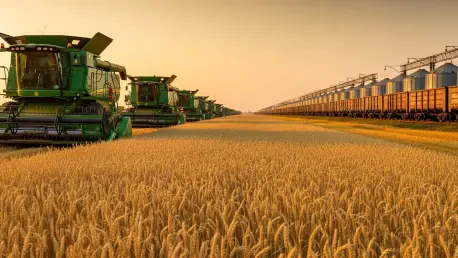

The vast agricultural plains across the southern Russian territory are currently witnessing a historic divergence between projected yields and the actual capacity to deliver those crops to the global market. While the total harvest is estimated to reach a staggering 134.7 million metric tons, the sheer volume of grain is beginning to overwhelm a crumbling logistics network and an increasingly unstable fuel supply chain. This situation has created a scenario where traditional indicators of agricultural strength, such as total production and the removal of export duties, no longer guarantee a dominant position in international trade. Instead, market participants are forced to navigate a labyrinth of rising operational costs and physical bottlenecks that threaten to turn a bumper crop into a logistical nightmare. The disconnect between the potential for abundance and the reality of distribution is forcing a fundamental reassessment of what constitutes a reliable grain supplier in 2026.
Structural Bottlenecks: Energy Supply and Farm Economics
A deepening fuel crisis is currently paralyzing the movement of agricultural machinery across key harvesting regions, prompting the government to implement drastic measures like a total ban on diesel exports. This intervention aims to protect domestic supplies, yet the underlying shortage persists due to delayed refinery maintenance and the rising costs of importing specialized additives. Subsidized fuel programs have been introduced to alleviate the pressure, but these bureaucratic solutions often fail to reach small-scale farmers who operate on thin margins and lack the political leverage of massive agro-holdings. Consequently, the disconnect between theoretical energy independence and the practical availability of diesel at the pump is creating a significant barrier to efficient harvesting operations. Without a stable supply of affordable fuel, the machinery required to process such a massive harvest remains idle, leading to a situation where grain sits in the fields for long periods.
The economic reality for producers in the southern regions has reached a breaking point as the wholesale cost of diesel surges far beyond the regional price caps set by the central administration. For many farmers, the financial math of the current season simply does not add up because the price of grain on the local market has remained stagnant while the costs of inputs and transportation have skyrocketed. This disparity is forcing a difficult choice upon medium-sized enterprises: either take a loss by harvesting and transporting the crop at high expense or leave the grain to rot in the fields. In some extreme cases, reporting a total crop loss has become a more viable financial strategy than attempting to sell the harvest under current market conditions. This trend is particularly worrying because it undermines the long-term sustainability of the agricultural sector, as farmers may decide to reduce their planted acreage in the coming seasons to avoid these financial risks.
Infrastructure Strain: The Shift to Rail Transportation
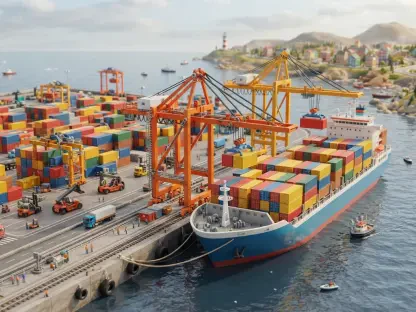
Logistical complications have further intensified following the unexpected suspension of commercial navigation within the Don-Azov system, which serves as a vital artery for the transport of grain to international waters. This halt in maritime traffic has left hundreds of loaded vessels stranded, effectively freezing millions of tons of grain in a state of transit and forcing exporters to seek alternative routes. The sudden loss of this critical waterway has caused a massive redirection of cargo toward inland systems that were never designed to handle such a concentrated surge in volume. As a direct result, freight rates for both river and sea transport have reached record highs, making the export process prohibitively expensive for many traditional players. The inability to rely on the Don-Azov corridor highlights the fragility of the current infrastructure and the high stakes involved when environmental or regulatory issues disrupt the primary channels of trade in the region.
In an effort to bypass the maritime delays, exporters are pivoting toward the national rail network to transport grain to deep-water ports like Novorossiysk, but this shift is creating its own set of systemic problems. The sudden influx of grain shipments has triggered a severe shortage of available wagons and locomotives, leading to a state of near-permanent congestion at major railway junctions and port terminals. What was initially seen as a temporary workaround has quickly become a primary source of delay, as the rail infrastructure struggles to accommodate the sheer volume of agricultural cargo alongside other high-priority industrial shipments. The bottleneck has essentially moved from the water to the tracks, resulting in significantly slower turnaround times for grain deliveries and increasing the risk of spoilage for cargo that remains stuck in transit for weeks. For international buyers, this logistical uncertainty is making the grain supply look unreliable.
Strategic Shifts: Global Market Dynamics and Future Resilience
While Russia continues to pursue strategic expansion by developing grain hubs in the Middle East to solidify its geopolitical and economic influence, the current decline in export efficiency is creating a vacuum. The internal friction within the Russian supply chain is inadvertently driving up global prices, which provides a significant competitive advantage to other producers in the Black Sea and Danube regions. Countries like Romania, Bulgaria, and Poland are rapidly modernizing their own infrastructure to capture the market share that is slipping away from the Russian federation. These neighboring nations are positioning themselves as more reliable partners by offering streamlined logistics and more predictable delivery schedules, which are highly valued by international buyers facing their own food security challenges. The shift in market dynamics suggests that the era of uncontested Russian dominance in the grain sector may be drawing to a close as buyers prioritize reliability.
The challenges encountered throughout the initial phases of the current season demonstrated that production metrics alone were insufficient to maintain a stable export environment without corresponding logistical support. Stakeholders recognized that the intersection of energy scarcity and infrastructure decay required a multi-faceted approach involving both state-led investment and private sector innovation. Moving forward, the industry adopted a strategy centered on diversifying transport corridors and establishing localized energy micro-grids to insulate agricultural operations from broader market volatility. Governments and international organizations accelerated the development of alternative transit agreements to ensure that global food supplies remained resilient against localized domestic disruptions. Producers began prioritizing the modernization of storage facilities to buffer against delays, while exporters shifted their focus toward long-term contracts. These measures provided a blueprint for future resilience.