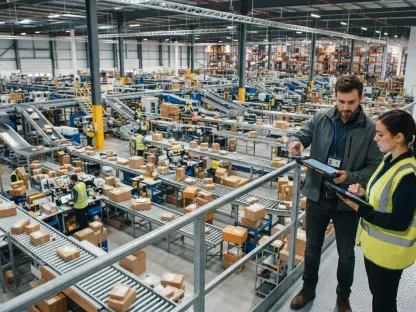

The rapid expansion of e-commerce has forced many established retail organizations to confront the stark reality that their existing brick-and-mortar warehouses were never designed to handle the sheer volume of contemporary palletized freight. This mismatch creates a significant operational paradox where 21st-century logistics demands are frequently hindered by mid-20th-century infrastructure. Fixed door openings and mismatched floor levels often turn a routine delivery into a logistical bottleneck, stalling the supply chain at the very point of entry.
Rather than settling for off-the-shelf equipment that provides a mediocre fit, distribution hubs are increasingly turning toward customized engineering to solve site-specific puzzles. These bespoke solutions allow facilities to bypass the limitations of their original architecture. By focusing on adaptability, companies can transform antiquated loading docks into fluid gateways that accommodate various vehicle types without requiring a complete building overhaul.
The Infrastructure Hurdle in UK Distribution
The United Kingdom possesses a vast inventory of aging industrial stock that presents a unique set of challenges for modern retailers. Total reconstruction of these hubs is often financially prohibitive and logistically disruptive, leaving many managers to struggle with facilities that were never intended for high-frequency operations. In these environments, standard loading equipment frequently fails because it cannot account for the irregular yard gradients or cramped footprints common in older sites.
The pressure to decrease vehicle turnaround times has never been higher, yet physical constraints remain the primary obstacle to peak performance. When trailers cannot align correctly with the dock, the risk of equipment damage and employee injury increases significantly. Consequently, the reliance on outdated infrastructure without modern modification leads to rising operational costs and a steady decline in throughput efficiency across the national distribution network.
Engineering Bespoke Solutions for Restricted Spaces
Modern engineering addresses these physical limitations through the integration of fixed steel platforms paired with heavy-duty equipment, such as 6,000-kilogram capacity swing lip dock levelers. This hardware is designed specifically to conform to the existing layout of a building, bridging the gap between internal warehouse floors and varying vehicle bed heights. By utilizing custom dimensions, engineers ensure that the equipment works in harmony with the building rather than forcing expensive and time-consuming structural alterations.
One notable application involved a UK retail center that successfully transitioned from a restricted, inefficient loading area to a high-performance hub. The project utilized a design where roller shutter doors were configured to close directly onto the platform deck. This specific configuration maintains a tight environmental seal when the bay is inactive, preventing heat loss and protecting the interior of the warehouse from the elements. This approach proves that legacy buildings can achieve modern performance standards through targeted hardware upgrades.
Prioritizing Operational Safety and Equipment Durability
Maintaining productivity in the unpredictable British weather requires a focus on both equipment durability and personnel safety. Heavy-duty dock bumpers are essential for mitigating impact damage from reversing heavy goods vehicles, while flared alignment kerbs provide necessary guidance for drivers in tight spaces. These features protect the structural integrity of the loading platform, ensuring that the investment remains functional for years despite the rigors of constant use.
Personnel safety is further enhanced through the use of integrated access steps, robust handrails, and hinged gate systems that prevent accidental falls. Anti-slip surfacing on all walking and driving areas provides reliable traction, which is vital for maintaining year-round productivity during wet or icy conditions. Industry experts suggest that these custom safety features drastically reduce long-term maintenance costs by preventing the small accidents and wear-and-tear issues that typically plague standard installations.
Strategies for Auditing and Upgrading Legacy Loading Bays
Upgrading a distribution hub effectively began with a comprehensive site survey to identify specific floor level discrepancies and yard gradients. These audits allowed managers to evaluate whether existing door apertures were compatible with modern dock leveler technology or if modular additions were required. A systematic approach helped determine whether a permanent structural modification was necessary or if a modular steel platform could provide the same benefits at a lower capital expenditure.
The final phase of modernization involved balancing immediate costs against the long-term gains of improved pallet truck flow and reduced vehicle wait times. Organizations that invested in these upgrades found that the smoother transition between the yard and the warehouse floor significantly decreased loading errors and equipment fatigue. As logistics demands continue to evolve toward 2027 and beyond, the focus shifted from simple maintenance to the strategic implementation of flexible, high-capacity infrastructure.