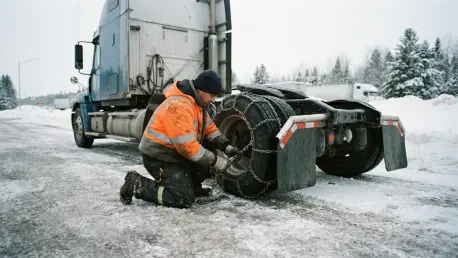

By issuing permits to private recovery outfits, Colorado intends to increase the throughput of chain stations near the Eisenhower-Johnson Memorial Tunnels and Vail Pass. This decision comes after a unanimous vote by the Colorado Transportation Commission, marking a significant evolution in how the state manages winter logistics on its most critical high-altitude corridors. For years, the Interstate 70 mountain stretch has been plagued by lengthy closures and massive traffic jams caused primarily by commercial vehicles failing to navigate snowy inclines. Instead of relying solely on individual drivers to manage their equipment, the Colorado Department of Transportation (CDOT) is integrating a professionalized service layer into winter operations. This strategic move acknowledges that roadway efficiency is not just about plowing snow, but about ensuring that every heavy vehicle is equipped with necessary traction quickly. The program creates a formal framework for private companies to assist haulers, effectively turning roadside stations into rapid-service hubs.
Bridging the Gap: Competence Over Compliance
While official data suggests that roughly 90% of commercial drivers comply with the “must-carry” law, which requires traction chains to be stored on board from September through May, possessing the gear does not guarantee the ability to use it under duress. State officials have observed a troubling trend where long-haul truckers arrive at mountain passes completely unprepared for the physical demands of high-altitude winter labor. It is a common occurrence for road crews to find drivers attempting to chain their tires while wearing summer attire like shorts and sandals in sub-freezing temperatures. This lack of environmental readiness often leads to hesitation, as drivers remain parked in chain stations for hours, paralyzed by the complexity of the task or the severity of the weather. These stationary trucks create a backlog that spills onto the highway, effectively blocking other vehicles and preventing snowplows from clearing lanes, which exacerbates the very delays the stations were meant to prevent.
The introduction of professional assistance directly addresses this proficiency gap by replacing slow, amateur attempts with expert efficiency. Under current conditions, an untrained driver might spend three to four hours attempting to secure a set of chains while referencing digital tutorials, only to have the equipment fail a few miles later. Improperly installed chains often snap or fly off, posing a severe hazard to other motorists and damaging the truck’s undercarriage. In contrast, a certified professional can securely chain a heavy vehicle in 30 to 45 minutes, ensuring that the equipment is mounted correctly the first time. By shortening the dwell time at these designated stations, the state can significantly increase the total number of trucks that successfully pass through the corridor per hour. This speed is essential for maintaining momentum during heavy storms, as it prevents the traffic failures that occur when a single driver becomes stuck and blocks a major thoroughfare.
Regulatory Oversight: Permits and Penalties
Colorado’s approach to winter safety is built on a foundation of strict regulations, but the state is now shifting its focus from punishment to facilitation. Currently, the commercial chain law is strictly enforced during inclement weather, with non-compliance resulting in substantial financial consequences. A standard citation for failing to have chains installed when required carries a fine of approximately $579, but if a driver’s negligence results in a lane closure, that penalty jumps to over $1,150. Despite these high stakes, the number of spun-out vehicles remains high, suggesting that fear of fines is not a sufficient motivator when the driver lacks the physical ability to comply. The new program aims to lower these risks by providing an accessible alternative to struggling alone. By offering a paid service that guarantees safe passage, the state provides a logical exit for drivers who would otherwise risk a fine or a dangerous accident, ensuring compliance through active assistance.
To maintain order and safety, the Department of Transportation will issue specific permits to private companies, predominantly those already working in the towing and recovery sector. The operational guidelines are designed to prevent the chaos that often erupts at crowded roadside stations during blizzard conditions. According to the approved framework, only one authorized vendor will be allowed to provide services at any specific station at a given time, preventing competition from turning into a safety hazard. In high-traffic locations like the Eisenhower-Johnson Memorial Tunnels, CDOT plans to implement a rotation system among multiple vendors to ensure equitable business opportunities and consistent coverage. For more remote or rural mountain passes, the state is actively incentivizing local outfits to participate, ensuring that the entire mountain network receives support. This structured permitting process ensures that vendors are vetted for reliability, providing drivers with consistent service quality.
Legislative Foundation: Support and Fair Pricing
The regulatory shift is the result of focused legislative action, specifically Senate Bill 69, which passed with bipartisan support from lawmakers representing the state’s mountain regions. Signed into law by Governor Jared Polis, this legislation recognized that the economic health of the Western Slope depends heavily on the reliability of the Interstate 70 corridor. The bill provided the necessary funding for a dedicated program manager within the CDOT Office of Emergency Management to oversee the rollout and ongoing enforcement of the new standards. This oversight is crucial for developing standardized operating procedures that prioritize safety over speed. By formalizing this relationship through law, the state has created a permanent mechanism for public-private cooperation in transit management. The legislative backing also ensures that the program has the legal teeth to remove unauthorized vendors who might attempt to operate without a permit, maintaining a high standard of professional accountability.
A central pillar of the program’s development is the commitment to preventing price gouging and protecting commercial drivers from financial exploitation. State officials are aware that stranded truckers represent a captive market, and without regulation, service costs could skyrocket during emergencies. To combat this, CDOT is working closely with the Colorado Motor Carriers Association to establish rigorous price ceilings for labor and equipment. By analyzing the operational model used in Washington state—the only other jurisdiction with a similar program—Colorado is creating a balanced fee structure that ensures vendor profitability while remaining affordable for trucking fleets. This proactive approach to pricing ensures that the service is viewed as a helpful resource rather than a predatory expense. Establishing these caps helps build trust within the trucking industry, encouraging wider adoption and reducing the likelihood that drivers will bypass the service in an attempt to save money at the risk of safety.
Long-Term Trajectory: Reducing Closures and Safety Improvements
The rollout of the permit system is progressing through a phased approach to allow for continuous improvement based on real-world feedback. While full integration across all mountain corridors is slated for early 2027, the initial trial phases have already begun during the 2025-2026 winter season. These early operations allow the state to identify logistical hurdles and adjust the rotation schedules of vendors at the busiest stations. State officials have described this period as a trial-and-error phase, acknowledging that the complexities of mountain weather require a flexible management strategy. By starting with a limited number of high-priority sites, the Department of Transportation can refine its communication protocols between state dispatchers and private recovery crews. This iterative process ensures that by the time the program reaches full scale, the systems for dispatching assistance and managing station capacity will be seamless, providing a reliable safety net for thousands of heavy vehicles.
The successful implementation of this professionalized chain-assistance program aims to effectively transform a perennial bottleneck into a more predictable artery for commerce. By moving away from a model that left untrained drivers to fend for themselves, Colorado is taking a concrete step toward improving regional road safety. The broader impact of this initiative extends beyond the trucking industry, as passenger vehicle drivers should also experience a significant decrease in full-highway closures caused by preventable accidents. Moving forward, the state should consider expanding these public-private partnerships to include automated monitoring systems that can alert vendors to rising demand in real-time. This data-driven approach could allow for even more precise deployment of resources, further reducing the time trucks spend idling at high altitudes. As other mountain states look for solutions to winter gridlock, Colorado’s model provides a clear blueprint for balancing enforcement with practical improvements.