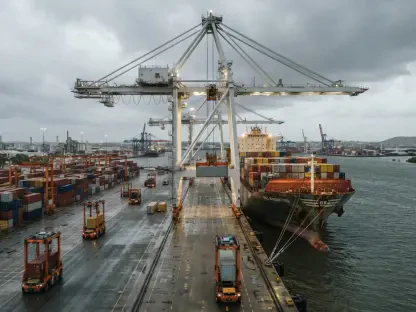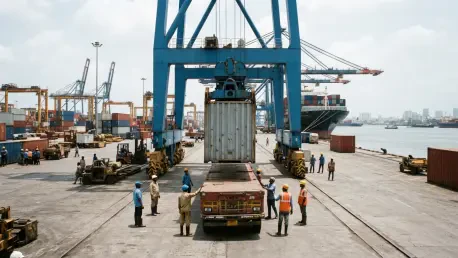

The divergence in India’s logistics landscape is deepening as maritime momentum fails to translate into demand for rail services or domestic air travel. While the nation’s ports are witnessing a robust expansion in cargo handling, the inland infrastructure tasked with moving these goods to the interior is struggling to keep pace. Recent data from JM Financial reveals that this disconnect is not merely a temporary fluctuation but a structural challenge that has seen rail container volumes enter their eighth consecutive month of contraction. Even as maritime trade thrives, the domestic aviation sector is facing its own set of headwinds, with passenger numbers dipping unexpectedly. This growing divide suggests that the massive investments in port capacity are reshaping how goods move, often at the expense of traditional rail networks. Investors are now forced to re-evaluate their strategies as the ripple effects of high port throughput fail to reach the railway lines or the domestic airport terminals across the country.
Analyzing the Inland Logistics Gap
Rail Container Volume Contraction
Data from October indicates a stark reality where rail container traffic fell by 3.3% year-on-year, dropping to 7.9 million tons. This downturn is particularly striking when viewed against the backdrop of a 26.8% increase in overall container handling measured in twenty-foot equivalent units. At the Jawaharlal Nehru Port Authority, the country’s premier container gateway, rail evacuation grew by 6.8%, yet this was widely characterized as modest compared to the sheer volume of goods arriving by sea. The rail coefficient—representing the percentage of port traffic moved by trains—plunged to 13.6% earlier this year, marking its lowest point since early 2024. Such a trend indicates that manufacturers and shippers are increasingly bypassing rail in favor of road transport, possibly due to pricing pressures or perceived inefficiencies in the intermodal chain. This shift creates a significant bottleneck that could hinder the long-term efficiency of the supply chain.
Shifting Preferences in Freight Transport
Logistics operators are observing that the current boom in maritime activity is heavily skewed toward specific types of commodities that do not traditionally favor rail containerization. While ports are busy, the goods being moved are predominantly bulk items such as coal and iron ore, which are often diverted toward specialized coastal shipping lanes rather than being loaded onto trains for inland delivery. This phenomenon explains why coastal cargo surged by an astonishing 80.8% recently, reaching 31.6 million tons. However, because this growth is concentrated in bulk materials, it fails to provide the necessary volume to stabilize the rail container sector. The preference for road transport for short-to-medium distances continues to erode the market share of railway operators, who find it difficult to compete with the flexibility of trucking. Without a realignment of tariffs or infrastructure improvements at rail sidings, the gap between port arrival and rail departure will remain wide.
Navigating Aviation and Maritime Growth
Stagnation in Domestic Air Travel
The aviation sector is currently mirroring the sluggish performance seen in the rail industry, although the underlying causes are tied more closely to consumer sentiment and regional economic shifts. Total passenger traffic at Indian airports declined by 3.9% in the most recent reporting period, driven primarily by a 5% drop in domestic travelers. While international traffic provided a small silver lining with a 1% increase, it was not enough to offset the domestic downturn. Industry analysts suggest that this cooling of the aviation market may be a reaction to rising ticket prices and a saturation of demand in major metropolitan hubs. There is a general expectation that a recovery will not materialize until after December, when year-on-year comparisons become more favorable due to holiday travel patterns. However, the immediate concern remains the weakness at regional airports, where connectivity issues and operational costs continue to dampen growth for the foreseeable future.
Long-Term Strategic Considerations
To address the widening disparity between port success and inland stagnation, strategic analysts determined that stakeholders must focus on enhancing port-rail-road synchronization through digital integration and policy reform. This period highlighted a clear requirement for more competitive rail pricing to pull container traffic back from the highways, supported by investments in dedicated freight corridors that manage the increased throughput. Furthermore, the performance of coastal cargo suggested that the focus on the blue economy produced tangible results, which were then leveraged to create integrated logistics hubs instead of isolated corridors. Decision-makers advocated for the development of multi-modal logistics parks that transition goods between ships, trains, and trucks to minimize transit times. By shifting away from a focus on port capacity alone, the industry ensured that maritime momentum functioned as a catalyst for the broader logistics ecosystem.