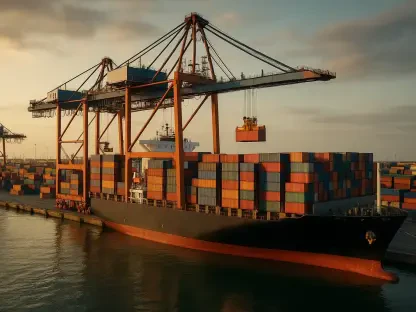

The completion of a colossal man-made waterway in Southern China marks a seismic shift in how heavy industry maneuvers through the increasingly complex geopolitical waters of the Pacific. As of 2026, the Pinglu Canal has transitioned from a massive engineering blueprint into a functioning artery of international commerce, reshaping the logistical map of East and Southeast Asia. This development is not merely an infrastructure project but a profound response to the cooling trade relations with Western economies and a decisive pivot toward the burgeoning markets of the Global South. For decades, the inland provinces of the southwest were tethered to circuitous and costly routes through the Pearl River Delta, but the new connectivity provided by this canal allows for a direct exit into the sea, effectively turning landlocked regions into competitive export platforms.
The New Frontier of Chinese Logistics and Inland Connectivity
The strategic evolution of the Maritime Silk Road has reached a critical juncture where the focus has shifted from global expansion to regional consolidation. By 2026, the emphasis on the Global South has intensified as trade barriers in North America and Europe become more entrenched. The Pinglu Canal serves as the physical manifestation of this policy, providing a dedicated corridor that links the heart of China’s industrial interior directly to the Association of Southeast Asian Nations (ASEAN). This shift reflects a broader geopolitical strategy to build a self-sustaining trade ecosystem that is less dependent on traditional Western consumption and more integrated with the developing economies of neighboring states.
Integrating the southwestern hinterland has long been a challenge for central planners, yet the canal has successfully transformed isolated provinces into frontline export hubs. Regions such as Guangxi, Yunnan, and Sichuan, which previously struggled with the high costs of transporting goods thousands of kilometers to eastern ports, now have a streamlined path to the Beibu Gulf. This transformation has stimulated a wave of industrial relocation, with manufacturers moving deeper into the interior to take advantage of lower land and labor costs while maintaining high-speed access to international shipping lanes. The result is a more balanced economic geography that reduces the over-reliance on coastal provinces like Guangdong and Zhejiang.
The technological and engineering milestones achieved during the construction of this 134-kilometer waterway are unprecedented in the modern era. As the first major artificial canal built since 1949, the project required the movement of vast quantities of earth and the implementation of advanced ship lock technologies designed to handle 5,000-ton vessels. Engineers utilized smart construction techniques and automated monitoring systems to ensure that the waterway could operate at peak efficiency from the moment of its inauguration. This scale of development underscores the capacity of state-directed investment to rapidly alter the physical landscape in favor of national economic goals.
Key market players and investment strategies have been central to restructuring regional supply chains around this new infrastructure. With a total investment of 72.7 billion yuan, the project has been spearheaded by major state-owned enterprises that possess the capital and technical expertise to execute such a massive undertaking. These entities are not only building the canal itself but are also investing in the surrounding logistics parks and multimodal transport networks. This concerted effort has invited a surge of private capital into the region, as logistics firms and manufacturing conglomerates seek to secure their positions within the newly formed Guangxi-ASEAN trade corridor.
Driving a Pivot Toward Southeast Asian Markets
Emerging Logistics Trends and the Shift to Asia
One of the most significant advantages of the canal is its ability to bypass geopolitical chokepoints and alleviate the pressure on existing maritime routes. By reducing the journey from inland rivers to the South China Sea by approximately 560 kilometers, the canal offers a much more efficient alternative to the congested traditional paths that required transit through the Pearl River Delta. This reduction in distance is particularly crucial for time-sensitive goods and high-volume industrial commodities. Moreover, the ability to avoid the crowded waters near major eastern hubs provides a layer of logistical security that is increasingly valued in a volatile global trade environment.
Industrial capacity and export venting have become essential components of China’s current economic model. With domestic demand showing signs of stabilization at lower levels, the ability to utilize ASEAN as a primary outlet for industrial surplus is vital for maintaining production growth. The Pinglu Canal acts as a pressure valve, allowing heavy machinery, chemicals, and automotive components to flow seamlessly from the southwestern production bases to Southeast Asian markets. This export strategy ensures that Chinese factories remain operational and competitive, even as traditional export destinations become more difficult to access due to tariffs and regulatory hurdles.
Digital and physical integration is further enhancing the efficiency of these new shipping routes. The modernization of port facilities in the Beibu Gulf has been synchronized with the canal’s operations, creating a seamless interface between inland waterways and deep-sea shipping. Advanced digital platforms now coordinate the movement of containers from the river systems of Guangxi to the automated terminals of Qinzhou and Beihai. This convergence of infrastructure and technology ensures that the time saved on the water is not lost at the dock, providing a high-speed logistical experience that rivals the most established ports in the world.
Market Projections and Economic Impact Indicators
Logistics cost optimization is perhaps the most tangible benefit for manufacturers operating in the Chinese interior. Projections indicate a reduction in transport expenses of between 18% and 30% for companies that transition their logistics from overland rail or circuitous river routes to the Pinglu Canal. For high-margin industries like electronics or automotive manufacturing, these savings represent a significant boost to competitiveness in the global market. Furthermore, the lower cost of shipping raw materials into the interior allows for more efficient production cycles, creating a virtuous loop of cost reduction and industrial expansion.
Bilateral trade growth forecasts suggest that the relationship between China and ASEAN will continue to strengthen in the coming years. After surpassing the $1 trillion annual threshold, trade volumes are expected to maintain a steady upward trajectory as the canal facilitates deeper economic integration. The ease of access provided by the new waterway encourages smaller firms to engage in cross-border trade, which was previously too expensive or logistically complex. As more diverse products move through the canal, from agricultural goods to high-tech components, the economic bond between the two regions is becoming more resilient to external shocks.
ASEAN has firmly established itself as the primary trading partner for China, representing a significant center of gravity for global exports. Data-driven insights reveal that the regional shift is not a temporary trend but a long-term realignment of trade flows. The demographic dividend in Southeast Asia, coupled with rising middle-class consumption, makes it the ideal partner for China’s industrial output. The canal is the final piece of the puzzle that allows China to fully capitalize on this regional proximity, ensuring that the logistics of the 21st century are oriented toward the south.
Navigating the Trade Deficit and Regional Apprehensions
The “double-edged sword” dilemma is a recurring theme in diplomatic discussions between Beijing and its Southeast Asian neighbors. While the Pinglu Canal offers ASEAN businesses a more direct route into the Chinese market, it also facilitates a massive influx of Chinese manufactured goods. This surge has led to concerns about trade imbalances that could favor China at the expense of local manufacturers. Leaders in the region are increasingly vocal about the need for a balanced trade relationship that does not result in the deindustrialization of Southeast Asian economies.
Protecting domestic industries has become a priority for nations like Vietnam, Thailand, and Malaysia as they navigate the realities of increased competition. There is a palpable risk of protectionist backlashes if the widening trade deficit is not addressed through cooperative policies. Some ASEAN member states have already begun investigating anti-dumping measures and other trade defense instruments to shield their local producers from a flood of low-cost imports. The success of the Pinglu Canal as a regional asset depends heavily on the ability of all parties to ensure that it promotes mutual growth rather than one-sided economic expansion.
Environmental and social considerations are also at the forefront of the canal’s operational strategy. The ecological impact of such a massive waterway construction project cannot be overlooked, as it involves the alteration of natural river systems and the potential displacement of local communities. Strategies for managing these impacts include the implementation of green shipping technologies and the restoration of habitats along the canal’s banks. Moreover, the social transition of inland regions into industrial hubs requires careful planning to ensure that the benefits of modernization are shared by the local population and that the traditional ways of life are respected.
Regulatory Frameworks and Cross-Border Standards
Coordinating international trade protocols is essential for the smooth operation of commerce through the canal. The Regional Comprehensive Economic Partnership (RCEP) plays a pivotal role in this process by streamlining the rules of origin and reducing tariff barriers across the region. By aligning the regulatory frameworks of China and ASEAN, the RCEP ensures that goods moving through the Pinglu Canal can clear customs with minimal friction. This legal infrastructure is just as important as the physical locks and channels, as it provides the certainty that businesses need to make long-term investment decisions.
Compliance and customs efficiency are being enhanced through the deployment of “Smart Border” technologies. These systems use artificial intelligence and big data to facilitate faster clearance of cargo between Guangxi and ASEAN member states. Automated documentation and non-intrusive inspection techniques reduce the time that vessels spend at border checkpoints, further maximizing the speed advantages of the canal. This digital layer of customs management allows for a higher volume of trade to be handled without a proportional increase in administrative overhead, making the entire logistics chain more lean and responsive.
Maritime security and sovereignty remain complex issues that require careful navigation in the Beibu Gulf and the wider South China Sea. As the canal increases the volume of shipping in these waters, the importance of clear legal landscapes and maritime boundaries becomes even more pronounced. China and its ASEAN partners must work together to ensure that the increase in commercial activity does not lead to heightened tensions or jurisdictional disputes. Establishing clear protocols for search and rescue, environmental protection, and maritime law enforcement is vital for maintaining the stability of this critical trade corridor.
The Future of Global Trade Corridors and Diversification
Beyond the southern focus, the Pinglu Canal is part of a larger strategy that includes the “Polar Silk Road” and land bridges in the Malay Peninsula. These diverse routes are designed to provide China with multiple options for reaching global markets, reducing the impact of any single point of failure. The synergy between the southern canal and the Arctic route allows for a flexible logistics network that can adapt to changing geopolitical or environmental conditions. This diversification is a key component of China’s broader goal to create a logistics network that operates independently of Western-controlled maritime paths.
Hainan is emerging as a transshipment powerhouse that complements the new inland connectivity of the Pinglu Canal. The strategic synergy between the canal and the Yangpu Port free trade hub allows for goods to be consolidated and redistributed with unprecedented efficiency. Hainan’s status as a free trade port provides additional incentives for international shipping companies to use the region as a base for their Southeast Asian operations. As the canal brings more cargo to the Beibu Gulf, Hainan acts as a sophisticated gateway that connects these goods to the rest of the world.
Reshaping global commerce requires a forward-looking view of how logistics networks can be used to foster regional autonomy. The Pinglu Canal represents a shift toward a more localized but highly efficient trade model that prioritizes regional partnerships over global dependency. This model challenges the traditional dominance of long-distance shipping routes that have historically been managed by Western powers. By building its own corridors and establishing its own standards, China is creating a parallel trade architecture that is better suited to the economic realities of the mid-21st century.
Summary of Strategic Shifts and Economic Outlook
The synthesis of the “Look South” policy demonstrated that infrastructure was the most effective tool for bypassing modern trade barriers. Decisions made during the initial phases of the canal’s construction proved to be prescient, as they allowed inland manufacturers to remain competitive during a period of intense global economic realignment. The strategic move toward ASEAN provided a much-needed outlet for industrial capacity, which in turn stabilized the domestic labor market and fostered a new era of regional cooperation. This shift highlighted the importance of physical connectivity in maintaining economic momentum when traditional geopolitical alliances were under strain.
Recommendations for long-term regional stability focused on the necessity of fostering two-way trade to ensure that all partners benefited from the new infrastructure. Stakeholders emphasized that for the Pinglu Canal to remain a viable corridor, it had to be more than a conduit for exports; it needed to facilitate the import of high-value goods and raw materials from ASEAN into China’s interior. Policies were developed to encourage Southeast Asian firms to utilize the canal for their own expansion, creating a more balanced and integrated regional economy. This approach aimed to mitigate protectionist sentiments and build a foundation of mutual trust between the trading nations.
The final verdict on investment and growth confirmed that the canal successfully redefined international business and supply chain resilience. The project achieved its goals of reducing logistics costs and opening new markets for the southwestern provinces, which previously lacked direct maritime access. As the global logistics landscape continued to evolve, the Pinglu Canal stood as a testament to the power of strategic long-term planning and massive capital investment. The resulting network provided a template for how other regions could integrate their hinterlands into the global economy while insulating themselves from the volatility of traditional trade routes.