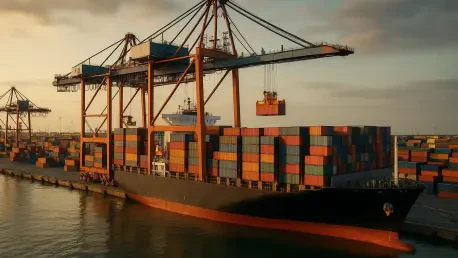

The once-unquestioned reliance on razor-thin inventory margins and single-source global manufacturing has reached a definitive breaking point as modern enterprises prioritize survival over the pursuit of the lowest possible production cost. For decades, the mantra of global commerce centered on hyper-efficiency, squeezing every penny from the logistics chain by centralizing production in low-cost jurisdictions. However, the current landscape of 2026 reveals that this lean architecture was far more fragile than industrial leaders realized, prompting a massive structural pivot toward resilience and strategic autonomy.
The Evolution of Global Trade: From Lean Optimization to Strategic Autonomy
The Transition from Just-in-Time to Just-in-Case
The shift from the just-in-time models of the 1990s to the just-in-case strategies of the current era represents the most significant change in business philosophy in a generation. In the past, holding inventory was viewed as a failure of management, a waste of capital that could be better deployed elsewhere. Today, that perspective has inverted, with companies recognizing that a lack of safety stock is a catastrophic risk that invites operational paralysis during periods of geopolitical or environmental upheaval.
Stability has replaced raw cost as the primary metric of success for logistics departments worldwide. This movement is not merely a reaction to past disruptions but a calculated response to a more volatile international environment where trade routes can be closed overnight by diplomatic friction or regional instability. Consequently, firms are redesigning their networks to absorb shocks rather than simply bypassing them, fundamentally altering how products are sourced, moved, and stored.
Core Industry Segments and Global Scope
Critical sectors such as pharmaceuticals, automotive manufacturing, and chemical processing are leading this transformation, as these industries are most sensitive to supply interruptions. In the pharmaceutical realm, the push for regionalizing the production of active ingredients has become a matter of national security, moving away from a decade-long dependence on concentrated manufacturing hubs in Asia. Automakers, similarly, have learned that the absence of a single low-cost component can halt an entire assembly line, leading to a massive overhaul of how they vet and secure their sub-tier suppliers.
The scope of this change is truly global, affecting trade corridors from the Americas to the Indo-Pacific. While the cost-centric models of the early 2000s favored a hub-and-spoke system with a single dominant center, the 2026 model favors a more balanced, multi-polar distribution. This involves a broad re-evaluation of global dependencies, ensuring that no single nation or transport lane holds an effective veto over a company’s ability to fulfill its market obligations.
Technological and Geopolitical Influences
Advancements in logistics technology have provided the tools necessary to manage this new complexity, allowing for real-time visibility that was previously impossible. Artificial intelligence now predicts potential bottlenecks before they manifest, enabling firms to reroute shipments or activate secondary suppliers with surgical precision. However, these technological gains are being balanced against a volatile international political climate that increasingly views trade as a tool of statecraft rather than a neutral economic activity.
Geopolitical volatility has forced a realization that operational continuity must take precedence over raw economic efficiency. When political alliances shift, the companies with the most rigid, cost-optimized chains are often the first to suffer from new tariffs, sanctions, or export controls. In contrast, those who have invested in resilient, adaptable networks find themselves better positioned to navigate the friction of a fragmented global marketplace.
The Role of Strategic Autonomy
Government regulations and concerns over national security are now primary drivers of where and how goods are produced. The concept of strategic autonomy has moved from the realm of political rhetoric into the boardroom, as new laws mandate that critical infrastructure and health-related goods be manufactured domestically or within allied trade blocs. This trend is reshaping the very definition of supply chain sovereignty, making local manufacturing a strategic asset rather than an expensive alternative to imports.
Tax incentives and local mandates are further entrenching this shift toward domesticity. Governments are now more willing to subsidize the higher costs of local production to ensure that essential goods remain available during global crises. This regulatory environment has made it clear that the era of unfettered, borderless trade is being replaced by a system where political alignment is just as important as logistics performance.
Navigating the New Era of Supply Chain Optionality
Emerging Trends in Diversification and Regionalization
Multi-sourcing has become the standard defense against single points of failure in the modern logistics network. Rather than awarding contracts to the single lowest bidder, firms are now qualifying multiple suppliers across diverse jurisdictions to ensure that a localized disaster or policy change in one region does not sever their entire supply line. This strategy of routing optionality extends to transport, where companies are utilizing varied corridors—incorporating rail, sea, and air—to maintain movement even when primary lanes are congested.
The rise of near-shoring and friend-shoring is further evidence of this regionalization trend. By establishing manufacturing hubs in neighboring countries or with trusted political allies, companies can significantly reduce the transoceanic variables that lead to unpredictable lead times. This proximity to the end consumer not only mitigates risk but also allows for faster response times to shifting market demands, providing a competitive edge that often offsets the higher labor costs associated with these regions.
Market Projections and Performance Indicators
The economic cost of building this redundancy is undeniable and has contributed to a broader inflationary trend across the global economy. Redundancy is expensive, as it requires higher unit costs due to lost economies of scale and increased capital requirements for holding safety stock. Between 2026 and 2031, industry analysts expect these costs to stabilize as the initial investments in regional infrastructure begin to yield more predictable returns.
Despite the initial capital outlays, the demand for sophisticated logistics management systems is projected to grow significantly over the next five years. As companies manage more distributed and multi-layered networks, the need for advanced coordination will drive a surge in investment for digital twin technology and automated warehouse management. These performance indicators suggest that while the transition is costly, it is creating a more stable and technologically advanced global trade infrastructure.
Addressing the Complexities of a Multi-Layered Logistics Network
A significant challenge facing modern industry is the time-lag required to relocate sophisticated manufacturing operations. It is not possible to move a complex chemical plant or a high-end semiconductor facility overnight; such transitions often require a window of five to fifteen years. During this period, firms are utilizing bridge strategies, such as temporary stockpiling and the use of flexible logistics providers, to maintain continuity while their long-term regionalized infrastructure is under development.
Overseeing a fragmented and multi-layered supply chain also introduces significant management hurdles that did not exist in simpler times. The need for enhanced digital visibility across multiple regions is paramount, as managers must coordinate production across dozens of jurisdictions with varying regulatory standards. Balancing the need for healthy margins with the requirement for reliability is the central struggle of the 2026 executive, requiring a delicate dance between cost-cutting and risk-taking.
The Geopolitical Landscape and Regulatory Compliance
Trade policies in major economies like the United States, China, and the European Union are actively domesticating critical production through aggressive tax incentives and mandates. This shift toward strategic autonomy means that compliance has moved from a back-office function to a core part of corporate strategy. Chief Financial Officers and legal teams are now deeply involved in navigating trade embargoes and evolving international standards, ensuring that the company’s geographic footprint remains within the bounds of increasingly complex trade law.
Security measures in global transit have also been heightened, impacting the speed and cost of moving goods across borders. Enhanced regulatory requirements and stricter cargo inspections are now common, as nations seek to protect their domestic markets from both economic and physical threats. These protocols add a layer of friction to international trade, but they are increasingly accepted as the necessary price of operating in a more guarded and security-conscious world.
Future Outlook: Innovation and Market Disruption
Digital transformation acts as the primary enabler of modern resilience, providing the transparency needed to manage deliberately distributed networks. Technologies such as blockchain are being utilized to verify the provenance of goods, ensuring that every component in a complex product meets the necessary legal and ethical standards of the destination market. Real-time tracking and automated risk assessment allow companies to pivot their operations in hours rather than weeks, effectively neutralizing many of the traditional risks associated with global trade.
However, potential market disruptors remain a constant threat, as localized conflicts and climate events can still derail even the most well-planned logistics network. The demand for reliable delivery is also starting to supersede the desire for the lowest price in the eyes of the consumer. This long-term shift in preference is shaping future brand loyalty, as customers are increasingly willing to pay a premium for products that they know will be available regardless of global conditions.
Conclusion: Building a Durable Global Trade Infrastructure
The strategic pivot from efficiency to resilience was fully realized as a mandatory evolution for any firm seeking longevity in the global market. Decision-makers across the industrial spectrum recognized that the fragility of lean networks posed an existential threat that no amount of cost-saving could justify. Consequently, the global trade infrastructure was restructured to prioritize localized redundancy and optionality over the single-minded pursuit of the lowest possible unit cost.
The most successful organizations were those that established the flexibility to remain operational during systemic disruptions. By allocating capital toward regionalized manufacturing and digital visibility tools, these firms built a durable foundation that allowed them to survive while their less adaptable competitors failed. Investors and leaders concluded that the future of competitive advantage resided in the stability of the supply chain, transforming logistics from a cost center into a primary strategic asset for the late 2020s.