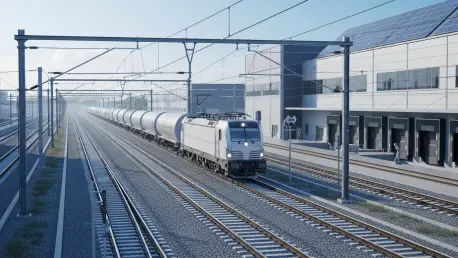

The Hungarian logistics landscape shifted dramatically over the past twelve months as the rail freight sector moved from a period of manageable fluctuation into a profound structural crisis. Data provided by HUNGRAIL indicates a concerning 11 percent decline in transport performance throughout 2025, signaling that the industry has collided with a cost wall that threatens the long-term stability of the entire national logistics network. This downturn is far from a seasonal dip; it represents a systemic failure where the expenses required to move goods have rapidly outpaced the income generated by those services. Consequently, the industry finds itself in a precarious state, one that endangers not only the financial health of individual operators but also the broader industrial competitiveness of Hungary as a central European hub. Without immediate and strategic intervention, the vital arteries of the nation’s trade could become clogged by inefficiency and insolvency, leaving the economy vulnerable to external shocks and rising logistical costs across all sectors.
Economic Instability and Financial Burdens
The Fiscal Divide: Analyzing the Cost-Revenue Disconnect
The fundamental driver of this financial distress remains the stark and widening divergence between the actual cost of operations and the rates that carriers can realistically charge their clients. During 2025, unit costs for rail operators surged by nearly 12 percent, a spike largely fueled by the volatile nature of energy prices and the rising burden of infrastructure usage fees. Furthermore, labor expenses have climbed as companies struggle to retain skilled personnel in a competitive market, adding another layer of financial strain to an already thinning margin. While these costs moved upward with relentless momentum, freight tariffs remained virtually stagnant, failing to account for the inflationary pressures that redefined the fiscal reality of the year. This situation forced many companies to absorb losses directly, eroding their capital reserves and limiting their ability to invest in the modernization of their aging fleets or the implementation of digital solutions that might have improved efficiency.
Corporate Realities: Internal Strategies and Tariff Challenges
Internal efforts to mitigate these compounding losses, such as aggressive administrative downsizing and significant reductions in workforce numbers, eventually proved insufficient to bridge the substantial financial gap. Industry experts have calculated that a general tariff increase of at least 10 percent would have been required simply to reach a break-even point against the backdrop of the year’s escalating expenses. However, the market remains highly price-sensitive, and many customers have made it clear that they would rather transition to other modes of transport than accept higher costs for rail services. This resistance creates a paralyzing environment for rail operators who are caught between the necessity of raising prices and the fear of losing their remaining cargo volume to more flexible road-based competitors. As revenue continued to decline in real terms, the prospect of long-term sustainability became increasingly dim for several mid-sized firms, leading to a climate of uncertainty that has persisted well into the current operational cycle.
Physical Infrastructure and Market Constraints
Network Degradation: The Toll of Reliability Issues
Beyond the purely financial obstacles, the physical deterioration of the Hungarian rail network has emerged as a primary barrier to operational reliability and service quality. Throughout 2025, extensive and often poorly coordinated construction projects across major transit corridors led to frequent traffic restrictions and unpredictable delays for freight trains. These disruptions made it nearly impossible for rail operators to meet the strict “just-in-time” delivery requirements of modern industrial clients, who rely on precise scheduling to keep their production lines moving efficiently. The resulting lack of predictability eroded the trust that manufacturers and distributors once placed in the rail system, prompting a reconsideration of logistics strategies across several key industries. When a train is delayed for several days due to track maintenance or a sudden rerouting, the financial penalties and production stalls often outweigh the environmental benefits or volume advantages that rail transport typically offers to large-scale shippers.
The Last-Mile Challenge: Idle Sidings and Road Dominance
The “last-mile” problem further complicates these systemic issues, as more than half of Hungary’s industrial rail sidings now sit idle and underutilized because of neglect or lack of investment. When a factory or warehouse cannot connect directly to the main rail lines, the logistical chain is broken, forcing companies to utilize trucks for the initial or final leg of a shipment’s journey. Frequently, once a cargo container is loaded onto a truck for that first short distance, the logistics manager decides it is simpler and more cost-effective to keep it on the road for the entire trip. This shift away from rail creates a destructive feedback loop where lower freight volumes lead to even higher unit costs for the rail network, making it even less competitive against the trucking industry. To reverse this trend, a massive overhaul of siding infrastructure would be necessary, but the capital required for such an undertaking is currently out of reach for many private operators who are struggling to survive the present fiscal constraints.
Strategic Frameworks for Industry Resilience
National Interest: The Role of Rail in Economic Security
Despite these mounting hurdles, maintaining a robust rail freight sector remains a non-negotiable requirement for Hungary’s export-driven economy, particularly for sectors like heavy manufacturing and energy. These industries require the high-capacity transport capabilities that only rail can provide at scale, and the loss of this capacity would have devastating effects on national economic security. Furthermore, shifting significant portions of rail cargo onto the highway system would drastically increase the nation’s carbon footprint and put unsustainable pressure on an already congested road network. The environmental goals established by the government depend heavily on rail being a viable option, as it remains one of the most carbon-efficient ways to move bulk goods over long distances across the continent. Protecting this sector is not just about saving specific companies; it is about ensuring that the entire logistics ecosystem remains diverse and capable of supporting large-scale industrial growth without overwhelming public infrastructure.
The VÁGTA Initiative: Policy Reforms for Long-Term Recovery
To address this decline, the HUNGRAIL association introduced the VÁGTA program as a comprehensive recovery strategy that called for urgent government intervention to level the playing field between rail and road. The program focused on essential reforms, including the restructuring of infrastructure fees and the correction of traction electricity prices, which had reached prohibitively high levels for many operators. Legislators were encouraged to provide direct financial support for specific transport categories, such as single-wagon loads, which are vital for smaller manufacturers but are currently the most expensive to operate. By addressing these regulatory anomalies, the initiative sought to stabilize the sector and secure the long-term viability of the Hungarian logistics network within the European market. These actions were designed to create a more equitable environment where rail could finally compete on its own merits. Ultimately, the industry moved toward a model of increased cooperation between the public and private sectors to ensure that rail freight regained its position as a cornerstone of national trade.