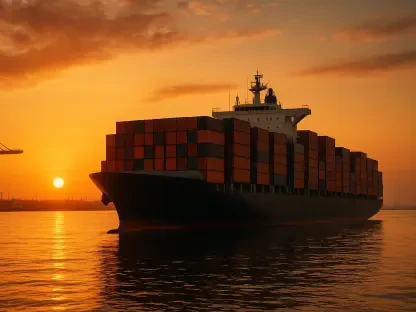

The sheer magnitude of modern international commerce relies heavily on a complex network of deep-sea vessels that traverse the globe, silently carrying the weight of civilization across every major ocean. In 2026, the global economy has reached a point where the local availability of consumer electronics, agricultural products, and energy is entirely dependent on the efficiency of these maritime routes. While land-based logistics provide the final mile of delivery, the ocean remains the primary stage for the movement of goods between continents, bridging the gap between manufacturing hubs and distant markets. This dominance is not a historical accident but a result of physics and economics combined. The ability of a single container ship to transport thousands of steel boxes at a fraction of the cost of any other method makes it the cornerstone of global stability. As trade volumes expand, the importance of these blue highways becomes increasingly evident to policymakers and industrial leaders alike.
Analyzing Global Transport Efficiency
The Statistical Lead: Maritime Trade Routes
When measuring transport work in ton-kilometers, maritime shipping accounts for a massive 86.6% of all international trade, representing a volume that dwarfs all other forms of transportation combined. This overwhelming dominance stems from the geophysical reality that land-based transport, such as rail and road, is naturally confined to continental borders and cannot offer the same reach. While trucks and trains are vital for regional distribution, they simply lack the capacity to manage the immense intercontinental flows required for contemporary global consumption patterns. Consequently, the maritime sector currently handles more than five times the volume of land-based international trade, reinforcing its position as the ultimate facilitator of the global market. Furthermore, the development of mega-ports and automated terminals has allowed for a streamlined flow of goods that land infrastructure cannot replicate at the same scale. The sheer size of the vessels allows for an efficiency that remains unmatched.
Logical Comparison: Sea and Air Logistics
The disparity between sea and air transport is even more striking when one considers that aviation accounts for a mere 0.2% of global trade by volume, despite its speed and perceived modern necessity. Although air freight is indispensable for high-value electronics and perishable goods where speed is the primary priority, it cannot handle the sheer mass of global commodities. For island nations like Japan, this reliance on the ocean is absolute, with 99.5% of all trade tonnage moving through maritime ports rather than through airport cargo terminals. This data highlights that shipping is the only viable method for moving the vast quantities of goods that modern societies require to function on a daily basis. The cost-per-ton ratio for air transport remains prohibitively high for most materials, making it a niche solution rather than a general one. While innovations in drone delivery are emerging, they do not yet threaten the supremacy of massive cargo carriers that move millions of tons of freight.
Resource Distribution and Fleet Power
Commodity Focus: Prioritizing Energy and Raw Materials
A closer look at seaborne cargo reveals that the industry is primarily a carrier of the world’s most essential resources rather than just the finished goods seen in local retail stores. While public attention often centers on the colorful metal boxes found on container ships, these consumer goods represent only about 20% of the total maritime volume moving across the water today. Instead, nearly 80% of the cargo consists of bulk and liquid commodities, such as iron ore, coal, grain, and crude oil, which serve as the lifeblood of industrial production and power generation. These materials form the industrial and energy foundations of modern life, proving that the primary mission of the global fleet is to transport the fundamental building blocks of the economy. Large bulk carriers are designed specifically to handle these raw materials, often operating on fixed routes between mining regions and industrial centers. This segment of the industry is highly specialized, ensuring that supply chains for steel and energy remain uninterrupted.
Measuring Capacity: Deadweight Tonnage and Infrastructure
The physical strength of the shipping industry is measured by Deadweight Tonnage, which tracks the actual weight of the cargo a vessel can carry safely across deep waters. In 2026, the global fleet possesses a staggering capacity of approximately 2.27 billion DWT, with bulk carriers and tankers making up the largest share of this critical infrastructure. This distribution of assets ensures that the world remains supplied with the heavy materials necessary for infrastructure development and industrial expansion. The sheer scale of these vessels, particularly the Ultra Large Crude Carriers and massive ore ships, provides the economies of scale required to keep global shipping prices competitive. This physical infrastructure represents one of the most significant capital investments in the modern world, reflecting the long-term commitment of nations to maintain sea-based trade. Ultimately, the stability of the global economy is intrinsically linked to this maritime network and its capacity, making it the most cost-effective way to connect resources.
Future Considerations: Decarbonization and Digital Integration
The industry recognized that the path forward required a transition toward more sustainable operations and increased digital oversight. To maintain its dominance, the sector looked toward the implementation of zero-emission fuels and the integration of artificial intelligence to optimize route planning and reduce fuel consumption. These next steps included retrofitting existing vessels with wind-assisted propulsion systems and expanding smart port technologies to minimize idle times during loading and unloading. Leaders in the field focused on these technological advancements to ensure that maritime transport remained the most resilient and environmentally viable option for the evolving global market. By prioritizing carbon-neutral shipping lanes and autonomous navigation, stakeholders prepared for a future where efficiency and responsibility were equally valued. These strategic investments served to solidify the ocean as the primary gateway for international commerce, ensuring that maritime trade continued in a cleaner era.