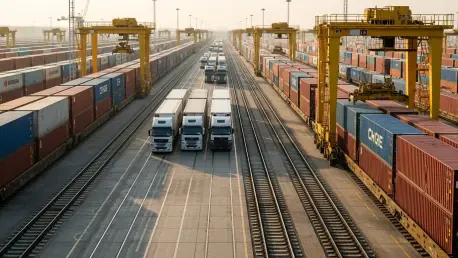

The American landscape of logistics is currently undergoing a seismic transformation as rising operational costs force shippers to reconsider traditional highway-based transportation models in favor of rail-based solutions. This transition is not merely a reactionary measure to temporary market fluctuations but rather a calculated pivot driven by a convergence of geopolitical instability and energy price volatility that has plagued the first quarter of 2026. Shippers who previously relied on the flexibility of long-haul trucking are now facing a stark reality where diesel prices and driver shortages are eroding profit margins at an unsustainable rate. Consequently, major Class I railroads have reported a surge in demand, as intermodal transport becomes the preferred choice for moving heavy freight across the continent. The strategic shift is evident in the performance of industry giants like CSX, which reported a total volume of 1.56 million units in the first quarter, representing a significant year-over-year increase while its intermodal segment grew by six percent.
Geopolitical Instability and the Surge in Diesel Prices
A primary driver behind this sudden migration from road to rail is the escalating geopolitical tension in the Middle East, specifically the ongoing conflict involving Iran, which has sent shockwaves through global energy markets. As crude oil prices fluctuate wildly, the impact on diesel fuel has been disproportionately severe for the trucking industry, where fuel typically accounts for one of the largest operating expenses. Shippers are finding that the fuel efficiency of locomotives, which can move a ton of freight nearly five hundred miles on a single gallon of fuel, provides a necessary buffer against these rising costs. This economic reality has created significant tailwinds for the rail sector as companies look to lock in more predictable shipping rates. Union Pacific has noted that as long as on-highway diesel prices remain at these elevated levels, the incentive for shippers to convert from truck to rail will persist, leading to a sustained volume increase throughout the remainder of the year.
The trucking market is simultaneously grappling with a tightening of capacity as smaller carriers are forced out of the market by rising insurance premiums and equipment costs. Norfolk Southern has observed that dry van rates are beginning to climb as capacity rightsizes itself, making the cost-benefit analysis tilt even further in favor of rail transport. Unlike the trucking sector, which is highly fragmented and vulnerable to localized economic shocks, the rail industry offers a consolidated and more stable infrastructure that can handle massive volumes with greater consistency. Shippers are increasingly viewing rail not just as a cheaper alternative, but as a more reliable backbone for their supply chains during periods of extreme market volatility. This shift is leading to a fundamental restructuring of logistics networks, where the long-haul portion of a journey is handled by rail, leaving trucks to manage only the final mile. This hybrid approach allows for the flexibility of road transport while leveraging the efficiency of the rail network.
Strategic Intermodal Connectivity and Network Expansion
To capitalize on this momentum, railroads are aggressively expanding their service offerings to compete directly with trucking routes that were previously considered untouchable. A prime example is the Southeast Mexico Express, a collaborative effort between CSX and CPKC designed to streamline freight movement between the Southeastern United States and the rapidly growing industrial hubs in Mexico. By offering a seamless rail connection that bypasses the congestion and delays often associated with border crossings for trucks, this service provides a compelling value proposition for automotive and manufacturing shippers. This expansion into the Mexican market highlights the strategic foresight of rail executives who are looking to create permanent shifts in shipping behavior. These new routes are being supported by significant investments in intermodal terminals and advanced tracking technologies that provide shippers with the level of visibility they once expected only from premium trucking services. As these networks mature, the competitive advantage of rail is expected to grow.
While the expansion into new territories is vital, the internal dynamics of the rail industry are also shifting as major players position themselves for long-term growth. The proposed merger between Union Pacific and Norfolk Southern has introduced a new layer of complexity to the competitive landscape, prompting other carriers to refine their operational strategies. This consolidation is expected to create a more efficient and integrated rail network, though it also raises questions about market competition and service pricing in the long run. In response, companies are focusing on precision scheduled railroading to improve dwell times and ensure that shipments move through the system with maximum velocity. These operational improvements are essential for retaining the shippers who have recently switched from trucks, as they have high expectations for on-time delivery and service reliability. By demonstrating that rail can match the speed and efficiency of road transport for specific corridors, railroads are successfully dismantling old stereotypes.
Evolving Commodity Landscapes and Sustainable Logistics Frameworks
Beyond the typical consumer goods moved in intermodal containers, the energy crisis has also revitalized the transportation of bulk commodities like coal. Higher natural gas prices have led many utility companies to return to coal-fired power generation as a more cost-effective way to meet energy demands, providing a secondary boost to rail volumes. Norfolk Southern, which maintains a strong coal franchise, has been a primary beneficiary of this trend, using the diversified revenue stream to offset potential weaknesses in other segments. This resurgence in coal transport illustrates the cyclical nature of the energy market and the rail industry’s unique ability to pivot between different types of freight depending on global economic conditions. Furthermore, the increased demand for bulk commodities is encouraging railroads to invest in specialized rolling stock and infrastructure that can handle heavier loads more efficiently. This flexibility allows the rail sector to remain a critical component of the national energy strategy while continuing to provide the intermodal solutions required.
Ultimately, the strategic pivot toward rail was defined by a collective realization that the previous reliance on long-haul trucking was no longer sustainable in a high-cost energy environment. Shippers who successfully navigated this transition prioritized the integration of intermodal hubs into their existing distribution networks and leveraged data analytics to optimize their modal choices. The railroads, for their part, recognized the need for permanent infrastructure enhancements and more aggressive service expansion to ensure that the gains made during this period of volatility were not lost once diesel prices stabilized. Industry leaders recommended that logistics managers conduct a thorough audit of their supply chain costs and consider long-term rail contracts to mitigate future risk. By embracing the efficiency of the rail network, the American logistics sector began to build a more resilient framework for the movement of goods across the country. These actions moved the industry toward a future where the synergy between road and rail was no longer a temporary fix but a foundational element.