
Rohit Laila has spent decades navigating the complex veins of the global logistics network, witnessing firsthand how the shift toward digital immediacy has transformed consumer expectations. With a background that spans the breadth of supply chain management and a deep-seated passion for technological disruption, Laila offers a unique perspective on the evolving landscape of mail and parcel delivery. Today, we delve into the ambitious efforts of the U.S. Postal Service to overhaul its visibility infrastructure, moving beyond traditional tracking to a future where data eliminates the uncertainty of “lost” mail. This conversation explores the strategic pivot toward total delivery reliability, the integration of cutting-edge sensing technologies, and the financial hurdles that currently stand in the way of a fully transparent shipping ecosystem.
The discussion focuses on the federal agency’s mission to achieve absolute visibility across its entire network to mitigate delays. We examine how specific technological investments, such as Bluetooth Low Energy and bidirectional cameras, are being deployed to identify and resolve internal bottlenecks. Furthermore, the dialogue addresses the disconnect in early-stage tracking when third parties are involved and the significant economic pressures, including pension obligations and a steep decline in volume, that impact these innovation efforts.
Postmaster General David Steiner recently highlighted the emotional and financial toll of delayed mail, emphasizing a goal of 100% delivery reliability rather than accepting a 5% failure rate. From your perspective in the logistics industry, how does this shift in philosophy from “good enough” to “total visibility” change the operational DNA of a massive agency like the USPS?
It is a seismic shift in operational mindset because it moves the focus from aggregate statistics to individual human experiences. When a wedding invitation arrives late or a utility bill hits the mailbox after its due date, the system has failed the customer regardless of what the overall percentages say. By aiming for 100% reliability, the agency is acknowledging that the 5% of mail they “don’t care” about often represents the most critical moments in a person’s life. Operationally, this means managers are no longer just looking at spreadsheets; they are now being alerted in near real-time when parcels are lingering too long at a specific plant. It creates an environment of accountability where every package is treated as a priority, ensuring that the heavy scent of wedding flowers or the stress of a late fee isn’t ruined by a logistical blind spot.
The Postal Service is moving away from “rocket science” and toward proven technologies like Bluetooth Low Energy and bidirectional cameras to track parcel movements. How do these specific tools help identify the invisible bottlenecks that have historically plagued large distribution facilities?
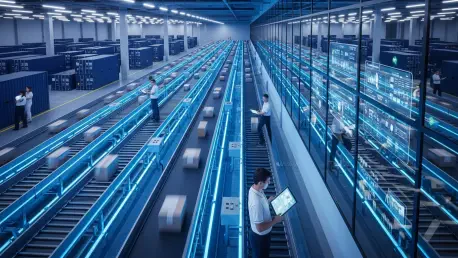
These technologies act like a nervous system for a warehouse, providing a constant stream of data that was previously obscured. By placing Bluetooth beacon devices in test packages and using Bluetooth Low Energy to see inside shipping containers, managers can pinpoint exactly where high-value shipments are stalling. Imagine a facility where bidirectional cameras capture every movement of a container; it removes the guesswork and provides a visual record of where efficiency breaks down. This isn’t just about scanning a barcode at the door; it’s about creating a “near real-time view” that alerts staff before a minor delay turns into a major backlog. These tools allow the agency to compete with titans like FedEx and UPS by utilizing existing innovation to sharpen their operational edge.
One of the significant hurdles identified by industry consultants like Samuel Moore is the lack of visibility when third parties or customers handle the initial stages of shipping. How can the agency bridge this gap in “end-to-end” visibility when they don’t necessarily “own” the tracking experience from the very first moment of drop-off?
This is the “black hole” of the shipping journey where the customer’s experience often turns negative because the hand-off isn’t seamless. When a customer bypasses the standard pickup or a third party manages the initial haul, the chain of custody is broken, leaving the sender in the dark. To fix this, there must be a rigorous reinforcement of scan compliance through intensive employee training to ensure every critical tracking event is captured the moment it touches the network. It’s about creating a culture where the first scan is just as vital as the final delivery, closing those early-stage gaps that currently frustrate users. By investing in modern information systems, the agency can better integrate these disparate data points, turning a fragmented process into a unified, intelligent postal network.
Despite these ambitions, the Postal Service faces a harsh reality of underinvestment due to financial challenges like declining mail volume and pension obligations. How does a logistics leader balance the urgent need for technological innovation with the heavy weight of these systemic economic pressures?
It is a delicate and often painful balancing act because you are trying to build a futuristic infrastructure while tethered to older, rigid mandates. The sharp decline in mail volume since 2006 has created a massive cash crunch that limits the ability to buy the very sensors and cameras needed to stay competitive. When you add regulatory pricing restrictions and billions in pension payment obligations, the room for error becomes razor-thin. However, the cost of not innovating is even higher; without these visibility tools, the agency risks losing even more ground to private carriers who already offer these features. Leaders have to prioritize investments that offer the highest ROI in terms of efficiency, recognizing that transparency is no longer a luxury but a requirement for survival in the modern market.
What is your forecast for the future of the U.S. Postal Service’s role in the global supply chain?
My forecast is that the Postal Service will eventually transform into a data-driven powerhouse, but only if they can successfully navigate the current transition toward full transparency. Within the next few years, the integration of “near real-time” tracking will move from a pilot phase into the standard operating procedure for every shipment. We will likely see a significant reduction in those “lost” 5% cases as Bluetooth and camera technologies become ubiquitous across all major processing plants. If they can solve the financial puzzle, the USPS will not just be a carrier of paper and parcels, but a vital, high-tech hub of the American economy that rivals the world’s most advanced logistics firms. The road is difficult, but the shift toward 100% visibility is the only path forward to regain public trust and operational excellence.