
The 37 km journey from riverine jetties to deep-water transshipment points represents the most vulnerable link in the Guinea-to-China supply route. In a global market where mineral abundance is often overshadowed by the practicalities of transport, Guinea’s position as the premier bauxite supplier is a testament to its evolving logistical backbone. While the geological wealth of the Boké region is immense, the industry’s sustained growth into 2026 has been dictated by the movement of ore from inland extraction sites to the hulls of ocean-going vessels. In the preceding year of 2025, the nation exported an unprecedented 182.8 million metric tons, marking a 25 percent increase that solidified its dominance. However, this success is heavily weighted toward a single destination, with approximately 127 million metric tons flowing into the Chinese industrial machine during the first ten months of that year alone. This concentration has turned the Guinean logistics corridor into a vital artery for global aluminum production, where any minor friction at the riverbanks can lead to massive ripples in international alumina pricing. The relationship is symbiotic: China requires high-grade Guinean ore to fuel its smelting capacity, while Guinea relies on the continuous throughput of its ports to maintain national economic stability. Consequently, the focus has shifted from discovering new deposits to refining the “pit-to-port” efficiency that keeps the wheels of this massive trade moving without interruption.
Technical Realities: Analyzing the Transshipment Process
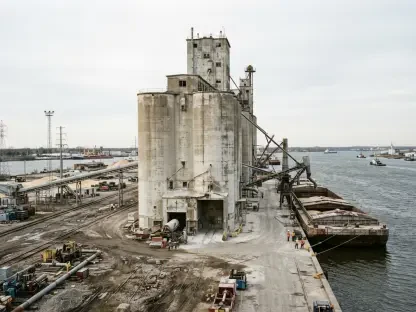
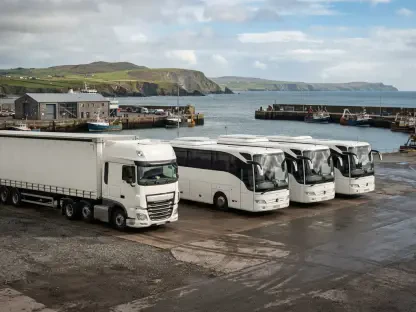
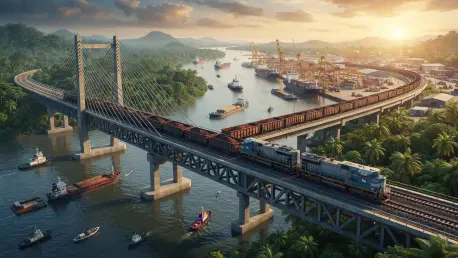
The movement of bauxite from the mines of the Boké region to the industrial hubs of China is a complex, multi-modal process. Because the Guinea-China route relies on massive Capesize vessels, which are ships too large to navigate the shallow, silt-heavy rivers of Guinea, the industry utilizes a specific transshipment model. The process begins with open-pit mining and primary crushing near the site, followed by haulage via specialized heavy-haul rail or high-capacity truck fleets. Once the ore reaches terminal management facilities at riverine or coastal ports like Kamsar, Dapilon, or Katougouma, it is stockpiled before being moved via jetties onto shallow-draft barges. These barges, typically carrying 8,000 to 10,000 metric tons, then travel nearly 40 kilometers to deep-water berths where massive floating cranes transfer the material into Capesize ships that can carry up to 220,000 metric tons. Every additional barge movement and crane lift introduces a potential point of failure where inclement weather or mechanical failure can halt the entire export flow, making the operational uptime of these midstream assets more valuable than the mines themselves.
The mathematical inefficiency inherent in this transshipment model is significant and presents a constant challenge for logistics managers. Filling a single 180,000-metric ton vessel requires approximately 18 barge trips, but if a company is limited to smaller 8,000-metric ton barges, that number rises to 27 individual round trips. Each trip is subject to the variables of Atlantic swells, tidal shifts, and seasonal rains that can turn river navigation into a hazardous undertaking. Furthermore, the reliance on floating cranes means that offshore loading can be suspended during periods of high wind, leading to costly delays for vessel owners. In the current 2026 market, the ability to minimize these “pinch points” has become the primary competitive advantage for mining consortiums. Companies that have invested in larger barge fleets or high-capacity transshipment platforms have seen a marked difference in their ability to meet offtake agreements compared to smaller players who remain at the mercy of shared terminal capacity. This logistical bottleneck remains the single greatest physical constraint on Guinea’s ability to scale its exports further.
Infrastructure Evolution: The Shift Toward Shared Corridors
To address these capacity limits, the Guinean mining sector is undergoing a strategic shift toward shared infrastructure and multi-modal redundancy. A primary example is the Nimba Mining Company, which recently secured access to a 56-kilometer road leading to the Dapilon port facilities. This road is not a proprietary asset but is shared by a consortium of major players including SMB, CDM, and Ashapura, illustrating a new era of cooperation in West African logistics. For many operators, this road represents a necessary safeguard against rail congestion or technical failures on primary transport lines. While the industry prefers the efficiency of 12,900-metric ton trains that can unload in under three hours, the ability to divert ore to different ports by road provides a layer of operational security that was previously absent. However, this reliance on road transport introduces its own set of variables, such as higher fuel costs, constant maintenance requirements for heavy-haul routes, and complex dust management protocols to mitigate environmental impacts on local communities.
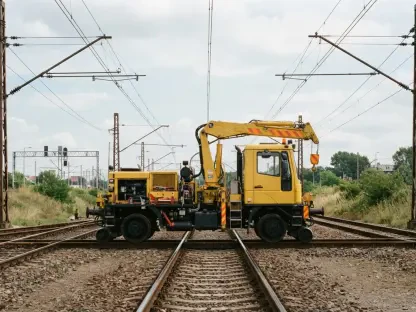
Despite the flexibility offered by road networks, the industry consensus remains that rail is the superior long-term solution for high-volume bauxite exports. The contrast between companies with dedicated rail access and those relying on shared road-and-rail corridors highlights a diverging landscape of operational risk across the Boké concessions. For instance, the SMB-Winning consortium has leveraged its dedicated railway since the early 2020s to link its deposits directly to the coast, providing a level of predictability that road haulage cannot match. As we progress through 2026, the divide in profit margins between these two models is becoming more pronounced. Producers with proprietary rail lines are better insulated from the rising costs of diesel and the logistical headaches of managing thousands of truck movements per day. Meanwhile, those dependent on shared infrastructure must navigate complex scheduling agreements and government-mandated allocation rules. This evolution toward integrated corridors is not just about moving more ore; it is about creating a predictable environment that can satisfy the high-volume requirements of the Chinese alumina industry.
National Interests: The Grand Corridor and Shipping Mandates
The most ambitious development currently being discussed by the Guinean government and Chinese state-owned enterprises is the “Grand Corridor of Guinea.” This project, envisioned as a three-billion-dollar investment, involves a 160-kilometer railway linking the Santou region to a new high-capacity terminal at Cape Verga. The projected capacity for this corridor is a staggering 77 million metric tons per year, which would significantly bypass the limitations of current river-based terminals. By allowing larger ships to dock directly at more efficient berths, the project aims to reduce the reliance on the complex barge-to-ship transshipment model. However, as of mid-2026, the project remains in the negotiation phase. While a multisector government team is actively working on the terms, the lack of a final investment decision or a clear financing structure suggests that this “Grand Corridor” is a long-term goal. The successful realization of this project would fundamentally change Guinea’s export profile, turning it from a river-dependent mining province into a global maritime power in the dry bulk sector.
Parallel to these physical infrastructure projects, Guinea is asserting greater control over the economic value of its exports through shipping sovereignty and resource nationalism. In 2025, the government established Guitram, a national shipping company, and introduced policies requiring that half of all bauxite exports be carried under the Guinean flag or through equivalent national arrangements. This initiative, championed by the Ministry of Mines, seeks to capture a larger share of the maritime value chain that has historically been dominated by international shipping firms. While the intent is to boost national revenue, the practical implementation of this 50 percent rule remains a topic of intense debate among stakeholders. There is a persistent lack of clarity regarding how this mandate will affect long-term offtake contracts and whether the national fleet has the capacity to manage such a massive volume of cargo. The ability of the state mining company to form effective partnerships with global giants like COSCO Shipping Bulk will be critical in determining whether Guinea can successfully transition from being a raw material provider to a full participant in the global logistics industry.
Pricing Dynamics: Logistical Influence on Global Commodities
The logistical hurdles inherent in the West African mining landscape directly impact the delivered price of bauxite in Chinese ports. Because bauxite is a high-volume, low-value commodity, the costs associated with shipping and logistics often account for a significant portion of the total “Cost, Insurance, and Freight” price. When rail loops become congested or offshore loading is delayed by seasonal weather, the cost of deadweight tonnage and demurrage fees can quickly erode the thin profit margins of mining companies. This explains why market analysts at major firms place more weight on port stockpile data and rail throughput updates than on the theoretical size of ore reserves. In the current economic environment, the volume of ore pulled out of the ground is essentially a secondary metric; the only number that truly dictates revenue is the volume that successfully clears the final transshipment point. This reality has forced mining executives to focus their capital expenditure on logistics technology and terminal efficiency rather than just expanding the footprint of their open-pit mines.
The sensitivity of global aluminum markets to Guinean logistics cannot be overstated, as any disruption in the Boké region immediately affects supply chains thousands of miles away. Because Guinea provides nearly three-quarters of China’s imported bauxite, a single failure in the transshipment chain can lead to industrial instability for Chinese refineries. This has led to a situation where the “logistics premium” is a permanent fixture in bauxite pricing models. As more companies compete for limited space on shared rail lines and river jetties, the cost of access is expected to rise, further pressuring the bottom line of smaller producers. Moving forward through 2026, the winners in this sector will be the operators who can demonstrate a resilient, weather-resistant logistics chain. The market has matured to a point where geological certainty is assumed, and the real value lies in the reliability of the transport network. For the Guinean economy, the challenge remains to maintain this flow while balancing the demands of national shipping policies and the need for massive, continued investment from international partners.
Strategic Perspectives: Establishing Future Benchmarks for Success
The analysis of the Guinea-China trade route demonstrated that the success of the bauxite sector was contingent upon its ability to streamline complex transshipment mechanics. The industry identified that while the extraction of high-grade ore was straightforward, the “last mile” of the logistics chain remained the primary constraint on national export growth. The structural fragility of the barge-to-ship model was explored in detail, revealing that operational maturity was achieved only by those who invested in strategic redundancies like shared road networks and high-capacity floating terminals. The study concluded that the symbiotic relationship between Guinea and China became the most critical artery in the global aluminum industry, making it highly sensitive to any shifts in Guinean infrastructure policy. Consequently, the focus of the sector transitioned from a purely geological perspective to one centered on the efficiency of the multi-modal transport framework that sustained the entire trade ecosystem.
The investigation into Guinea’s logistical role highlighted that actionable progress was measured by the delivery of tangible infrastructure milestones rather than speculative announcements. Stakeholders recognized that the next steps for industrial stability required the publication of formal road allocation rules for the Dapilon corridor and the securing of firm financing for the Cape Verga rail project. The implementation of national shipping mandates through Guitram was identified as a significant move toward economic sovereignty, although its success was tied to the practical fleet capacity of the national carrier. The report summarized that the Guinean bauxite trade remained a high-volume operation defined by its narrowest bottlenecks, and the maturation of the sector was ultimately judged by how effectively it addressed these constraints. Moving forward, the industry prioritized the integration of rail and deep-water docking as the only viable path to maintaining Guinea’s status as the world’s leading bauxite exporter.