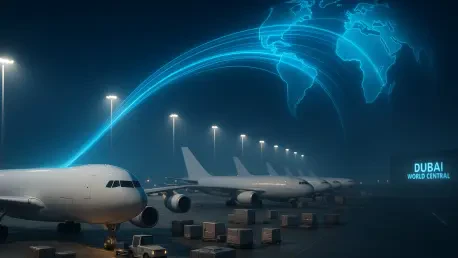

Rohit Laila brings a wealth of knowledge to the table, having spent decades navigating the intricate web of global supply chains and logistics technology. As an expert who has watched the industry evolve from traditional shipping to high-speed air cargo, his insights provide a unique perspective on the shifting trade winds between the Middle East and Eurasia. This discussion focuses on the recent strategic expansion into Central Asia, a move that signals a significant change in how landlocked regions are integrated into global commerce.
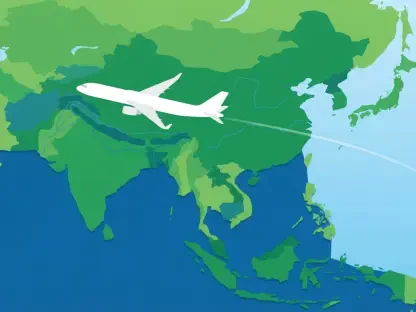
The conversation explores the opening of new air corridors between Dubai and Bishkek, emphasizing the role of specialized cargo fleets in underserved markets. We delve into the logistics of the Silk Road’s modern revival, the technical advantages of operating specific freighter models, and the ambitious growth targets set for the coming years.
How does the addition of Kyrgyzstan to the network change the logistics landscape for landlocked Central Asian nations?
Kyrgyzstan is a heartbeat in the historic Silk Road corridor, and its geography has always presented a unique challenge for traditional logistics. By launching this charter service to Manas International Airport, the airline is effectively creating a high-speed bridge for a region that has long struggled with its landlocked status. This isn’t just about a single flight; it’s about providing freight forwarders with a direct link to the Gulf that bypasses slower, ground-based alternatives. Bishkek is now a pivotal gateway, allowing goods to flow into the heart of Central Asia with a level of reliability we haven’t seen before.
What is the strategic reasoning behind targeting markets that larger, more established carriers often overlook?
The core philosophy here is about building capacity ahead of the demand curve rather than just following existing traffic patterns. Many carriers wait for a market to be fully proven before they commit resources, but there is immense value in serving underserved routes like Bishkek and Astana. By moving in early, the carrier establishes itself as a foundational partner for local shippers who are desperate for direct air cargo capacity. It is a bold move that proves trade lanes should be developed where the need is greatest, even if those destinations aren’t the easiest places to fly.
With the fleet operating out of Dubai World Central, how do the specific aircraft chosen for these routes support such a wide-reaching network?
The choice of the 737-800 Boeing Converted Freighter is a masterstroke for this kind of regional expansion across 58 destinations. These planes offer a 20-tonne cargo capacity, which provides the perfect balance of volume and efficiency for the middle-mile routes connecting Asia, Africa, and Europe. Operating from a hub like Dubai World Central allows for incredible agility, as these seven freighters can be deployed quickly to meet fluctuating trade demands. These nimble aircraft are the workhorses making it possible to manage a footprint that spans 36 different countries.
Given the rapid expansion into Europe and Central Asia recently, how realistic is the goal of reaching 50 cities and 20 aircraft by the end of next year?
The momentum we are seeing, especially with the recent addition of Bucharest in Romania, suggests that the growth trajectory is very much on course. Reaching a 20-aircraft fleet by the end of 2027 will require a disciplined scaling of operations, but the infrastructure at the Dubai hub is designed for this kind of volume. Expanding across three continents is a complex puzzle, yet the airline has already demonstrated its ability to hit milestones ahead of schedule. The target of 50 major city hubs feels like a natural evolution of their current success across 36 countries.
What is your forecast for the Central Asian cargo market?
I anticipate that the trade volume between the Gulf and Central Asia will see a significant increase as we approach 2027. As infrastructure at airports like Manas International continues to improve, Kyrgyzstan will solidify its role as a central node for the entire region’s supply chain. We are likely to see a shift where high-value technology and consumer goods become the primary cargo, replacing slower traditional trade methods. The foresight to establish these links now will define who leads the logistics industry in the coming years.