
The global air cargo landscape is currently navigating a period of unprecedented volatility, where geopolitical shifts and capacity constraints are forcing a complete reimagining of how heavy and outsized goods move across the world. In this interview, we sit down with Rohit Laila, a veteran of the logistics industry with decades of experience steering complex supply chains through innovation and technology. He provides a masterclass on the current state of the heavylift segment, detailing the ripple effects of Middle Eastern instability on global trade lanes and the creative maneuvers required to keep industrial projects on track. Our conversation touches upon the tightening of aircraft availability—specifically the loss of key Russian-owned freighters—and how the role of the freight forwarder is evolving from a mere service provider into a strategic engineering advisor. We also explore the fascinating logistical “MacGyverism” involved in fitting massive energy equipment into narrowbody planes and the stark financial realities of operating in high-risk zones.
The Middle East has long been a central hub for global aviation, but recent geopolitical turmoil has sent shockwaves through the industry. How is this instability specifically reshaping the heavylift and air charter market right now?
The current crisis in the Middle East has effectively knocked out a significant amount of capacity, creating a vacuum that we are feeling across every major trade lane. When you lose access to key hubs like Dubai or Doha, or when flights through the region are suspended, it creates a massive spillover effect that hits the Asia-to-Europe routes particularly hard. We are seeing a market where charter rates have surged to about 50% above pre-crisis levels on average, and on the most affected lanes, those costs have actually doubled. It is a high-stakes environment where shippers are being forced to choose between the high cost of air charter and the risk of indefinite delays in their industrial projects. Beyond the immediate logistical hurdles, the psychological impact on the market is palpable; some aircraft operators are becoming extremely risk-averse, monitoring the situation on a daily basis and hesitating to commit their assets to certain corridors.
When we look at the financial side of these disruptions, particularly the surge in insurance premiums and charter rates, how are clients reacting to these mounting costs for urgent shipments?
For many of our clients in the energy and defense sectors, the cargo is so critical that the price, while staggering, is not a show-stopper. We are seeing insurance premiums for flights into perceived high-risk countries ranging anywhere from $35,000 to $75,000 per flight, which is an incredible sum to add to an already expensive charter. Despite these “premium prices,” the demand remains steady because the cost of a halted infrastructure project or a grounded fleet often far exceeds the price of the airfare. Shippers have become much more cost-conscious and are scrutinizing their schedules more than ever, yet when the timeline is tight, they are still reaching for the charter solution. We do our best to offer reasonable solutions, but in a market where fuel costs are rising and capacity is shrinking, those solutions come with a heavy price tag that clients are increasingly willing to pay to maintain their operational continuity.
With seafreight facing its own set of challenges and manufacturers’ schedules in disarray, what kind of specialized cargo is currently dominating the demand for air charter solutions?
We are seeing a very focused demand for heavylift and outsize cargo, specifically coming from the aerospace, defense, and energy sectors, including both traditional oil and gas and the burgeoning renewables market. Infrastructure and industrial projects are also driving record volumes, often involving shipments that are not just heavy, but incredibly complex and time-critical. For instance, we recently saw a case involving a 60-tonne hydraulic spooler destined for an offshore energy project in Rio de Janeiro, which required a massive amount of coordination to move from Scotland. These movements often involve delivery into environments where the local infrastructure is limited, requiring a tailored combination of air charter and time-critical ground solutions. The sheer scale of these projects means that even a minor delay in a single component can have a multi-million-dollar impact, which is why the reliance on specialist operators has never been higher.
You mentioned that some operators are reluctant to fly into certain regions, forcing forwarders to get creative with multimodal solutions. Could you describe some of the tactical maneuvers you are using to bypass these geopolitical bottlenecks?
Creative problem-solving has become our daily bread and butter, such as flying equipment into Saudi Arabia—which has remained less affected by certain regional attacks—and then trucking the cargo to its final destination. Our philosophy is simple: if we can fly the cargo, we can also truck it, though even that is getting difficult as trucking capacity in the Middle East is also in short supply for heavylift movements. These operations require deep, long-established relationships with local suppliers to ensure that when the plane touches down, the specialized trailers are actually there and ready to go. We are also seeing a much higher reliance on detailed permit coordination and airspace management to navigate the tightening web of restrictions. It is a constant game of chess where we have to anticipate the next move of both political actors and market competitors to keep the cargo moving.
The heavylift fleet itself seems to be under immense pressure, especially with the removal of half the world’s AN-124 fleet and the end of Boeing 747 production. How are you adapting to this shortage of “workhorses” in the sky?
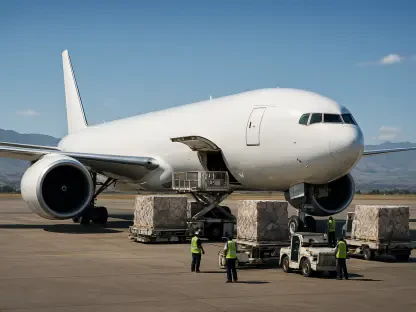
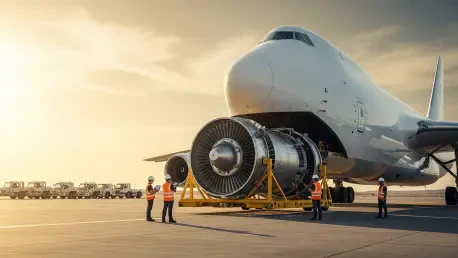
The core heavylift fleet is extremely limited right now, particularly at the AN-124 level, as Russian-owned aircraft have been effectively removed from much of the global market. With military and government demand absorbing a huge chunk of the remaining capacity, we’ve had to find ways to “tease” large pieces of cargo onto aircraft that weren’t necessarily built for them, like the Boeing 777 or even the narrowbody Boeing 737. We actually managed to move an 8-meter piece of equipment on a narrowbody flight by meticulously analyzing its dimensions and shape to see how it could be fit through the hold. It is a process of careful engineering, looking at what can be dismantled or reoriented to make use of the secondary support offered by 747Fs and A330Fs. This scarcity is a major driver of the high pricing we are seeing, as the flexibility of the global fleet has been significantly compromised.
It sounds like the relationship between the forwarder and the shipper is changing. How has the shift from being an “executor” to an “advisor” affected the way projects are planned?
We are now being brought into the loop much earlier, often during the design phase of the equipment itself, which is a significant and gratifying shift in our role. Clients are now asking us, “If we build this reactor vessel to these dimensions, can you find a plane to carry it?” This allow us to act as strategic advisors, suggesting modifications—like removing a gearbox to reduce height—before the cargo even leaves the factory. A great example was a 60-tonne spooler that was originally too high for the aircraft; by identifying this early and packing the gearbox separately, we reduced the height and ensured it fit. This level of collaboration prevents “show-stoppers” at the airport and allows us to execute complex, multi-leg charters with much higher precision and fewer last-minute surprises.
Looking at the long-term horizon, there is a mix of concern about business sentiment and hope for a post-conflict “rebuilding” phase. What is your forecast for the air charter and heavylift market over the next few years?
My forecast is that we will see a bifurcated market: in the short term, continued instability will keep capacity tight and reliance on charters high, but in the long term, the eventual need to rebuild infrastructure in conflict-stricken areas will provide a massive boost to the heavylift sector. We will see a surge in demand for moving essential components to repair power grids, mining operations, and transport networks, which could keep the market buoyant even if general e-commerce traffic fluctuates. I also expect to see a continued evolution in aircraft technology; while I am skeptical about airships as a current workable prototype, the industry’s need for a new generation of bespoke heavylift aircraft is becoming undeniable. Ultimately, the forwarders who invest in technical expertise and maintain their own charter desks will be the ones who thrive, as the complexity of global logistics shows no signs of slowing down.