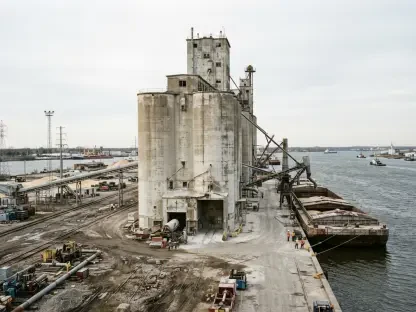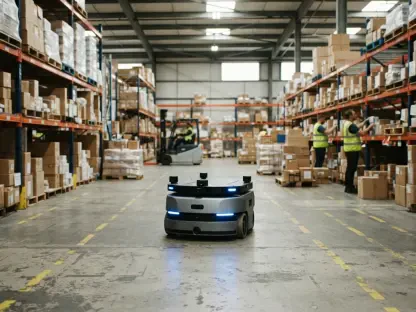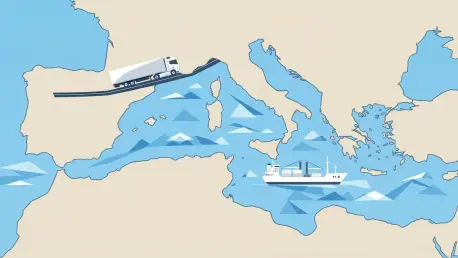

Greece has officially designated logistics as one of its five most critical economic sectors to drive higher export volumes and job creation. This strategic move follows a remarkable ascent in the World Bank’s international logistics rankings, where the nation recently secured 19th place, representing a substantial leap from its 42nd position held in 2018. This accomplishment is not merely a result of geographic luck but stems from a comprehensive national blueprint that integrates modernized infrastructure with sophisticated digital tools and a streamlined legal framework. By prioritizing the supply chain as a core pillar of growth, the government has successfully transitioned from reactive management to a proactive, investment-heavy model. The current objective centers on transforming the entire peninsula into a seamless gateway for goods entering the European market from the east, reinforcing a stable economic foundation for the next decade of commercial trade.
Integrating Infrastructure for Seamless Connectivity
The vision for a unified national logistics network focuses on creating an integrated system where ports, railways, highways, and freight centers operate as a synchronized machine rather than isolated projects. This approach acknowledges that the true value of a logistics hub lies in the speed and reliability of transshipment between different modes of transport. To achieve this, the state has prioritized the synchronization of major arterial roads with secondary rail links, ensuring that cargo never remains stagnant for longer than necessary. This structural cohesion is the backbone of the national strategy, ensuring that the geographic advantage of being at the crossroads of three continents is finally translated into consistent economic performance. By bridging the gap between deep-sea shipping and inland distribution, the government has created a template for multi-modal efficiency that rivals established northern European hubs while offering more direct routes.
Developing Strategic Hubs in the Attica Region
The industrial heartland of West Attica is currently undergoing a radical metamorphosis, moving away from fragmented storage units toward a highly synchronized logistics ecosystem. Central to this evolution is the implementation of the Thriasio I project and the finalization of the concession for Thriasio II, initiatives that remained in bureaucratic limbo for several decades before the current wave of modernization. These sites serve as the primary nodal points where maritime cargo meets rail and road transport, creating a streamlined path for containers arriving at the Piraeus port. Complementing these freight centers is the Skaramangas triple interchange, a critical piece of engineering that facilitates rapid vehicle movement between major arterial highways and the coast. Private sector confidence has mirrored this public investment, evidenced by the redevelopment of legacy industrial sites like the former Hellenic Steel facility into modern, high-tech logistics parks.
Maximizing Multimodal Corridor Efficiency
Beyond simple warehouse space, the Piraeus-Thriasio-Aspropyrgos corridor is being rebranded as a world-class logistics hub that leverages automation to reduce transit times and operational costs. The focus has shifted toward a unified system where the physical integration of the rail network directly into the port terminals ensures that freight can be moved across the continent with minimal environmental impact. This connectivity allows for just-in-time delivery models that were previously impossible due to historical congestion and administrative bottlenecks. By providing a clear and efficient entry point, the region has attracted global retail giants and electronics manufacturers who view the corridor as their primary gateway into the Balkans and Central Europe. These developments have fostered a competitive environment where service quality and speed are the primary differentiators, pushing local operators to adopt international best practices in cargo handling and data-driven management.
Strengthening the Northern Gateway in Thessaloniki
While the south focuses on the deep-water capabilities of Piraeus, Northern Greece is solidifying its position as the premier transit corridor for Central Europe and the Baltic states. The expansion of the Thessaloniki port’s Pier 6 is a cornerstone of this strategy, providing the necessary depth and equipment to handle the latest generation of ultra-large container ships. This expansion is paired with an aggressive overhaul of rail connectivity, ensuring that goods unloaded in Thessaloniki can reach northern borders within hours rather than days. The development of a new Business Park at the former Gonou military camp further enhances this capacity, offering localized processing and assembly services that add value to raw transit. These improvements are designed to bypass traditional, more congested northern European ports, offering a faster and more cost-effective alternative. The strategic utility of Thessaloniki now acts as a regional magnet for trade flows.
Legislative Foundations and Technological Evolution
The current surge in logistics efficiency is the result of nearly two decades of legislative groundwork and structural reforms that provided a stable environment for international capital. The trajectory began with the creation of the Permanent Logistics Committee in 2008, which laid the intellectual foundation for what would eventually become a national priority. This was followed by the National Supply Chain Strategy established between 2012 and 2014, a period that saw the implementation of landmark Law 4302/2014. This specific legislation simplified the licensing process for logistics centers and clarified the legal status of third-party logistics providers, removing the ambiguity that once deterred foreign investors. Privatization efforts at major ports also played a pivotal role, injecting private-sector efficiency and advanced management techniques into previously state-run infrastructure. These reforms created a predictable regulatory climate where long-term investments thrived.
Standardizing Operations for Global Competitiveness
The legislative stability achieved through these reforms has allowed the government to focus on more complex challenges, such as digital transformation and the professionalization of the workforce. By standardizing the requirements for Logistics Parks and Organized Receivers, the legal framework has encouraged the consolidation of smaller, inefficient operators into larger, more capable entities. This consolidation is essential for competing on a global scale, where scale and efficiency are the primary drivers of success. Furthermore, the alignment of national laws with European Union standards has streamlined cross-border operations, making it easier for Greek companies to integrate into broader continental supply chains. The success of these policies is evident in the increased participation of international logistics firms, bringing with them best practices and proprietary software solutions. As the legal environment matures, the focus shifts toward continuous updates.
Implementing Logistics 4.0 and Digital Systems
Looking ahead from 2026 to 2030, the overarching goal is to synthesize physical infrastructure with cutting-edge technology and specialized human capital to maintain this upward momentum. Digitalization is no longer an optional upgrade but a fundamental requirement, involving the implementation of blockchain for secure document tracking and artificial intelligence for predictive warehouse management. These technologies are being integrated into the logistics sector to ensure that the country remains at the forefront of the Logistics 4.0 revolution. Smart ports, equipped with Internet of Things sensors, now monitor container movements in real-time, allowing for unprecedented levels of transparency and security throughout the supply chain. This digital layer acts as the glue that binds the various physical components of the network together, ensuring that data flows as freely as the goods themselves. By investing in these digital tools, the sector offers advanced value-added services.
Cultivating Specialized Human Capital for the Future
The human element remains equally critical, as the demand for specialized skills in logistics management, data analytics, and automated system operation continues to grow. Educational institutions are now collaborating with industry leaders to develop specialized curricula that address the specific needs of a modern logistics hub. This focus on human capital ensures that the workforce can operate the sophisticated machinery and software that define the contemporary supply chain. Moreover, the creation of better-quality jobs within the sector is helping to reverse the brain drain by offering high-tech career paths for young professionals. As the sector evolves, the focus is on creating a resilient workforce that can adapt to rapid technological shifts and global market fluctuations. By prioritizing both technology and talent, Greece is securing its position as a dominant player in the international trade map, transforming its geographic advantages into sustainable economic growth and stability.
Strategic Steps for Sustainable Trade Leadership
To sustain this competitive advantage, stakeholders focused on the integration of green energy solutions into the logistics network to meet tightening international environmental standards. The transition toward electric freight fleets and hydrogen-powered port machinery became a necessity for maintaining access to premium shipping routes. Policymakers acted to prioritize the development of dry ports in central regions, which relieved pressure on coastal facilities and distributed economic benefits more evenly across the country. Companies invested heavily in cybersecurity protocols to protect the digital infrastructure that now underpins every transaction. The successful coordination between public agencies and private investors proved that long-term strategic planning could overcome geographical and financial hurdles. Moving forward, the focus remained on refining the intermodal links that connect sea, air, and land transport into a singular, resilient organism to ensure long-term regional dominance and commercial success.