
The economic prosperity of the European Union now hinges significantly on the seamless transformation of its maritime gateways into sophisticated multimodal nodes that can handle the sheer velocity of modern global trade. For decades, ports were viewed as the edges of the continent, mere points of transition where the sea met the land. In 2026, this perspective has been fundamentally replaced by a vision that treats ports as the very heart of the European industrial and energy strategy. These hubs no longer operate as isolated entities; they are now the critical junctions that ensure the continent remains resilient in the face of shifting geopolitical alliances and fluctuating energy markets. The integration of high-capacity rail systems is the primary mechanism driving this evolution, turning geographic entry points into dynamic economic backbones.
Redefining European Ports as Multimodal Economic Backbones
The European maritime landscape is currently characterized by its immense scale and its indispensable role in the single market. With 283 seaports integrated into the Trans-European Transport Network, these facilities handle nearly three-quarters of the freight that enters or leaves the Union. This translates to billions of tons of goods annually, ranging from essential raw materials to high-tech consumer electronics. The strategic pivot toward multimodality reflects the understanding that a port’s value is determined less by its depth of water and more by the speed at which its cargo reaches the final consumer. Consequently, the focus has shifted from expanding quayside storage to enhancing the inland connectivity that defines the modern supply chain.
Hinterland connectivity has become the ultimate metric of port competitiveness in an increasingly crowded global market. If a terminal can unload a vessel in record time but cannot evacuate the containers through the surrounding land network, its technological advantages are essentially neutralized. This reality has brought together a diverse group of stakeholders, including the European Commission, national port authorities, and private railway operators, to align their investment strategies. Their collective goal is to ensure that the maritime sector serves as a stable foundation for energy security, particularly as ports transition into hubs for renewable energy and alternative fuel imports.
Modernizing Logistics to Overcome Bottlenecks and Drive Growth
Modernizing the logistics chain requires a comprehensive rethinking of how goods move across the landscape once they leave the maritime terminal. While maritime transport has achieved incredible economies of scale through the use of ultra-large container vessels, the land-side infrastructure has often struggled to keep pace. This disparity has led to significant congestion at the gates of Europe’s busiest ports, where the sheer volume of arriving freight overwhelms existing road and rail links. To drive growth, the European Union has prioritized a transition away from road-heavy logistics models, which are prone to delays and high carbon footprints, in favor of integrated systems that leverage the high-capacity potential of rail.
Identifying the Land-Side Constraints Affecting Global Throughput
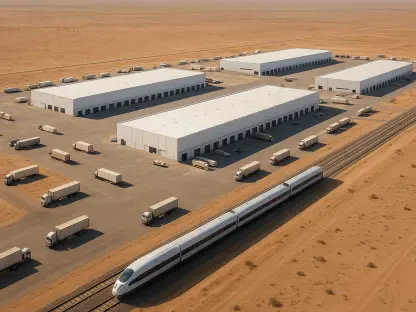
The land-side bottleneck is often the result of a mismatch between the efficiency of quayside automation and the sluggishness of inland rail connections. Even the most advanced ports, equipped with autonomous cranes and deep-water berths, face limitations when the “last-mile” rail link is insufficient to handle the surge in volume from a single mega-vessel. This congestion does not merely affect the port itself; it ripple through the entire economy, increasing costs for manufacturers and consumers alike. The transition from having a formal, symbolic rail connection to maintaining a competitive, high-capacity system is now the primary objective for port planners seeking to eliminate these friction points.
Current road-heavy models have reached a point of diminishing returns, as highway congestion and driver shortages continue to plague the logistics sector. In contrast, a well-integrated rail system can move the equivalent of dozens of truckloads in a single journey, provided the infrastructure is capable of supporting long-haul, high-frequency service. The challenge lies in ensuring that these rail links are not just present but are optimized for speed and reliability. Without this optimization, the time saved by high-performance maritime operations is lost as soon as the cargo crosses the port perimeter, making the entire journey less efficient and more expensive.
Market Projections for a Rail-Integrated Maritime Future
Market projections indicate that the success of European ports from 2026 to 2030 will be defined by their ability to reduce container dwell times through intermodal integration. As the deployment of ultra-large container vessels continues, the demand for land-side throughput will grow exponentially, necessitating infrastructure that can scale rapidly. Port authorities are increasingly using “port-to-destination” throughput as their primary performance indicator, recognizing that shipping lines choose their ports of call based on the reliability of the inland journey. By focusing on rail integration, ports can capture a larger share of the freight market and provide a more attractive value proposition to global trade partners.
The forecast for European freight suggests a steady increase in volume, particularly in the sectors of green technology and industrial components. To accommodate this growth, the share of rail in the intermodal mix must rise significantly, requiring a coordinated expansion of terminal capacity and rail corridor frequency. This scalable infrastructure is essential for maintaining the Union’s competitive edge, as it allows ports to act as buffers against global supply chain shocks. The ability to move large volumes of goods away from the coast quickly ensures that ports remain fluid, preventing the gridlock that has historically characterized periods of high trade activity.
Technical and Operational Barriers to Seamless Interconnectivity
Despite the clear economic advantages, several technical and operational barriers hinder the creation of a truly seamless European rail network. National rail systems remain fragmented, often relying on legacy technologies and incompatible signaling standards that vary from one border to another. This lack of interoperability forces freight trains to stop frequently, leading to delays that diminish the competitiveness of rail compared to road transport. Additionally, the process of shunting and marshalling trains within port yards remains labor-intensive and time-consuming, creating an operational lag that prevents the rapid dispatch of cargo to inland destinations.
Administrative and regulatory hurdles further complicate the situation, as different member states may have varying rules for rail access and safety certifications. These inconsistencies make it difficult for railway operators to plan unified corridors that cross multiple national boundaries without encountering bureaucratic delays. Synchronizing rail schedules with maritime arrival windows is another logistical challenge, requiring sophisticated data exchange that is not yet universal. To overcome these barriers, the EU is pushing for a more synchronized approach to infrastructure planning, ensuring that improvements in one country are matched by complementary upgrades in neighboring regions to prevent the simple shifting of bottlenecks.
The Regulatory Framework and Financial Instruments Driving Integration
The regulatory landscape is currently dominated by the push to implement the European Rail Traffic Management System across the entire core network. This system is designed to standardize signaling and control mechanisms, allowing trains to move across borders without the need for technical adjustments or locomotive changes. The goal is to meet the 2030 deadline for full standardization on the core Trans-European Transport Network corridors, which would fundamentally change the speed of cross-border freight. This modernization effort is backed by a robust legal framework that requires member states to prioritize the interoperability of their rail systems with maritime hubs.
Financial support mechanisms are playing a vital role in turning these regulatory goals into physical infrastructure. The Connecting Europe Facility remains the primary source of funding, with the 2028–2034 budget cycle expected to allocate over fifty billion dollars toward transport projects. These funds are specifically targeted at filling missing links in the rail network and modernizing terminals to handle modern freight volumes. Furthermore, the European Investment Bank provides low-interest loans and advisory services to ensure that port-rail projects are bankable and sustainable. Compliance with dual-use infrastructure requirements is also becoming more important, as the EU seeks to ensure that its transport network can support both commercial trade and the needs of security and defense.
The Future Landscape of Port-Rail Connectivity and Sustainability
The future of the European transport sector is defined by the twin transition of digitalization and green energy. Ports are increasingly acting as energy hubs, facilitating the import and distribution of hydrogen and the logistics required for massive offshore wind projects. These new energy flows require specialized rail infrastructure capable of transporting heavy components and sensitive materials safely across the continent. Digitalization complements this physical transition by using real-time data to optimize schedules and reduce the time goods spend sitting idle in terminals. By integrating digital twins and automated documentation, ports can maximize the utility of their existing rail tracks without needing to expand their physical footprint.
Strategic resilience and redundancy have also become top priorities as the Union seeks to withstand systemic shocks from climate change or geopolitical instability. A diverse and interconnected rail network allows for the rapid rerouting of goods if a primary corridor is blocked, ensuring that the supply of essential materials remains uninterrupted. This focus on resilience extends to territorial cohesion, where small and medium-sized ports are being integrated into the larger network to support regional economies. By ensuring that even smaller maritime hubs have efficient rail access, the EU can promote a more balanced distribution of economic growth and prevent the over-concentration of freight in a handful of massive ports.
Conclusion: A Unified Vision for the European Transport Corridors
The strategic pivot toward corridor-wide connectivity represented a decisive moment in the evolution of the European transport sector. Stakeholders across the continent recognized that the era of treating maritime efficiency and rail logistics as separate disciplines had to end for the Union to remain competitive. Planners shifted their focus from isolated quayside projects toward the creation of integrated logistics arteries that stretched from the deep-water berths of the coast to the industrial centers of the interior. This transition necessitated a unprecedented level of cooperation between national governments, which began to align their investment patterns with the overarching goals of the Trans-European Transport Network.
The rollout of standardized signaling and the expansion of terminal capacities across the 2026 to 2028 period provided a blueprint for future infrastructure development. Investment began flowing more consistently toward projects that demonstrated a clear benefit for the entire transport corridor rather than just a single region. These efforts stabilized the supply chain and reduced the environmental impact of freight movements by making rail the preferred choice for long-haul transport. Moving forward, the focus must remain on the rapid adoption of digital twin technologies and the continuous reskilling of the workforce to manage increasingly automated multimodal systems. The initiative successfully demonstrated that the resilience of the European economy was directly tied to the strength of its weakest logistical link, leading to a more unified and robust global trade presence.