
The industrial landscape is navigating a critical inflection point where robotics is transitioning from an experimental luxury to a fundamental strategic necessity. This shift reveals a startling disconnect: while 60% of global executives plan to deploy robot fleets from 2026 to 2031, a significant portion lacks the structural roadmap to manage them. The disconnect between technological ambition and organizational infrastructure defines the current market. By analyzing the core pillars of implementation, businesses can move beyond pilots into a future of integrated, scalable automation.
Navigating the Shift: From Speculative Tech to Strategic Necessity
For decades, automation was confined to controlled environments with minimal need for real-time adaptability. However, global supply chain pressures and artificial intelligence advancements have fundamentally altered these requirements. The transition is moving away from legacy systems toward deep integration where machines are no longer isolated units. The current challenge involves the readiness of organizations to deploy and sustain these sophisticated systems effectively within a highly competitive global economy.
Bridging the Divide: Ambition Meets Execution
Aligning Human-Machine Collaboration: The Workforce Strategy
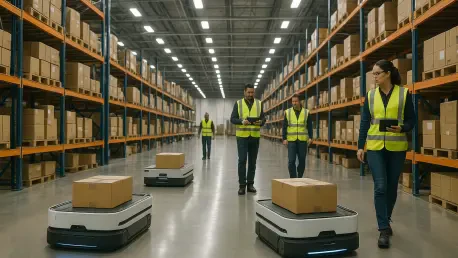
Only 40% of leaders possess a formal strategy for hybrid workforces, despite 60% anticipating fleet expansion. This gap suggests that many organizations overlook the critical skills and strategy pillars needed for success. The challenge involves moving toward a model of human enhancement rather than simple replacement. While leaders believe robotics will improve capabilities by 2030, the lack of upskilling plans remains a significant barrier to achieving this vision.
Navigating Complexity: Safety Standards and Scalability
Safety is both a primary driver and a cause of deployment delays. Many organizations operate in a regulatory vacuum, leading 68% of respondents to call for clearer global safety standards. Beyond compliance, moving from a single pilot to an enterprise-wide rollout requires standardized protocols. Organizations must develop architectures that allow robotic systems to function predictably across diverse facility types and regional markets.
Technical Demands: Physical AI and Edge Computing
Physical AI requires machines to interact with the world in real-time, creating pressure on IT infrastructure. Many applications require response times under 10 milliseconds, yet less than half of surveyed organizations have a funded edge AI strategy. Without processing data at the edge, advanced machinery cannot deliver its full potential in dynamic environments. This technical deficit represents a major hurdle for companies attempting to scale beyond simple tasks.
Future Trends: The Rise of Autonomous Ecosystems
The future of industry leans toward autonomous ecosystems where robots act as interconnected nodes. A surge in software-defined robotics is expected, where capabilities are updated through continuous AI learning. Experts predict the normalization of physical AI will occur by 2030, making the line between digital intelligence and mechanical execution nearly invisible. This shift will require a total reimagining of how data flows between the factory floor and the executive suite.
Actionable Strategies: Closing the Readiness Gap
To close the readiness gap, businesses must prioritize strategy, skills, safety, shape, and scale. Leaders should embed robotics into core corporate strategy rather than treating it as a standalone project. This involves creating roadmaps for human-machine collaboration and investing in edge AI. Modernizing infrastructure ensures systems meet real-time demands and maintain long-term scalability while fostering a culture that views automation as a growth catalyst.
Embracing a New ErIndustrial Intelligence
The findings of the research underscored the urgency for the modern enterprise to address internal deficiencies. Robotics ceased being a future speculation and became a present requirement for market relevance. Success in this era required a fundamental shift in organizational culture and technical architecture. By addressing strategic hurdles, businesses ensured they were active leaders in the revolution. The foundation for a robotic-integrated ecosystem was established as organizations moved to close the chasm before it became insurmountable.