
The logistics industry is currently navigating its most significant transformation since the invention of the shipping container, moving away from simple mechanical improvements toward a future defined by intelligent, self-optimizing systems. At the forefront of this shift is Rohit Laila, a veteran with decades of experience steering global supply chains and a deep-seated passion for the intersection of heavy machinery and cutting-edge innovation. Our conversation explores how the traditional arteries of American commerce—the Mississippi River, the vast interstate highways, and the intricate rail networks—are being rewired by software that never sleeps. We delve into the implications of 24/7 autonomous trucking operations in Texas, the deployment of machine-learning navigation on inland towboats, and the quiet integration of predictive sensors in the rail sector. Throughout our discussion, we examine how these advancements are not just about replacing labor, but about radically reducing the 37% of U.S. energy demand currently consumed by the transportation sector.
The Mississippi River has long been the backbone of American commodity transport, but it is now undergoing a digital rebirth. How is the introduction of machine-learning navigation changing the way we perceive the efficiency of these ancient waterways?
The Mississippi system has always been a marvel of natural buoyancy, where the river’s own flow does the heavy lifting for millions of tons of grain and fuel, but for centuries, it relied entirely on the grit and “river sense” of human captains. Today, that intuition is being augmented by systems like the Mythos AI Advanced Pilot Assist, which we are seeing deployed on commercial towboats to handle the complex variables of river navigation. When you stand on the deck of a modern towboat, you can feel the subtle shift in how the vessel responds to the water as software calculates stopping distances and analyzes shifting riverbeds with a precision no human eye could match. The efficiency gap is already staggering: a single gallon of fuel can move one ton of cargo more than 500 miles on a barge, whereas a truck would run out of steam after only about 60 miles. By using AI to identify fuel-saving strategies and minimize the delays that often plague river traffic, we are widening that advantage and ensuring that the 4% of transportation fuel used by waterways is squeezed for every possible drop of productivity.
Trucking accounts for a massive 60% of total U.S. transportation fuel use, making it the primary target for automation. Beyond fuel savings, what does the transition to continuous-use assets in places like Texas mean for the broader economy?
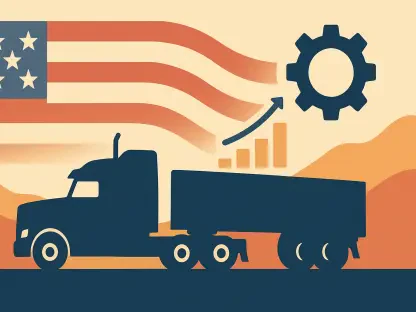
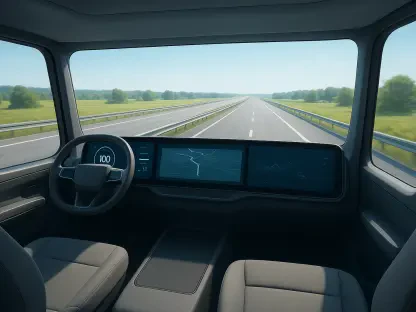
The real revolution on the highways isn’t just about streamlining the engine; it’s about breaking the biological constraint of the human driver who, by necessity and federal law, must stop to rest. In the heat of the Texas corridors, companies like Aurora Innovation are proving that a truck can transition from a 10-hour-a-day asset to one that operates for 20 hours or more, effectively doubling the productivity of the capital invested in that vehicle. This shift changes the very rhythm of our supply chains, as freight moves in a near-continuous flow that reduces the need for idle equipment to sit in dusty lots waiting for a shift change. We are seeing a profound shift where software replaces the inherent inefficiencies of human fatigue, leading to a landscape where the 70% of U.S. petroleum demand tied to transportation could be dramatically reshaped. If we can move more goods with fewer trucks running around the clock, we not only lower the cost for the consumer but also create a predictable, synchronized network that feels more like a utility than a traditional hauling service.
Railroads are often described as having a “quiet revolution” because their automation happens behind the scenes. Could you elaborate on how sensors and predictive analytics are fundamentally changing the safety and reliability of our rail infrastructure?
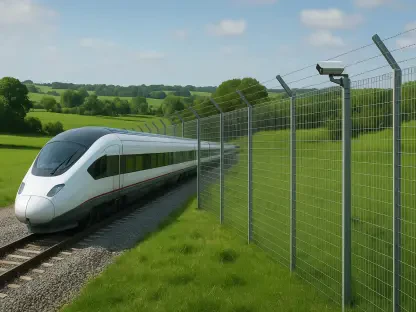
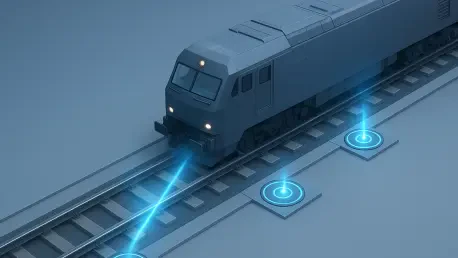
While autonomous trucks grab the headlines, the rail sector is quietly implementing a fundamental shift from periodic, visual inspections to a state of continuous, high-tech monitoring. Using lasers, cameras, and machine-learning systems, railroads are now inspecting track integrity and wheel health at speeds that were previously impossible, identifying microscopic defects long before they manifest as operational risks. You can see this technology in action with devices like Wabtec’s Pathfinder, which essentially allows older locomotives to be “plugged in” to a modern digital brain, granting them autonomous capabilities and advanced safety controls. Because rail is already incredibly efficient—accounting for only 2% of total U.S. transportation fuel use—every ton of freight we can move from the road to the rail through improved reliability represents a massive win for energy intensity. The goal is a rail network that is virtually self-healing, where the metallic screech of a failing bearing is detected by an algorithm and addressed before the train ever has to stop.
Aviation is often considered the final frontier for transportation automation due to its complexity and regulatory hurdles. How are remote supervision and pilotless cargo aircraft beginning to reshape regional logistics?
The conversation around aviation is shifting from “if” to “how,” as regulators like the FAA work alongside innovators to build frameworks for gate-to-gate autonomous cargo flights. Companies such as Reliable Robotics are proving that we can operate aircraft with remote supervision, which opens up a world of possibilities for connecting smaller, underserved communities that were previously too expensive to reach. While aviation currently accounts for about 9% of our transportation fuel use, the real impact of automation here is about creating a flexible, resilient logistics web that didn’t exist before. Imagine a fleet of electric-powered cargo planes quietly humming into a regional airport at midnight, managed by a supervisor hundreds of miles away; this isn’t just about saving fuel, it’s about creating alternative options for moving high-value goods. It is very much like the early days of the internet, where the most transformative changes weren’t just making old tasks cheaper, but enabling entirely new ways for the economy to function.
There is a historical concern that increased efficiency often leads to higher overall demand, potentially offsetting the energy savings. How do we balance the drive for lower shipping costs with the need to reduce total energy consumption?
This is a classic economic paradox where making a service cheaper and more efficient actually encourages us to use more of it, potentially neutralizing the fuel savings we’ve worked so hard to achieve. However, the current wave of automation is different because it isn’t just making machines more powerful; it is making the entire system smarter and more capable of shifting toward cleaner energy sources. As autonomous fleets become more centralized and managed by sophisticated software, we can better optimize charging schedules for electric trucks, moving the demand away from diesel and toward a more sustainable grid. Even if freight volumes rise because shipping becomes more affordable, the “hidden” energy waste—the empty backhauls, the unnecessary idling in traffic, and the preventable rail slowdowns—is being aggressively eliminated. We are building an economy that is capable of significantly higher output without a proportional increase in its carbon or energy footprint, which is a necessary evolution for our global competitiveness.
What is your forecast for the future of the American freight landscape over the next five years?
I believe we are entering an era where the most important metric for a successful logistics network will no longer be the horsepower of the engines, but the uptime of the assets and the seamlessness of the handoffs between modes. We will see the “Texas model” of autonomous trucking expand into major national corridors, and the Mississippi will become a truly digital highway where towboats navigate with surgical precision, saving millions of gallons of fuel through better routing. The most profound change will be the invisibility of these systems; the consumer won’t necessarily see the AI, but they will experience a world where goods are cheaper, more available, and moved with far less environmental impact. Ultimately, we are moving toward a “non-stop” logistics reality where the movement of physical goods finally catches up to the speed of the digital information that triggers the order. Success will be defined by how well we integrate these disparate technologies into a single, synchronized system that views every drop of fuel and every minute of time as a precious resource to be protected.