
Rohit Laila is a seasoned veteran in the logistics and supply chain sector, bringing decades of deep-rooted experience to the table. His career has tracked the evolution of freight from traditional trucking to the high-tech, data-driven networks of today. With a keen eye for innovation and a passion for terminal efficiency, he has navigated the complexities of multi-modal delivery systems and the human element of driver management. In this discussion, we explore the strategic nuances of regional expansion, the shift toward flexible warehousing, and the critical importance of infrastructure investment in the American South. We also touch upon the evolving landscape of driver compensation and the long-term goals for a carrier footprint that is rapidly scaling to meet the demands of tomorrow.
Jackson, Mississippi, sits at a unique crossroads of major American freight lanes. How does placing a new 100,000-square-foot facility at the intersection of I-20 and I-55 fundamentally change the distribution speed for the Gulf region?
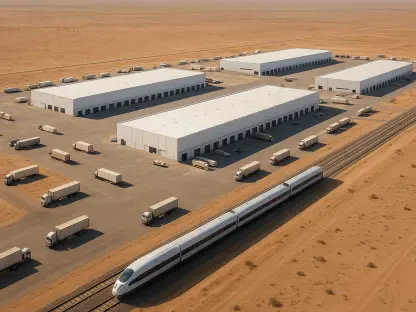
When you look at a map of the Southeast, you realize very quickly that Jackson is the heartbeat of Mississippi’s logistics corridor. By situating this new 100,000-square-foot distribution and fulfillment facility right at the junction of I-20 and I-55, we are essentially cutting down the transit times that usually plague long-haul regional freight. This isn’t just about having a roof over inventory; it’s about the synergy created by having a 57-door less-than-truckload terminal sitting immediately adjacent to the new warehouse. This proximity allows for a seamless transition from long-term storage to rapid-fire delivery, tapping directly into the $400 million infrastructure project recently announced by the Mississippi Department of Transportation. We are talking about massive upgrades to roads, bridges, and even rail lines that ensure the movement of goods doesn’t get bottlenecked by outdated transit routes. This level of connectivity is a game-changer for businesses that need to move products quickly between the manufacturing hubs of the North and the growing consumer markets of the South.
The logistics industry has traditionally relied on rigid, multi-year contracts for warehousing, but there is a clear move toward flexibility. How does offering space for seasonal or overflow projects without long-term commitments solve the modern shipper’s biggest headaches?
The volatility of the market over the last few years has taught us that the old way of doing business—forcing a company into a five-year warehouse lease—is simply no longer sustainable for many. By providing flexible warehousing and fulfillment options, we are giving businesses the breathing room they need to handle seasonal spikes or unexpected inventory overflows without the weight of a heavy contract hanging over their balance sheets. Think about a retailer who suddenly finds themselves with a surplus of goods during a peak season; they can now flex into the space they need in Jackson and then scale back when demand levels out. This agility is exactly what Barry Blakely was referring to when he spoke about supporting businesses as their distribution needs change in real-time. It moves the relationship from a transactional vendor-client model to a genuine partnership where we are absorbing some of the operational risk for them. It is about being a release valve for the supply chain, ensuring that when a company grows, their logistics provider is a bridge rather than a barrier.
With direct connections to major rail lines and proximity to the ports of New Orleans and Mobile, how does this facility act as a gateway for international cargo entering the southern United States?
This facility is a critical piece of the puzzle for anyone looking to optimize their maritime-to-inland logistics flow. By being strategically positioned to serve rail connections and the busy ports in New Orleans and Mobile, Alabama, we are effectively creating a “dry port” environment in central Mississippi. When cargo arrives at the Gulf, the clock starts ticking on drayage and storage costs, so having a high-capacity facility just a short haul away allows for much more efficient deconsolidation and distribution. We are seeing more shippers look for alternatives to the congested East and West Coast ports, and the Gulf is the natural beneficiary of that shift. With over 140 terminals already operating across the South and Southeast, we can take a container from a ship in Mobile, process it in Jackson, and have it on a truck headed to a terminal in Tulsa or Tennessee within a very tight window. It’s a multimodal symphony that relies on having the right square footage in the right geographic pocket to keep the rhythm of global trade moving smoothly.
Managing a workforce of over 9,000 people requires more than just high-tech facilities; it requires a commitment to the people behind the wheel. How do the recent pay raises and the planned addition of 2,000 truck parking spaces speak to the long-term strategy of driver retention?
In this industry, your network is only as strong as the people who keep the wheels turning, and we have always understood that “driver-first” isn’t just a slogan—it has to be reflected in the paycheck and the daily experience on the road. We recently implemented pay increases where regional drivers saw their rates climb to a new top rate of 66 cents per mile, and our LTL drivers received their own raise at the end of July. But pay is only one side of the coin; the quality of life at the terminals is equally vital. That is why the plan to add 2,000 truck parking spaces by 2027 is so significant. Finding a safe, reliable place to park is one of the greatest stressors for a driver today, and by investing in that infrastructure alongside 379 new dock doors, we are telling our 9,000 employees that we value their time and their safety. When a driver knows they have a dedicated spot waiting for them at a secure, well-maintained facility, they are more likely to stay with the company for the long haul, which ultimately provides better service consistency for our customers.
Looking at the broader expansion plan that includes nearly a million square feet of new warehouse space, what does the successful launch of the Tulsa and Jackson facilities signal for the company’s trajectory through 2027?
The successful opening of the 33-door facility in Tulsa back in June, followed quickly by this massive Jackson project, is a clear signal that we are in a period of aggressive, yet disciplined, growth. We are on a very specific path to add 900,000 square feet of warehouse space by 2027, and every new terminal is a building block toward a more densified network. This isn’t just growth for the sake of growth; it is about building a footprint that can handle the increased complexity of modern e-commerce and industrial supply chains. By the time we reach our 2027 targets, the ability to offer truckload, dedicated, and fulfillment services under one unified banner will be unmatched in the region. We are celebrating 55 years as a company, and the momentum we are seeing now is perhaps the strongest in our history. Each new dock door and each square foot of warehouse space represents a new opportunity to solve a problem for a shipper who is trying to navigate an increasingly fragmented world.
What is your forecast for the logistics landscape in the South over the next few years?
I believe we are going to see a massive “near-shoring” of the supply chain, where the South and Southeast become the primary engines for North American distribution. As infrastructure projects like the $400 million roadway improvements in Mississippi come to fruition, we will see a shift away from traditional mega-hubs toward a more distributed network of mid-sized, highly flexible facilities like the one in Jackson. Technology will continue to bridge the gap between the warehouse floor and the truck cab, but the physical location—the “dirt,” if you will—will remain the most valuable asset. Carriers that can offer a blend of multi-modal port access, flexible storage, and high-quality driver amenities will be the ones that dominate the market. The next two years will be defined by who can build the most resilient and adaptable network to handle the sheer volume of goods moving through the Gulf and into the heart of the country.