
The global e-commerce logistics sector is currently navigating a fundamental pivot away from the frantic, high-stakes races of the early decade toward a landscape defined by measured, strategic expansion and structural maturity. This transition marks the professionalization of an industry that once operated in a state of permanent crisis management, evolving into a sophisticated infrastructure that underpins the modern digital economy. As the market moves deeper into 2026, the focus for both retailers and third-party logistics providers has shifted from simply securing space to the meticulous refinement of existing networks. This market analysis explores the factors driving this recalibration, the regulatory shifts cooling cross-border trade, and the technological innovations that are setting the stage for the remainder of the decade. The central theme of this investigation is the arrival of a “new normal” where success is defined by operational excellence and the ability to navigate a complex, localized regulatory environment.
The Dawn of a New Era in Digital Supply Chains
The current phase of the e-commerce logistics market represents a significant departure from the volatile, hyper-growth era that dominated the start of the decade. As domestic markets in many Western economies reach a point of relative saturation, the industry is moving toward a more predictable and sustainable period of stable expansion. This shift is not merely a reaction to cooling demand but a necessary evolution for an industry that has outgrown its “gold rush” phase. Logistics operators are now prioritizing long-term profitability and network resilience over the aggressive, capital-intensive capacity building that was required during the global supply chain shocks of previous years.
The strategic focus has turned toward the optimization of the middle and last mile, ensuring that delivery speeds remain high while costs are kept under control. For the period extending from 2026 to 2030, the global market is expected to grow at a steady annual rate, reflecting a more mature and disciplined marketplace. This period of stabilization provides an opportunity for businesses to integrate more deeply with digital platforms, refine their returns management systems, and address the growing demand for environmental sustainability in shipping. The transition to stable growth is a sign of a healthy, maturing sector that is now better equipped to handle external shocks and shifting consumer expectations.
From Pandemic Surges to Market Maturity
To grasp the context of the current stabilization, one must look at the extraordinary performance of the 2022–2025 period. Driven by a permanent shift in consumer behavior that favored digital retail, the global domestic logistics market expanded by over 44%, eventually reaching nearly EUR 486 billion. This growth was fueled by massive investments in fulfillment centers and the rapid expansion of delivery fleets. Cross-border logistics performed even more aggressively, rising by over 50% as shoppers increasingly looked toward international platforms for product variety and competitive pricing. These years were characterized by a frantic attempt to keep up with demand, often at the expense of operational efficiency.
The foundational infrastructure built during that period—automated sorting centers, localized delivery hubs, and advanced digital tracking platforms—now serves as the backbone for the current era. The explosive growth of the early decade was inherently unsustainable, and the current cooling represents a return to a state of structural maturity. This stabilization allows for a more strategic approach to network design, where the placement of inventory is determined by data-driven demand forecasting rather than reactive emergency measures. The market has moved past its initial growth spurt and is now focused on the professionalization of every link in the supply chain.
Structural Realignment and Regulatory Impact
The logistics sector is currently grappling with a fundamental realignment necessitated by both economic cooling and aggressive regulatory intervention. This shift is most visible in the way international trade routes are being redesigned to accommodate new fiscal policies and customs requirements. Governments worldwide have recognized the massive volumes of low-value goods entering their borders and have acted decisively to reclaim tax revenue and protect domestic industries. Consequently, the regulatory landscape has become a primary architect of modern supply chain strategy, influencing everything from transport modes to the physical location of fulfillment centers.
The “De Minimis” Overhaul and the Cooling of Global Trade
A critical driver of the current market shift is the global dismantling of “de minimis” customs exemptions, which previously allowed low-value packages to cross borders duty-free. For years, this “loophole” facilitated a massive influx of inexpensive goods, particularly from Asian manufacturing hubs, directly to consumers in the West. The removal of these exemptions—most notably the USD 800 threshold in the United States in late 2025 and the EUR 150 limit in the European Union in July 2026—has created a significant cooling effect on cross-border volumes. These changes have introduced a level of friction that was previously absent, making the individual shipment model more expensive and administratively burdensome.
The data confirms the impact of these policy shifts. By the end of 2025, the volume of low-value imports in major markets began a downward trend as the true cost of individual shipping became apparent to both sellers and consumers. This regulatory pivot is forcing a profound change in how international sellers approach Western markets. The emphasis is no longer on moving millions of small parcels under the radar of customs authorities; instead, the focus is on commercial transparency and legal compliance. This shift has slowed the pace of cross-border growth but has also led to a more professional and equitable competitive landscape.
Rethinking Transportation Modes and Fulfillment Models
The end of duty-free individual shipping is fundamentally restructuring how goods move across the globe. Historically, the “direct-to-consumer” model relied heavily on expensive air freight to move single parcels from Asian factories to Western doorsteps within days. As new regulations make this model less viable, there is a clear and accelerating shift toward sea freight and bulk importation. Retailers are increasingly shipping goods in large containers to regional fulfillment centers, where they are cleared through customs as commercial shipments before being stored for domestic delivery. This “inventory consolidation” approach allows companies to bypass the complexities of individual customs entries while maintaining a high level of availability.
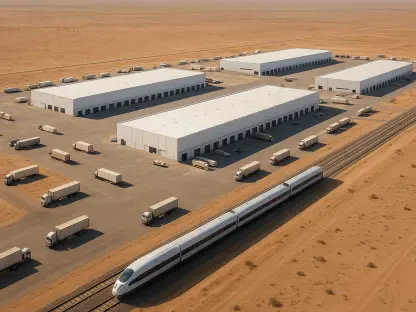
This transition back to a more traditional import model reduces the reliance on high-cost air freight and places a renewed emphasis on regional warehousing and local distribution networks. By shifting the “border” to an earlier point in the supply chain, companies are finding ways to manage costs while maintaining the delivery speeds that consumers have come to expect. This “local-first” strategy involves placing stock as close to the end consumer as possible, which not only reduces shipping costs but also mitigates the environmental impact of long-distance air transport. As a result, the demand for large-scale logistics parks near major urban centers continues to grow even as the overall market stabilizes.
Consumer Price Sensitivity and Geographic Divergence
While the global trend points toward stabilization, regional nuances provide a more complex picture of the e-commerce landscape. In mature markets like the DACH region (Germany, Austria, Switzerland), growth is slowing to a modest 4.6%, reflecting a high degree of digital penetration and a cautious consumer base. In contrast, emerging markets such as India, Indonesia, and Poland are seeing much higher rates of expansion. In these regions, rising middle classes and increasing smartphone penetration continue to drive e-commerce adoption at a pace that exceeds the global average. This geographic divergence requires logistics providers to adopt nuanced strategies that cater to the specific needs of each market.
Consumer behavior is also shifting in response to new logistics costs and customs duties. In price-sensitive markets like Poland, research indicates that a significant portion of shoppers now prefer to buy from domestic or EU-based warehouses to avoid the risk of unpredictable fees and delays associated with international shipping. This trend highlights a paradox: while e-commerce technology is more globalized than ever, the actual logistics solutions winning the market are becoming increasingly local. The competitive advantage now belongs to those who can offer a seamless domestic experience, regardless of where the goods were originally manufactured.
Innovations and Technological Shifts Shaping the Future
As the market stabilizes, the battleground for logistics providers is shifting from physical capacity to technological excellence. Innovations in automation, AI-driven demand forecasting, and sophisticated returns management are becoming essential for maintaining profitability in a slower-growth environment. We are seeing a continued consolidation of power, with large marketplace platforms expected to capture nearly 90% of B2C revenues by the end of the decade. This concentration of volume drives a need for logistics operators to integrate deeply with these platforms while navigating a more stringent regulatory landscape.
The next several years will be defined by “smart logistics”—the ability to use data to move goods more sustainably and efficiently. This includes the use of robotics in fulfillment centers to handle the high volume of small-parcel orders and the implementation of blockchain for more transparent customs clearance. Additionally, the challenge of returns remains a major hurdle for profitability. Sophisticated systems that can predict the likelihood of a return or optimize the resale of returned items are becoming a key differentiator for top-tier logistics firms. Technology is no longer just about speed; it is about the precision and intelligence required to manage a complex, global supply chain in a more regulated and cost-conscious world.
Strategic Takeaways for a Maturing Industry
For businesses and logistics professionals, the transition to stable growth requires a fundamental change in strategy. The focus must move from reactive expansion to operational optimization. Companies should prioritize the establishment of local fulfillment footprints to bypass the friction of cross-border trade and to cater to the preferences of price-sensitive consumers. This involves moving inventory closer to the point of demand, which reduces lead times and provides a buffer against international shipping delays or regulatory changes. Best practices now include investing in customs brokerage expertise and ensuring that supply chain visibility is maintained from the factory floor to the final doorstep.
Success in this new era also requires a more sophisticated approach to geographic expansion. While traditional Western markets offer stability, the highest growth potential lies in emerging regions like Southeast Asia and Eastern Europe. Logistics operators that can build robust networks in these high-growth corridors while maintaining efficiency in mature markets will be best positioned for long-term success. Furthermore, the integration of technology must be viewed as a core business function rather than a capital expenditure. Whether through AI-driven routing or automated warehousing, the goal is to drive down the cost per parcel in an environment where volume growth is no longer guaranteed to solve all financial challenges.
Navigating the Path Toward 2030
The analysis of the global e-commerce logistics sector revealed that the era of volatile, unchecked growth concluded as structural maturity took hold across the marketplace. It was observed that the localization of trade, necessitated by the dismantling of tax exemptions and shifting consumer preferences, became the defining trend of the current period. Strategic planners discovered that the most effective way to protect margins was to transition toward containerized bulk shipping and localized warehousing, effectively moving the customs border away from the individual consumer. The investigation showed that technology served as the primary differentiator for companies seeking to optimize their fulfillment and returns processes in a more cost-conscious environment.
By the end of this study, it was clear that the industry moved toward a more resilient and predictable model that prioritized long-term stability over short-term surges. Actionable steps were taken by market leaders to diversify their geographic footprints, focusing on rising hubs like Poland and Indonesia to offset the slower growth in saturated Western regions. New insights regarding the integration of artificial intelligence and automated sorting demonstrated that operational efficiency was the only sustainable path forward. Ultimately, the industry transitioned from a reactive stance to a proactive, data-driven methodology, ensuring that the global supply chain remained a robust pillar of the economy through 2030 and beyond. This evolution into a sophisticated, regulated, and localized network provided the necessary foundation for the next generation of digital commerce.