
The ripple effects of this infrastructure failure are expected to persist for several weeks after the tracks eventually reopen to freight traffic. This logistical nightmare began when a GB Railfreight service, destined for the Hams Hall distribution center in Birmingham, derailed near Barking in East London. The incident has effectively severed a vital artery connecting the nation’s most critical maritime gateways with its industrial core. For an economy that prides itself on efficiency, the sudden immobilization of high-capacity freight trains serves as a sobering reminder of system vulnerability. The physical destruction is immense, involving nearly two kilometers of damaged track, signaling systems, and overhead electrical lines essential for modern locomotives. Network Rail engineers are now working against the clock to repair the permanent way, but the complexity of the electrical systems and the necessity for a forensic investigation by the Rail Accident Investigation Branch have made a quick resolution impossible.
Cascading Effects: Port Infrastructure and Terminal Operations
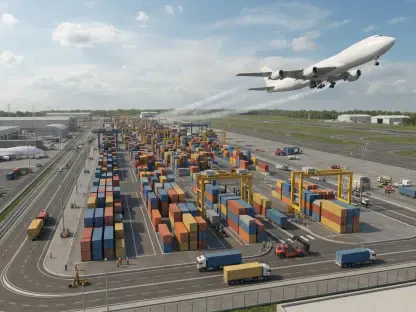
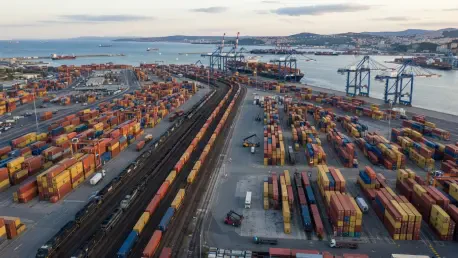
The Port of Tilbury and the modernized Tilbury2 facility have borne the brunt of this disruption, facing a total suspension of all rail freight services for the immediate future. Because these terminals rely heavily on rail to transport bulk commodities and containerized goods to Northern England, the inability to clear quayside inventory is creating a dangerous backlog. Without the regular departure of long-haul freight trains, the physical space within the terminal is rapidly reaching its capacity limit. This congestion threatens to delay vessel unloading operations, as there is simply nowhere left to stack incoming containers. Port operators are desperately seeking short-term storage solutions, but the sheer volume of goods typically moved by rail makes any alternative temporary at best. The suspension has effectively frozen a significant portion of the UK’s import-export machinery, highlighting how a single point of failure in East London can paralyze the entire maritime logistics chain.
While London Gateway has managed to maintain some operations, it is functioning on a severely diminished schedule due to the same infrastructure constraints. The terminal is attempting to utilize alternative routes, but these paths are already operating at peak capacity, leaving little room for diverted cargo. This bottleneck is felt most acutely at inland distribution hubs like Hams Hall, Birch Coppice, and Daventry, which serve as the central nervous system for national retail distribution. The “just-in-time” delivery models that have defined British commerce since the beginning of 2026 are now under immediate threat as transit times become increasingly unpredictable. Retailers are facing the prospect of empty shelves or significantly increased costs as they scramble to bypass the Barking corridor. The disruption to these inland flows suggests that even a localized accident can have systemic repercussions that undermine the reliability of the entire national distribution network.
The Logistics Challenge: Transitioning to Road Haulage
Diverting heavy freight trains is not a simple matter of changing lanes; it requires available pathing on lines that are already congested with passenger traffic. The North London and Great Eastern Main Lines, which represent the primary alternatives, have almost no spare capacity during peak hours, forcing freight operators into a difficult prioritization process. Only the most time-sensitive deep-sea container flows are being granted access to these limited windows, leaving secondary cargo to wait indefinitely at the ports. This selective movement creates an imbalance that ripples through the supply chain, as lower-priority goods essential for manufacturing and construction begin to pile up. The lack of flexibility in the UK’s rail network means that once a major corridor is blocked, there are few viable contingencies that can handle the displaced volume. Consequently, the build-up at the Thames Estuary gateways is likely to worsen until the damaged tracks near Barking are fully restored to operation.
With more than 30 daily rail services sidelined, the logistics industry has been forced to look toward the UK’s road network to fill the void. This sudden transition has created immense pressure on the road haulage sector, leading to a massive spike in demand for Heavy Goods Vehicles that the market was not prepared to absorb. Finding available drivers and trucks on such short notice has become a Herculean task for most cargo owners, resulting in extreme cost volatility in the spot haulage market. Beyond the financial impact, the logistical complexity of switching from rail to road is staggering. Every diverted container requires a new collection slot, updated customs documentation, and a renegotiated delivery schedule with the end customer. This administrative burden, combined with the higher carbon footprint and increased road congestion, makes the shift a costly and inefficient temporary fix. The strain on the national highway system is becoming evident as thousands of additional truck movements are added each day.
Industry Resilience: Responses and Future Mitigation Strategies
Ocean carriers and logistics providers have shifted into an emergency posture, issuing urgent advisories to clarify the division of responsibility for inland transport. For shippers utilizing merchant haulage, the burden of securing alternative transport rests entirely on their own shoulders, often leaving them at the mercy of a saturated road market. Conversely, carriers providing integrated sea-to-land services are struggling to fulfill their contractual obligations, with several major lines already suspending new carrier haulage requests. This defensive measure reflects the reality that there is simply no more spare road capacity available to bridge the gap left by the rail failure. To navigate this volatility, stakeholders are increasingly relying on digital tracking tools and predictive analytics to gain better visibility into their supply chains. By identifying high-priority containers before they arrive at the port, companies can proactively secure road transport, though this often comes at a significant premium that will eventually be passed on to the consumer.
The Barking derailment served as a stark warning about the inherent fragility of the nation’s intermodal infrastructure. Stakeholders recognized that maintaining supply chain continuity required a multi-pronged approach that prioritized inventory visibility and diversified transport partnerships. Logistics experts recommended that companies conducted comprehensive audits of their current holdings at Tilbury and London Gateway to ensure that essential goods moved first via the strained road network. Furthermore, the industry realized that enhancing digital communication between ports, rail operators, and hauliers was critical for managing future disruptions of this magnitude. While the physical repairs were eventually completed, the focus shifted toward building a more resilient system that could withstand similar shocks. The lesson learned from this crisis was that reliance on a single rail artery invited systemic risk, and long-term investment in alternative pathing became a primary objective for the transport sector. These actions ensured that the backlog was eventually cleared.