
The transition from designing aerospace vehicles meant for the vacuum of space to operating massive excavators in the mud of a construction site represents a fundamental shift in how modern engineering addresses global problems. After securing a massive $115 million funding milestone led by Kleiner Perkins, the startup known as TerraFirma is no longer just a theoretical project; it is a direct challenge to the antiquated methods of the construction industry. By applying the same rapid-iteration and systems-engineering principles used to develop Starship, the company is turning standard excavators into sophisticated, semi-autonomous robots capable of reshaping the world.
This leap into the “dirt world” is spearheaded by former SpaceX experts who realized that the same logic used to launch satellites could be applied to moving earth toward a better future. This vertically integrated approach allows for a level of control and speed that traditional manufacturers simply cannot match. Instead of waiting for new machine designs, the team focuses on how software can breathe new life into existing iron, creating a bridge between Silicon Valley innovation and the grit of heavy machinery.
Bridging the Gap Between Silicon Valley Engineering and Heavy Machinery
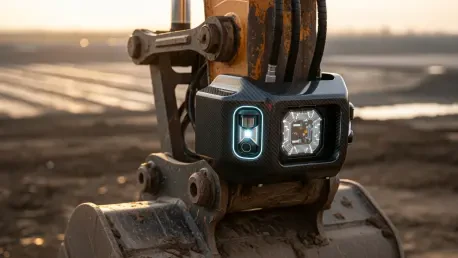
The philosophy driving TerraFirma is rooted in the belief that the physical world deserves the same level of technological sophistication as the digital one. By treating a construction site as a high-fidelity systems-engineering environment, the company integrates aerospace-grade software with rugged hardware. This strategy allows them to bypass the slow development cycles of traditional equipment manufacturers. Rather than building a new machine from scratch, they utilize the reliable hydraulic power of existing fleets, augmenting them with sensors and compute stacks that allow for remote operation and semi-autonomous tasks.
Furthermore, this bridge is built on a culture of rapid testing and deployment, a hallmark of the aerospace industry. In the two years since its founding in 2024, the company has successfully transitioned from laboratory prototypes to active job sites. This speed is essential for addressing infrastructure needs that have been neglected for decades. By focusing on the “full stack” of construction—from pre-construction data to final grading—they ensure that every piece of equipment operates as part of a cohesive, intelligent network rather than an isolated tool.
Overcoming the Stagnation of Modern Infrastructure and Labor
The construction sector has long been hamstrung by a paralyzing labor shortage and productivity levels that have remained virtually flat for nearly half a century. While other industries have embraced digital transformation, the heavy machinery world remains hazardous and reliant on manual processes that struggle to keep pace with modern demand. TerraFirma addresses these real-world concerns by focusing on the legacy of grand-scale projects like the Hoover Dam, aiming to restore that level of ambition through modern technology. The objective is to revitalize the industry before the current infrastructure deficit becomes insurmountable.
Solving the immediate terrestrial crises of housing and energy infrastructure is the primary goal before the skilled labor pool disappears entirely. As older operators retire, the gap in expertise grows wider, making the need for technological intervention more urgent than ever. By automating the most repetitive and dangerous parts of the job, the company helps stabilize an industry that is currently at a breaking point due to rising costs and shrinking schedules. This modernization is not just about speed; it is about ensuring that critical projects can still be completed in an era of diminishing human resources.
The Robotic Infrastructure Stack and the Power of Retrofitting
TerraFirma’s approach centers on a comprehensive “robotic infrastructure stack” that avoids the common pitfalls of total automation. Instead of building brittle, fully autonomous machines that often fail in unpredictable environments, the company retrofits existing heavy machinery—such as dozers and loaders—with a remote command-and-control layer. This full-stack platform integrates AI-powered pre-construction software with digital cockpits, allowing machines to be managed by operators who are miles away from the dust and danger of the job site. This allows the company to scale rapidly without waiting for a total overhaul of global machinery manufacturing.
This hybrid model ensures that human intuition remains in the loop while hardware handles the repetitive, grueling tasks. It recognizes that construction sites are dynamic and messy, requiring a level of problem-solving that pure algorithms still struggle to master. By providing a digital interface for physical work, the system bridges the gap between digital planning and physical execution, turning every excavator into a precise instrument. This allows for a level of precision in earth-moving that was previously impossible, reducing waste and improving the structural integrity of the final build.
Elevating the Workforce Through Credible Efficiency Gains
The impact of this technology is best measured by the 300% increase in operator effectiveness reported by the company in recent deployments. By removing the physical operator from the cab and placing them behind a digital screen, TerraFirma transitions hazardous manual labor into high-paying, tech-centric roles. This shift is backed by industry veterans and aerospace experts who recognize that the future of the workforce lies in fleet management rather than single-machine operation. This change effectively rebrands the construction trade for a new generation of workers.
Moreover, this methodology not only accelerates project timelines but also significantly lowers the overhead costs that typically stall major infrastructure developments. When one person can oversee multiple machines from a central hub, the unit economics of land development change completely. This shift attracts a diverse talent pool that is more comfortable with a digital interface than a traditional steering wheel, effectively solving the recruitment crisis. The result is a workforce that is safer, more productive, and capable of managing complex projects with unprecedented ease.
Scaling Success From Terrestrial Job Sites to the Final Frontier
The practical utility of this technology is already being demonstrated on the ground, with active projects ranging from site preparation for commercial retail in Austin to the construction of mission-critical power substations. However, these Earth-based applications serve as a proving ground for an even more ambitious objective. The software and hardware currently being refined to solve housing and energy problems on Earth are designed to be dual-purpose from the start. This dual-track development ensures that the technology remains profitable today while preparing for the requirements of tomorrow.
Eventually, these same robotic systems provided the blueprint for building the first human habitats on the Moon and Mars, proving that the tools used to fix the home planet were the same ones that helped humanity leave it. The integration of aerospace-grade software into earth-moving equipment changed the trajectory of both civil engineering and space exploration. Leaders in the field prioritized scalable solutions that addressed immediate needs while laying the foundation for an interplanetary future. Through these advancements, the daunting task of building in extreme environments became a manageable extension of terrestrial expertise.