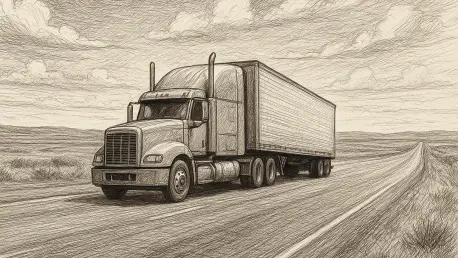

Rohit Laila stands at the intersection of traditional logistics and the high-tech future, bringing decades of experience in supply chain management to the rapidly evolving world of autonomous transportation. As an industry veteran who has witnessed the shift from manual paper logs to AI-driven routing, he is uniquely positioned to discuss the monumental transition currently taking place in the Texas freight corridors. With the recent announcement that Kodiak and IKEA are moving toward fully driverless operations, Laila offers a deep dive into how nearly a decade of research is finally manifesting as a commercial reality. This conversation explores the rigorous data collection, the strategic orchestration of Texas transit routes, and the profound impact this technology will have on the quality of life for the modern workforce.
The transition from human-monitored testing to driverless operations involves massive data collection and years of preparation. How has the journey over the last several hundred thousand miles prepared the system for this unsupervised milestone?
We have spent the last four years meticulously building a foundation of trust and data, having delivered more than 1,300 loads specifically for IKEA. Logging over 750,000 miles with a safety observer on board allowed us to capture the nuances of the road that a simulator simply cannot replicate. We have moved beyond just testing code; we have transformed the underlying technology into a robust AI-driven product that understands the unique rhythms of the Texas highways. Reaching the point where we can confidently remove the human from the cab is a milestone that the entire team has worked toward for nearly a decade. It is a transition defined by the smell of diesel and the silent processing of millions of data points every second to ensure absolute reliability.
The driverless service is set to begin on a very specific route in Texas. Could you elaborate on why the corridor between Houston and Dallas was chosen and how the logistics are orchestrated?
The route between our Houston and Dallas-area facilities serves as the perfect proving ground, specifically the 219-mile leg that will now be handled without a driver. This segment is part of a larger 292-mile delivery route that connects the sprawling IKEA distribution center in Baytown all the way to the store in Frisco. By focusing on Interstate 45, we are operating in a high-volume environment where we have already tested our systems for four years without a single incident. We’ve learned the vital “little things,” such as the precise timing required to launch a truck so it arrives at a specific Frisco dock door exactly when the unloading crew is ready. This level of orchestration ensures that asset utilization is maximized, turning a complex haul into a predictable, well-designed loop.
Safety is often the primary concern for the public when discussing autonomous trucks. What goes into the safety case for these long-haul operations, and how does it change the role of human drivers?
Our highway launch safety case is essentially a structured, evidence-backed argument proving that the autonomous system can operate safely without a human on board in a defined area. We are not looking to replace the human element but rather to enhance the quality of life for those in the industry. By automating the long-haul routes, we allow human drivers to focus on local driving jobs, which are the roles most of them actually prefer. Instead of spending nights sleeping in a cramped cab on the side of a noisy highway, these professionals can work local shifts and be home with their families and friends every night. It’s a shift that prioritizes human well-being while letting the AI handle the monotonous, long-distance stretches of the interstate.
Operational efficiency is more than just driving from point A to point B. What specific data insights are you utilizing to ensure these trucks remain reliable over long periods of time?
Efficiency in this new era is driven by predictive maintenance data insights that allow us to stay ahead of mechanical wear and tear. We have established proactive maintenance plans for every truck in the fleet, meaning we know when a component might fail before it ever causes a delay on I-45. By knowing exactly when and where trucks should be launched, we eliminate the guesswork that often leads to bottlenecks in traditional supply chains. This proactive approach ensures that the “driverless launch shipper” partnership creates real value and reliability for the IKEA supply chain. It’s about creating a seamless flow where the technology works silently in the background to keep the shelves stocked and the trucks moving.
What is your forecast for the future of autonomous freight?
I believe that by the end of this decade, we will see autonomous freight corridors become the standard for all major logistics hubs across North America. The success we are seeing on the 219-mile stretch in Texas will serve as a blueprint for transcontinental routes, drastically reducing the cost of shipping while increasing road safety for everyone. We will see a specialized workforce emerge, where humans manage the complex “first and last mile” navigation in urban centers while autonomous units handle the heavy lifting on the open road. Ultimately, this will lead to a more resilient global supply chain that can operate 24/7 without the fatigue-related risks that have challenged the industry for over a century.