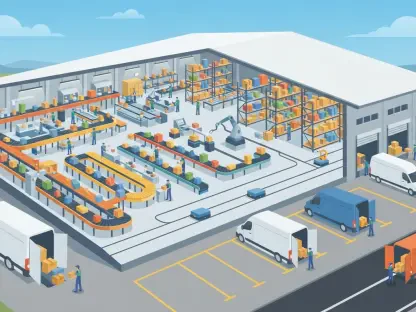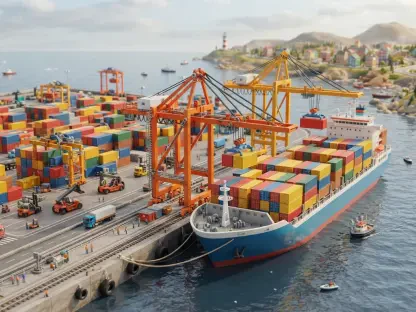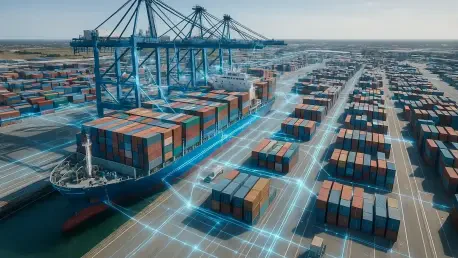

A massive container ship glides into a berth controlled by autonomous machinery, yet the trucks waiting to receive its cargo are idling in a line that stretches several miles into the city. The global shipping industry currently faces a baffling contradiction where autonomous cranes and advanced algorithms dominate the headlines while the world’s largest ports remain plagued by stubborn congestion. It is a reality where a single terminal might possess world-class computational power, yet operational visibility stops exactly at its own gates. This disconnect suggests that the digital revolution in maritime logistics is hitting a wall, not because the technology is flawed, but because it is being applied to the wrong scale of data. The current year, 2026, marks a pivotal moment where the industry must decide if it will remain a collection of high-tech islands or evolve into a truly integrated global network.
The Paradox: High-Tech Logistics and Low-Tech Bottlenecks
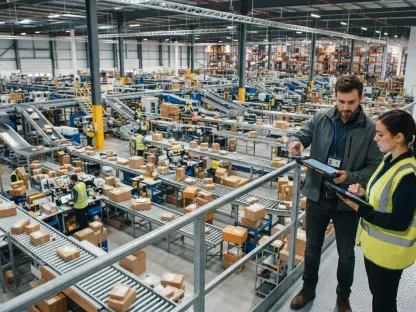
The maritime sector has invested billions into localized automation, yet these advancements frequently fail to translate into smoother cargo flows. While a terminal operator might use AI to stack containers with surgical precision, the lack of coordination with land-side transport leads to “peak-hour” surges that overwhelm the local road infrastructure. This creates a scenario where the internal efficiency of a facility actually exacerbates the problems faced by the surrounding community. When the physical capacity of a dock is managed in isolation from the logistics chain, the resulting friction negates the benefits of the sophisticated hardware on the wharf.
This systemic failure is primarily a result of treating port congestion as a hardware problem rather than an informational one. Increasing the physical footprint of a port is a multi-year endeavor that often yields diminishing returns if the underlying data remains fragmented. Conversely, improving the visibility of the containers already in the system can yield immediate capacity gains without moving a single cubic yard of earth. By viewing container movements as an integrated flow rather than individual segments, ports can reduce redundant logistical legs and empty kilometers that currently clog the world’s most vital trade arteries.
Why the Data Problem Is Stalling Port Evolution
The true bottleneck in modern logistics is a lack of informational synchronicity between disparate stakeholders. While ports are investing heavily in AI to optimize cargo planning, these projects often fail because they operate within isolated silos. When a terminal, a carrier, and a trucking company all optimize for their own internal metrics without sharing real-time data, the result is a series of locally sensible decisions that create global inefficiency. This fragmented approach turns what should be a unified supply chain into a disjointed series of handoffs where the value of AI is diluted by the friction of missing or mismatched information.
To understand the current crisis, one must look past the physical capacity of docks and warehouses to the digital gaps between them. Each participant in the chain holds only a small slice of the container’s journey, meaning no single entity maintains visibility over the entire process from ship to final destination. This lack of a “single source of truth” means that AI models are often trained on incomplete or outdated datasets, leading to predictions that do not reflect the ground reality of the port environment. Without a continuous stream of high-quality, cross-stakeholder data, even the most advanced algorithm remains a tool for individual nodes rather than a solution for the entire ecosystem.
Moving Beyond Local Optimization to Network Efficiency
Congestion is rarely a simple matter of lack of space; it is a byproduct of thousands of uncoordinated actions that occur daily. When an import container is trucked to a destination and returned empty while a separate truck is dispatched to collect an empty for an exporter nearby, the system has failed. AI has the potential to identify these “direct reuse” opportunities, but only if it can see both sides of the transaction simultaneously. By integrating data through a Port Community System, the maritime industry can transition from a zero-sum mentality to a collaborative model where empty trips are minimized and terminal yard space is used more effectively.
A Port Community System acts as the essential nervous system for holistic optimization, serving as the neutral ground where data from terminal operators, railroads, and customs agencies can be unified. Without such a digital foundation, AI is merely a tool for improving a single operator’s bottom line at the expense of others. With it, AI becomes a solution for the entire maritime community, allowing for more accurate ETA predictions and proactive planning. This integration permits land-side operators to plan against realistic arrival windows rather than theoretical dates, ensuring that disruptions in one part of the world do not lead to avoidable bottlenecks at the local gate.
Overcoming the Psychological Barriers to Data Sharing
Industry experts argue that the data crisis is essentially a trust problem wearing a technology costume. Many stakeholders view their data as a competitive advantage and fear that sharing it is a surrender of leverage to rivals or customers. This psychological barrier is reinforced by commercial models where a terminal’s goal of yard efficiency often conflicts with a carrier’s goal of vessel utilization. To overcome this, the industry requires a neutral intermediary or a platform capable of aggregating sensitive datasets without granting an unfair advantage to any single competitor.
For AI to be commercially durable, the model must ensure that benefits are shared across all parties involved in the transaction. This requires shifting the narrative so that the data contributor receives more value back from the network than they provide in raw information. When stakeholders realize that total system transparency leads to fewer delays and higher asset utilization for everyone, the incentive to hoard data begins to dissolve. Shifting from a siloed perspective to a community-focused one is the only way to ensure that the AI implementation provides long-term value rather than temporary, localized improvements.
Strategies for Implementing Community-Level AI Success
To accurately measure the success of an AI implementation, ports must move away from vanity metrics that flatter a single operator while masking systemic failures. If a terminal improves its truck turn time but forces all pickups into a narrower window that clogs public roads, the problem hasn’t been solved—it has merely been exported. Success must be measured through integrated KPIs, such as container dwell times, total truck trips, and vessel on-time departures. These metrics provide a more honest assessment of whether the digital transformation is actually improving the flow of goods through the terminal gates.
Transitioning from experimental pilots to daily operations requires a focus on operational reliability and real-time accuracy. Utilizing platforms that span the entire journey—from the port authority to the beneficial cargo owner—allows the AI to generate insights based on the global network rather than just local conditions. This transition ensures that the promise of AI, such as decongesting supply chains and reducing carbon footprints through fewer redundant truck movements, becomes a systemic reality. Only by scaling these solutions across the entire community can the industry move beyond the limitations of its current fragmented data landscape.
The resolution of the data fragmentation crisis depended on a fundamental shift toward shared accountability and digital transparency. Stakeholders successfully transitioned from isolated optimization to a unified network approach by prioritizing Port Community Systems over individual terminal software. This strategy allowed the industry to replace fragmented data silos with a synchronized flow of information, which significantly reduced dwell times and eliminated thousands of unnecessary truck trips. Leaders in the sector moved toward integrated global networks that provided earlier visibility into disruptions, ensuring that planning was based on real-time ground truths. By focusing on community-level benchmarks and neutral data aggregation, the maritime community turned the theoretical promise of AI into a functional reality that finally cleared the bottlenecks of the modern port. This collective evolution proved that the most effective way to expand port capacity was to optimize the data that governed the physical assets already in place.