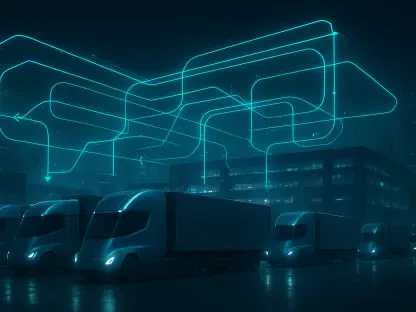

The heavy-duty transportation sector currently faces an unprecedented mandate to reduce carbon footprints while simultaneously managing the razor-thin margins of global supply chains. As regulatory bodies across North America and Europe tighten emissions standards, fleet operators are moving beyond traditional aerodynamics toward sophisticated software-driven efficiency. Artificial intelligence is no longer a peripheral experiment but a core component of modern long-haul logistics, specifically through advanced cruise control systems that interpret terrain in real-time. These systems analyze thousands of data points every second to ensure that every drop of fuel is utilized with surgical precision, effectively removing human error from the throttle. By integrating high-definition mapping with real-time traffic intelligence, the industry is witnessing a transition where the vehicle becomes a self-optimizing asset. This shift represents a fundamental change in how heavy-duty trucks interact with the environment through the strategic use of kinetic energy.
Enhancing Efficiency Through Intelligent Speed Management
The Mechanics of Predictive Powertrain Systems
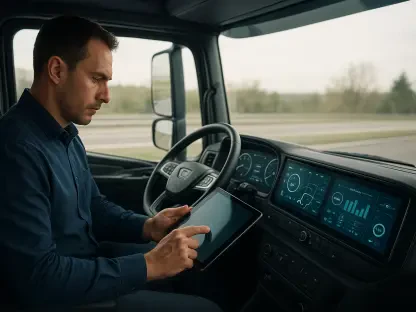
The deployment of Predictive Powertrain Control systems marks a significant milestone in the evolution of autonomous driving features designed for commercial applications. Unlike standard systems that maintain a constant speed regardless of topography, AI-driven cruise control utilizes GPS data to anticipate upcoming inclines and descents long before they are visible to the driver. By calculating the mass of the vehicle and the specific grade of the road, the algorithm decides when to accelerate slightly to build momentum or when to disengage the drivetrain to leverage kinetic energy during a downhill stretch. Companies like Daimler Truck and Volvo have successfully integrated these features, resulting in smoother gear shifts and reduced mechanical wear. The software manages momentum to prevent excessive downshifting that leads to fuel spikes and increased emissions. Such precision ensures that the engine operates within its most efficient power band for the maximum possible duration.
Economic and Ecological Impacts of Advanced Control
Beyond the immediate mechanical benefits, the integration of intelligent speed management provides a scalable solution for fleets attempting to meet aggressive sustainability targets. Empirical data from large-scale deployments indicate that AI-optimized driving can reduce fuel consumption by approximately six to ten percent compared to even the most experienced human operators. In a high-mileage industry, these incremental gains translate into thousands of tons of carbon dioxide prevented from entering the atmosphere annually. Furthermore, these systems alleviate the cognitive load on drivers, allowing them to focus on safety and navigation while the AI manages the complexities of torque and energy conservation. This synergy between human oversight and machine precision creates a more stable operating environment where performance is consistent across an entire fleet. As carbon taxes become more prevalent, the economic incentive to adopt these technologies has shifted from a luxury to a logistical necessity.
Strategic Implementation for Future Fleet Success
The widespread adoption of intelligent cruise control systems transformed the logistics landscape by successfully aligning environmental goals with operational efficiency. Organizations that prioritized early integration discovered that the key to success lay in the synergy between high-definition topographical data and automated powertrain responses. These firms bypassed the limitations of traditional hardware by utilizing software that learned from every kilometer driven, effectively creating a self-improving fleet. The transition was supported by comprehensive training programs that refocused the driver’s role toward high-level system supervision rather than manual throttle management. Ultimately, the industry recognized that sustainable trucking was not dependent on a single breakthrough, but on the continuous refinement of algorithmic control. The results achieved by pioneering fleets established a new standard, proving that data-driven momentum management was the most viable path for reducing the carbon intensity of freight.