
The rapid integration of autonomous systems into the critical infrastructure of the United States has reached a decisive turning point with the recent introduction of federal restrictions on foreign-produced hardware. In late July 2026, the Federal Communications Commission (FCC) enacted a landmark policy shift by expanding its “Covered List” to include advanced robotic devices. This decision effectively reclassified industrial hardware as a matter of national security, signaling that the digital and physical “brains” of these systems can no longer be viewed through a purely commercial lens. As these machines become more integrated into the American economy—performing tasks from warehouse logistics to urban delivery—the federal government has prioritized the mitigation of potential vulnerabilities that could arise from foreign-sourced technology.
This regulatory expansion aims to create a protective barrier around the nation’s industrial backbone, ensuring that the software and sensors driving modern automation do not pose a threat to data integrity or public safety. The ruling is not merely an update to existing trade guidelines; it represents a fundamental change in how the United States manages the intersection of technology and national defense. By targeting next-generation hardware, the agency is attempting to prevent long-term risks from becoming permanent features of the country’s infrastructure. This market analysis explores the technical scope of the mandate, the geopolitical motivations behind the shift, and the significant challenges businesses must navigate as they adapt to a more restricted environment.
A New Era of Regulatory Oversight in Industrial Automation
The policy shift introduced by the FCC has sent shockwaves through the automation and logistics sectors, forcing a re-evaluation of procurement strategies across the country. Under the new rules, any hardware classified as an advanced robotic device must undergo a rigorous equipment authorization process that assesses its origin and potential for remote interference. This move reflects a broader trend of technological decoupling, where the reliability of the supply chain is valued just as highly as the efficiency of the hardware itself. Consequently, the days of unfettered global sourcing for industrial robotics are ending, replaced by a framework that prioritizes security and domestic resilience.
The implications of this oversight extend far beyond simple compliance, as the ruling essentially creates a “security buffer” for future technological adoption. While existing robotic fleets are permitted to remain operational to avoid immediate economic paralysis, all new models must meet stringent safety criteria before they can enter the American market. This forward-looking approach ensures that as companies upgrade their facilities, they are doing so with hardware that has been vetted for potential backdoors or unauthorized data transmission capabilities. For the first time, the “brains” and “eyes” of industrial robots are being treated with the same level of scrutiny as telecommunications equipment and uncrewed aerial systems.
The Evolution of the Mobile Robot Market and Security Policy
The current landscape is the result of nearly a decade of explosive growth followed by a corresponding rise in security anxieties. Between 2018 and the start of 2026, the mobile robot industry evolved from a fragmented niche into a cornerstone of global commerce, with annual shipments jumping from 30,000 to over 200,000 units. This rapid adoption was largely fueled by international manufacturers, whose market share in the United States grew significantly in a very short period. This trajectory mirrored the earlier path of the drone industry, which faced similar federal restrictions late last year, setting a clear precedent for how the government would eventually handle ground-based autonomous systems.
As the market continues to expand from 2026 toward 2030, projections suggest that the demand for automation will only accelerate. However, the concentration of manufacturing in specific regions has created a “concentration risk” that the FCC is now directly addressing. The pivot toward security-centric policy is a response to the reality that a large portion of the hardware currently powering American warehouses was produced by entities that may not share the same data privacy standards as domestic providers. By implementing these restrictions now, the government is attempting to steer the industry toward a more diverse and secure supplier base before the next generation of humanoid and logistics robots becomes ubiquitous.
Analyzing the Framework of the FCC Mandate
Defining the Technical Scope: Advanced Robotic Devices
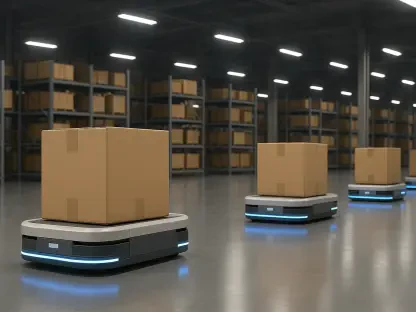
The 2026 ruling is remarkably precise in its technical definitions, casting a wide net that captures a diverse array of commercial and industrial hardware. To be classified as an “advanced robotic device,” a system must meet a specific set of criteriit must be a ground-based mobile system weighing more than 4.4 pounds, possess network connectivity speeds of at least 200 kbps, and utilize software for autonomous navigation or data collection. This definition moves the conversation beyond experimental humanoids to include the workhorses of modern logistics—Autonomous Mobile Robots (AMRs) and Automated Guided Vehicles (AGVs) that are already standard in order fulfillment centers.
By setting the weight and connectivity thresholds relatively low, the FCC has ensured that even small delivery bots and specialized inspection tools are subject to the same rigorous standards as heavy-duty industrial vehicles. The inclusion of connectivity speeds is particularly significant, as it highlights the government’s concern over the volume of data these devices can transmit. Since these robots are often equipped with high-resolution cameras and Lidar sensors, they are capable of creating detailed 3D maps of sensitive facilities, making the security of their data transmission protocols a top priority for national safety officials.
Geopolitical Realities: Focus on Supply Chain Integrity
While the language of the FCC ruling is technically country-neutral, its practical application is clearly aimed at addressing the dominance of specific foreign manufacturing hubs. The evidentiary basis for these restrictions cites documented security flaws in foreign-made hardware and concerns over “backdoors” that could allow remote access to sensitive American data. There is also a strategic focus on the humanoid robot supply chain, specifically regarding the production of high-density batteries and advanced actuators. For manufacturers in allied regions such as the European Union, Japan, and South Korea, the ruling introduces a heavy compliance burden, but the underlying intent is to decouple American infrastructure from high-risk technology providers.
The focus on supply chain integrity is a direct response to the global nature of robotics manufacturing, where a single machine might contain components from a dozen different countries. The FCC’s mandate requires a deeper level of transparency regarding the origin of critical sensors and processing units. This emphasis on provenance is intended to prevent the “rebranding” of restricted technology, ensuring that a robot assembled in a neutral country does not still carry the same security risks due to its internal components. This shift forces manufacturers to rethink their entire production logic, prioritizing suppliers that can guarantee a clean bill of health for their hardware.
Navigating the Maze: Regulatory Ambiguities
Despite the clear goals of the ruling, the industry is currently grappling with several gray areas that create operational uncertainty for both vendors and users. One of the primary concerns is the exact definition of a “new model,” as it remains unclear whether a minor hardware refresh or a firmware update will trigger the need for a fresh FCC authorization. Furthermore, the “Conditional Approval” process involves the Department of War, yet there is currently no established timeline or transparent criteria for what constitutes an “acceptable risk.” These ambiguities have left many system integrators in a state of cautious paralysis, as they are hesitant to invest in new platforms that might later be denied authorization.
The lack of clarity extends to the “foreign-produced” status of robots assembled in regions like Mexico or Vietnam that use a high percentage of restricted components. Without a standardized formula for calculating “substantial transformation,” manufacturers are left guessing whether their localized assembly operations will be sufficient to bypass the Covered List. This uncertainty is exacerbated by the potential for litigation, as major international manufacturers are expected to challenge the ruling in court, much like the drone industry did in late 2025. For now, the robotics market must operate in a landscape where the rules are written, but the interpretation remains a work in progress.
Future Trends: The Push for Localization
The long-term impact of this ruling will likely be a massive push toward localized supply chains and technological decoupling from high-risk regions. In the coming years, foreign vendors will likely accelerate plans to move assembly operations to allied nations to meet “substantial transformation” requirements. Additionally, the U.S. market is expected to see a surge in domestic manufacturing and a deeper reliance on hardware from nations that already meet stringent security standards. While this shift may slow down the adoption of automation in the short term due to increased costs and the need for new certifications, it will eventually lead to a more resilient and secure robotics ecosystem.
In this new environment, the technical performance of a robot will no longer be the sole metric for its success; instead, security specifications will be prioritized alongside speed and payload capacity. This shift will likely favor companies that have already invested in “security-by-design” principles, as they will be better positioned to navigate the FCC’s rigorous authorization process. Moreover, the industry may see the emergence of new certification bodies that specialize in auditing the software and hardware of autonomous systems, providing facility operators with the peace of mind they need to continue their automation journeys in a more regulated world.
Strategic Recommendations: Shifting Market Dynamics
For businesses and professionals operating in this new landscape, a proactive approach is essential to avoid costly disruptions to their operations. Companies should immediately conduct an audit of their existing and planned robotic fleets to identify any hardware that falls under the new FCC definitions. It is also advisable for facility operators to diversify their supplier base, looking toward manufacturers in regions with established security protocols and clear paths to compliance. For system integrators, the priority should be establishing transparent communication lines with international suppliers to verify component origins and future-proof product roadmaps against potential regulatory changes.
Navigating this transition requires moving away from an “efficiency-first” mindset and adopting a “security-first” strategy that accounts for the evolving regulatory environment. Businesses must also stay informed about the developing “Conditional Approval” process, as being among the first to successfully navigate this path could provide a significant competitive advantage. Engaging with trade associations and legal counsel who specialize in trade policy will be critical for understanding how the FCC’s interpretations evolve over the next several months. Ultimately, success in the modern robotics market depends on the ability to balance rapid innovation with strict adherence to national security mandates.
Conclusion: Balancing Innovation and National Security
The 2026 FCC ruling established a new baseline for the American robotics industry, moving the conversation from simple productivity to the complex realities of digital sovereignty. Businesses shifted their focus away from low-cost, foreign-sourced hardware and transitioned toward a model that valued supply chain transparency and regional manufacturing. The policy served as a catalyst for a broader movement toward industrial resilience, forcing manufacturers to innovate within a framework that prioritized the safety of national infrastructure. The mandate solidified the idea that the hardware driving the economy had to be as secure as it was efficient, ensuring that the future of automation remained protected from external vulnerabilities.
As the industry moved forward, the ability to integrate advanced security protocols became a primary differentiator for successful vendors. Facility operators adopted new procurement standards that emphasized the origin of components, effectively creating a more fragmented but trustworthy global market. The transition marked the end of the era of unfettered sourcing, yet it opened the door for a new generation of domestic and allied-nation technology providers to scale their operations. Ultimately, the industry learned that long-term technological progress was only sustainable when built upon a foundation of trust and regulatory clarity, setting the stage for a more robust and secure automated future.