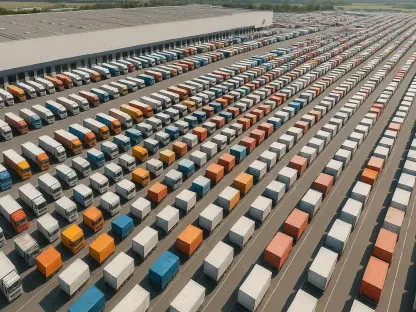

The landscape of domestic commerce shifted dramatically when the United States Postal Service and DHL eCommerce solidified a ten-year, ten-billion-dollar agreement that redefined how packages move across the nation. This historic commitment represents far more than a simple vendor-client relationship; it marks a total strategic alignment designed to navigate the complexities of a fast-paced digital economy. While the USPS has faced consistent challenges with the decline of traditional first-class mail, this deal provides a robust influx of volume and revenue essential for its continued operation. Conversely, DHL gains a streamlined mechanism to tackle the most expensive and complex part of the delivery cycle: the final trek to the customer’s door. This partnership serves as a high-profile signal that the future of logistics relies on the intersection of public infrastructure and private-sector agility. By combining the vast reach of the postal system with DHL’s global technical expertise, both entities are creating a more resilient shipping network.
Synergizing Logistics Networks
Operational Integration: The Mechanics of the Upstream Process
DHL eCommerce manages the sophisticated upstream segments of the logistics chain, focusing on the heavy lifting required before a parcel ever enters a local neighborhood. Their operations start with large-scale industrial pickups and extend through a highly automated network of sorting hubs and regional transit routes. By investing heavily in proprietary technology and high-speed sorting systems, DHL ensures that packages are moved across state lines and through major transportation corridors with precision. This focus on the middle-mile allows the company to maintain strict quality control and data visibility throughout the most volatile portions of the journey. Instead of diverting resources to maintain a fleet of thousands of neighborhood delivery vans, DHL optimizes its efforts on bulk movement and cross-border logistics. This specialization ensures that the initial stages of the delivery process are as efficient as possible, setting a high standard for speed and package safety within the industry.
Final-Mile Efficiency: Leveraging National Route Density
Once these parcels arrive at the destination city, they are seamlessly injected into the USPS network at specialized facilities such as Local Processing Centers or Sorting and Delivery Centers. This hand-off is the linchpin of the agreement, allowing postal carriers to handle the final-mile delivery using their established daily routes. Because the Postal Service already visits nearly 165 million addresses six days a week, adding a DHL package to an existing mail bag involves minimal incremental cost. This incredible route density is a competitive advantage that no private company can replicate without billions in capital expenditure and decades of route optimization. By leveraging the USPS as its final-mile engine, DHL can offer nationwide residential coverage without the need for a massive, dedicated delivery workforce. This model effectively turns the Postal Service into a primary subcontractor, creating a reliable and predictable bridge between global commerce hubs and the average American household.
The USPS as Modern Infrastructure
Strategic Growth: Redefining the Postal Service as a Utility
In the current landscape, the USPS has transitioned from its historical identity as a government mail service into a modern, high-capacity e-commerce utility. Under recent strategic initiatives, the organization has overhauled its physical infrastructure, expanding its overall parcel processing capacity by approximately 40% to meet surging demands. This massive upgrade involved the installation of new automated sorting machines and the redesign of delivery vehicles to accommodate larger package sizes. These changes reflect a fundamental shift in how the organization views its role in the national economy, positioning itself as a shared infrastructure layer that serves both individual citizens and corporate partners. By opening its network to private competitors, the Postal Service has maximized the utility of its national footprint, ensuring that its sorting centers and carrier routes remain busy. This evolution demonstrates a pragmatic approach to governance, where public assets are utilized to support the private market while maintaining universal service obligations.
Financial Sustainability: The Impact of Last-Mile Revenue
Financially, this transition into a utility-style provider has become a cornerstone of the Postal Service’s long-term sustainability strategy in a digital world. The revenue generated from high-volume last-mile partnerships now accounts for billions of dollars annually, providing the liquidity needed to fund essential operations and infrastructure maintenance. These commercial agreements help subsidize the cost of maintaining over 33,000 retail locations and a nationwide workforce that provides a vital connection to rural and underserved communities. Without these deep partnerships with companies like Amazon and DHL, the USPS would face much steeper financial hurdles as traditional paper mail continues to dwindle. By acting as the delivery engine for the world’s largest logistics players, the Postal Service secures its place in the supply chain of the future. This strategic pivot ensures that the agency remains operationally solvent, proving that legacy institutions can adapt to the rapid demands of the modern e-commerce environment.
DHL’s Business Rationale and Industry Trends
Capital Allocation: The Economic Benefits of Strategic Partnering
For DHL eCommerce, the commitment of $10 billion toward this partnership was a calculated move rooted in the practical realities of modern logistics and capital allocation. Building a proprietary, nationwide residential delivery network in the United States would have required an astronomical investment and years of regulatory hurdles. By choosing to partner with the USPS instead of competing directly on the final-mile front, DHL can direct its capital toward high-growth areas like automated hubs and international freight technology. This strategy allows the company to position its service offerings in the competitive middle ground between premium, high-cost express shipping and slower, budget-focused ground options. This flexibility is crucial in a market where consumer expectations are constantly shifting and operational costs are rising due to fuel and labor pressures. By relying on a proven partner for the final leg, DHL minimizes its own overhead while maximizing the reliability and speed of its network for its business clients.
Industry Evolution: The Rise of Logistics Co-opetition
This agreement highlights a broader trend in global logistics known as “co-opetition,” where traditional rivals share infrastructure to enhance efficiency and reduce carbon footprints. The industry is moving away from a siloed model where a single company attempts to own every step of the supply chain, from the factory floor to the customer’s doorstep. Instead, a more specialized system is emerging where different entities manage specific segments of the journey based on their core competencies and geographic advantages. This collaborative approach stabilizes the market by reducing redundant routes and optimizing the use of existing transportation assets. The expanded USPS-DHL relationship serves as a definitive blueprint for how public and private organizations can work in tandem to solve complex logistical challenges. As shipping volumes continue to grow, this model of shared resources will likely become the industry standard, ensuring that the global supply chain remains resilient in the face of economic shifts and increasing consumer demands.
Navigating the Future of Logistics Integration
The finalized agreement between the USPS and DHL established a clear roadmap for organizations looking to optimize their supply chain through strategic collaboration. Businesses that analyzed this deal understood that success depended on identifying core strengths and outsourcing high-complexity, low-margin tasks to specialized partners. Stakeholders recognized that the integration of public utilities into private shipping workflows created a more robust economic foundation for everyone involved. Moving forward, logistics managers considered how to replicate this model by seeking out localized partnerships that offered similar route density and operational scale. The shift toward a shared infrastructure model allowed for a more sustainable approach to urban delivery, reducing traffic congestion and lowering the overall cost of goods for the consumer. Ultimately, the industry learned that competition did not always require total independence, as the most effective solutions often emerged from a clever combination of disparate networks and shared goals.