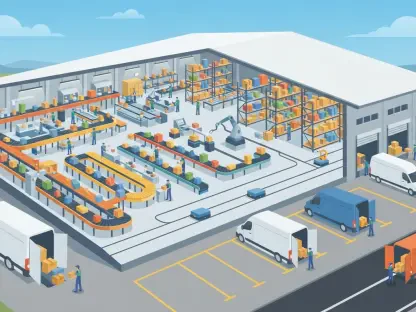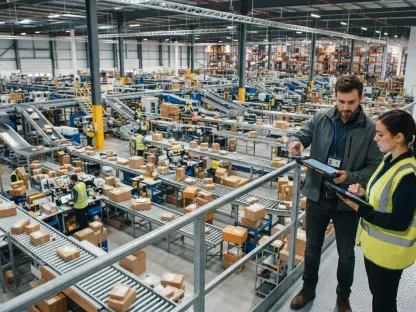

Modern logistics centers have evolved from mere storage facilities into the high-performance engines of global commerce, where every millisecond of latency can directly translate into millions of dollars in lost revenue and eroded market share. This transformation marks a departure from the days when warehouse management was viewed as a secondary operational concern, relegated to the domain of supply chain supervisors and floor managers. In the current economic climate, characterized by unpredictable labor markets and hyper-accelerated consumer expectations, warehouse automation has ascended to the highest levels of corporate governance. Boards of directors no longer view these technologies as mere upgrades to existing infrastructure but as foundational pillars of a company’s competitive strategy and long-term viability. By integrating automated systems into the broader business roadmap, executives are acknowledging that the ability to fulfill orders with precision and speed is just as critical to a brand’s health as its marketing or product development. This strategic shift ensures that investments in robotics and intelligence are not siloed projects but are instead aligned with corporate objectives such as sustainability, resilience, and global scalability, turning the warehouse into a dynamic asset rather than a static cost center.
The Evolution of Risk: The Cost of Inaction
Historically, the primary obstacle to implementing advanced warehouse technologies was the perceived capital risk associated with high upfront costs and the potential for a slow return on investment. However, as we navigate through the complexities of 2026, the risk profile has fundamentally inverted, and the greatest threat to a company’s survival is now seen as the decision to do nothing while competitors modernize. Senior leadership teams are increasingly aware that a failure to innovate in fulfillment capabilities leads to a compounding resilience gap that becomes harder to close with each passing fiscal quarter. In a world where same-day or next-day delivery has become the baseline expectation, a manual warehouse is a bottleneck that threatens the entire customer journey. When a brand fails to meet these expectations due to operational inefficiencies, the damage to its reputation is often permanent, making the investment in automation a form of brand insurance that protects the company’s most valuable intangible assets. This mindset shift has forced boardrooms to evaluate technology not just as a cost to be minimized, but as a strategic necessity to be maximized.
Boardrooms are now treating automation as a strategic buffer against the volatility of the global labor market, recognizing that human-centric operations are increasingly susceptible to external shocks. The focus has shifted from simple head-count reduction to building a robust operational foundation that can maintain peak performance regardless of local labor shortages or wage fluctuations. By making automation a boardroom priority, companies can ensure that their technical roadmaps are synchronized with their financial planning, allowing for more aggressive growth strategies that were previously hindered by fulfillment constraints. This high-level oversight allows for a more holistic view of risk, where the cost of inaction is quantified not just in operational expenses but in lost market opportunities and the inability to pivot when consumer demands shift. Consequently, the discussion is no longer about the technical specifications of a single machine but about how an automated ecosystem can serve as a shield for the company’s bottom line during periods of economic uncertainty. Leaders who recognize this shift are positioning their organizations to absorb shocks that would otherwise cripple a traditional, manual distribution network.
Software-Centric Orchestration: The Operational Core
A significant trend in modern warehouse strategy is the realization that the software layer is far more critical to long-term success than the physical machinery it controls. In the past, many organizations fell into the trap of purchasing hardware—such as automated storage and retrieval systems or conveyor belts—and then attempting to layer software on top of it, resulting in fragmented and inefficient operations. Today, the most successful boardroom-led initiatives prioritize a software-first approach, implementing sophisticated Warehouse Execution Systems (WES) that act as the central brain of the facility. These systems do not just manage tasks; they orchestrate the complex interplay between human workers, diverse robotic fleets, and traditional material handling equipment in real-time. This level of synchronization is essential for maximizing throughput and ensuring that the various components of the warehouse work in harmony rather than in isolated silos, providing the transparency that executives need to monitor performance at a granular level across their entire network. The software becomes the intelligence that bridges the gap between high-level business goals and floor-level execution.
Adopting a software-centric model also provides the essential benefit of hardware agnosticity, which is a major consideration for executives concerned with future-proofing their investments. When the core logic of the warehouse resides in a flexible, vendor-neutral software platform, the company is no longer tethered to a single equipment manufacturer for the lifespan of the facility. This flexibility allows businesses to integrate the latest advancements in robotics—whether they are new autonomous mobile robots or specialized picking arms—without needing to rebuild their entire operational architecture. As technological cycles continue to shorten, this ability to swap out hardware components while maintaining a consistent software foundation becomes a massive competitive advantage. It allows the board to authorize incremental hardware upgrades that respond to specific operational needs, ensuring that the warehouse remains at the cutting edge of efficiency without the massive disruptions typically associated with large-scale technological transitions. This architectural agility is what enables a business to remain relevant and responsive in an era of rapid technological breakthroughs.
Flexible Robotics: The Shift to Elastic Operational Models
The maturation of Autonomous Mobile Robots (AMRs) has fundamentally changed the financial and operational calculus of warehouse automation, moving it away from the rigid structures of the past. Traditional automation often involved bolted-down infrastructure, such as massive conveyor networks and fixed sorting systems, which, while efficient, offered very little in the way of flexibility if a company needed to change its product mix or relocate its operations. In contrast, modern robotic solutions are inherently mobile and reconfigurable, allowing warehouses to adapt their floor plans and workflows in a matter of days rather than months. This elasticity is highly valued by boards of directors who must navigate increasingly seasonal and volatile demand cycles. The ability to deploy more robots during peak holiday seasons and scale back during slower periods provides a level of operational agility that was simply impossible with the heavy, fixed systems of previous decades, turning fixed costs into more manageable variable ones. This physical flexibility is a direct answer to the market’s demand for faster transitions and more diverse product offerings.
Furthermore, the rise of Robotics-as-a-Service (RaaS) has transformed how these technologies are financed, making automation accessible to a wider range of businesses and reducing the barrier to entry for large-scale deployments. By shifting the financial burden from capital expenditure (CAPEX) to operational expenditure (OPEX), RaaS models allow companies to preserve their cash flow while still benefiting from the latest robotic innovations. This financial flexibility is a major talking point in boardrooms, as it allows for more rapid scaling and reduces the long-term risk of owning obsolete hardware. Leaders can now treat robotics as a utility, paying for the throughput or the number of units handled rather than the machines themselves. This shift aligns warehouse operations with the broader corporate move toward as-a-service models in other sectors like cloud computing, providing a predictable and scalable cost structure that facilitates more accurate financial forecasting and strategic planning for the years ahead. By decoupling the technology from the ownership of the asset, companies can maintain a lean balance sheet while still wielding the power of state-of-the-art automation.
Data-Driven Intelligence: The Imperative of Digital Security
The integration of Artificial Intelligence and advanced predictive analytics into the warehouse environment has turned these facilities into proactive, self-optimizing ecosystems that can anticipate problems before they occur. By leveraging the massive amounts of data generated by automated systems, companies can implement predictive maintenance schedules that virtually eliminate unplanned downtime, which has historically been one of the costliest aspects of warehouse management. These AI-driven insights also allow for the dynamic routing of robots and the optimization of storage locations based on real-time sales trends, ensuring that the most popular items are always in the most accessible positions. For the board, this means that the warehouse is no longer just a place where things are stored, but a source of vital business intelligence that can inform broader decisions regarding inventory management, procurement, and market expansion, creating a feedback loop between the floor and the executive suite. The ability to predict and react to market shifts before they happen is the ultimate prize in modern supply chain management.
However, as warehouses become increasingly reliant on digital connectivity and complex software architectures, the issue of cybersecurity has risen to the top of the boardroom agenda. An automated fulfillment center is now a sophisticated piece of digital infrastructure, and any disruption to its software or network could bring an entire company’s supply chain to a screeching halt. This realization has led to a focus on digital resilience, where security protocols and disaster recovery plans are integrated into the very design of the automated system. Boardrooms are now authorizing significant investments in secure network architectures and robust data encryption to protect against cyber threats and unauthorized access. Moreover, by incorporating spatial optimization and high-density storage solutions into these digital-first designs, companies are simultaneously addressing physical constraints—such as limited real estate and rising land costs—while ensuring that their operations are shielded from both physical and virtual vulnerabilities in an increasingly interconnected world. Securing the physical facility is no longer enough; the digital perimeter must be equally impenetrable.
Strategic Readiness: Moving Beyond the Immediate Horizon
The strategic elevation of warehouse automation into the boardroom represented a fundamental recognition that the back-end of the supply chain had become the front-line of brand competition. Executives successfully pivoted away from viewing these technologies through a narrow lens of cost-cutting, instead embracing them as essential tools for building a resilient and scalable enterprise. Moving forward, the most successful organizations established a culture of continuous technological assessment, ensuring that their software platforms remained agile and their hardware choices stayed flexible. They prioritized the development of internal expertise to manage these complex systems, while also fostering partnerships with technology providers who could offer scalable, service-based solutions. By treating digital security as a core component of operational integrity, these leaders protected their physical and data assets against an evolving threat landscape. Ultimately, the decision to automate became an ongoing dialogue about how to best leverage intelligence and robotics to meet the ever-changing demands of the global consumer, ensuring that the business remained prepared for whatever challenges lay beyond the immediate horizon.