
The chaotic symphony of Metro Manila’s gridlocked arteries has long been defined by the high-pitched drone of small-displacement internal combustion engines hauling everything from hot meals to industrial hardware. As the archipelago’s digital economy experiences a sustained period of explosive growth between 2026 and 2028, the traditional reliance on fossil-fuel-powered two-wheelers is facing an unprecedented reckoning from both environmental and economic fronts. Logistics firms are no longer merely looking for faster routes through the smog; they are actively seeking a fundamental shift in their fleet architecture to combat rising fuel volatility and stringent urban emission standards. This transition represents more than a simple swap of power sources; it is a systemic redesign of how goods move within the dense, humid corridors of Philippine megacities. The arrival of high-torque, long-range electric motorcycles has finally provided a viable alternative that promises to decouple logistical expansion from its heavy carbon footprint while simultaneously offering a lifeline to operators squeezed by narrow profit margins.
The Economic Calculus: Redefining Fleet Management Costs
The most immediate catalyst for this shift is the drastic reduction in total cost of ownership that electric platforms offer compared to their gasoline-powered counterparts. While the initial purchase price of an electric motorcycle might appear higher on paper, the elimination of oil changes, belt replacements, and complex engine overhauls creates a significant downward pressure on operational expenses. For a delivery rider covering over a hundred kilometers daily in stop-and-go traffic, the savings on electricity versus premium gasoline can account for nearly forty percent of their daily take-home pay. Furthermore, major logistics players like Grab and Lalamove have begun testing large-scale deployment of these vehicles, finding that the simplified mechanical nature of EVs results in significantly less downtime for repairs. By utilizing telemetry data to monitor battery health and motor efficiency, these organizations can now predict maintenance needs with a degree of accuracy that was previously impossible with aging internal combustion fleets.
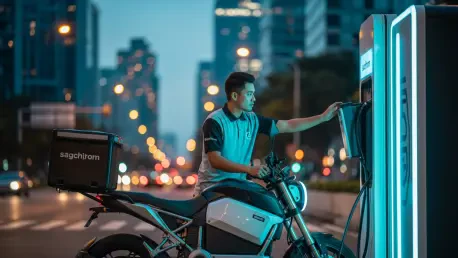
Beyond direct maintenance, the integration of battery swapping technology has effectively neutralized the primary deterrent of charging downtime, which previously crippled the efficiency of two-wheeled logistics. Companies such as Gogoro and Honda have established extensive networks of swap stations across the National Capital Region, allowing riders to exchange a depleted battery for a fully charged one in less time than it takes to fill a gas tank. This infrastructure-as-a-service model shifts the burden of battery degradation from the individual rider to the service provider, ensuring that the fleet remains powered by the most efficient energy storage technology available. This seamless transition is crucial in a market where every minute of inactivity directly translates to lost revenue. Moreover, the quiet operation of electric motors allows for late-night or early-morning deliveries in residential zones without violating local noise ordinances, effectively expanding the operational window for logistics companies and reducing congestion during peak daylight hours.
Strategic Implementation: The Road Toward Decarbonization
The successful pilot programs conducted between 2026 and 2027 demonstrated that electric motorcycles were not merely a niche solution but a robust cornerstone of modern urban supply chains. Stakeholders realized that the transition required more than just hardware; it necessitated a collaborative ecosystem involving energy providers, financial institutions, and logistics operators. Financial institutions developed specialized loan products that lowered the barrier to entry for independent contractors, while energy companies ensured that the increased demand did not compromise local grid stability. These coordinated efforts were instrumental in proving that the shift toward sustainable logistics was both technologically feasible and economically superior. Looking back, the focus shifted toward expanding these networks to regional hubs outside of Metro Manila, such as Cebu and Davao, where similar congestion and pollution challenges persisted. This geographic expansion ensured that the benefits of electrification were felt beyond the capital region.
Public-private partnerships were strengthened to address the recycling of lithium-ion batteries, ensuring that the lifecycle of these vehicles remained truly sustainable from production to disposal. These initiatives demonstrated that the most effective path forward involved the standardization of battery sizes and the expansion of solar-powered charging hubs to reduce the overall burden on the national grid. By prioritizing the electrification of high-mileage delivery fleets, the Philippines successfully mitigated a significant portion of its urban pollution while building a more efficient and reliable logistics backbone. Stakeholders were encouraged to adopt a circular economy model where used batteries were repurposed for stationary energy storage in rural areas. This strategic pivot served as a catalyst for broader societal shifts toward renewable energy, proving that even the most daunting infrastructure challenges were overcome through a commitment to systemic reform and innovation.