
The sight of a white FedEx Express truck and a white-and-green FedEx Ground van passing each other on the same quiet cul-de-sac used to be a daily ritual of operational redundancy that cost the company billions in fuel, maintenance, and wasted manpower. For decades, this logistical overlap was the physical manifestation of a corporate structure that prioritized specialization over synergy. However, as the world of global commerce enters the second half of this decade, the necessity of a leaner, more agile framework has forced a total reimagining of how packages move from a warehouse to a doorstep. This transformation, known internally and throughout the industry as Network 2.0, is not just a change in livery or a reorganization of middle management; it is a fundamental shift in the industrial logic of one of the world’s largest logistics providers. By dissolving the traditional walls between Express and Ground, the organization is betting that it can offer the speed of air transport and the economy of surface shipping within a single, unified lane.
The importance of this transition cannot be overstated in an environment where speed is no longer a premium luxury but a baseline expectation. In previous years, the company could afford the luxury of separate networks, but the current competitive landscape, dominated by integrated giants and highly optimized tech-driven delivery services, has made redundancy a liability. The goal is to capture $2 billion in annual savings by the conclusion of the fiscal year 2027, a target that requires a surgical level of precision in route planning and facility utilization. As the company moves toward a singular “Federal Express” identity, the focus has shifted from managing separate fleets to managing a cohesive flow of 18 million daily shipments. This evolution is designed to ensure that the infrastructure is prepared for the volatility of modern e-commerce while maintaining the reliability that defined the brand for its first half-century.
The End of the Double-Delivery Era
The dismantling of the bifurcated delivery system marks a historic departure from the specialized history of the company. For years, the distinction between a time-sensitive overnight envelope and a heavy box of home goods dictated which truck would arrive at a customer’s address. While this allowed for extreme specialization, it created a massive inefficiency where two different vehicles serviced the same zip code, often at nearly the same time. The move away from this model represents a calculated effort to prove that efficiency does not have to come at the expense of service speed. By merging these streams, the company is effectively ending the era of the double-delivery, ensuring that a single driver can manage the entire spectrum of customer needs in a specific neighborhood.
This transition requires a delicate balancing act that few logistics companies have attempted at this scale. The primary challenge lies in the nature of the “last mile,” where the density of deliveries determines profitability. Under the old model, the Ground network focused on high-volume, residential stops, while the Express network was built around strict time commitments, such as 8:00 a.m. or 10:30 a.m. deadlines. Network 2.0 requires these two distinct missions to merge, forcing a logistical redesign where a single vehicle must prioritize time-definite shipments without compromising the efficiency of the high-volume route. This shift is being systematically implemented across North America, as the organization moves to eliminate the operational walls that once defined its corporate identity.
As these changes take hold, the suburban landscape is beginning to reflect the new operational reality. The reduction in vehicle miles traveled is not only a financial win but also a significant step toward sustainability goals, as fewer trucks on the road lead to a smaller carbon footprint. Moreover, the move toward a unified brand helps to eliminate customer confusion, providing a single point of interaction for all shipping needs. The company is betting that by streamlining the front-end experience and the back-end logistics, it can create a more resilient network that is capable of scaling with the ever-changing demands of global trade. This is the moment where the legacy of specialization meets the necessity of integration, creating a blueprint for the future of delivery.
Breaking the Silos of a Logistics Giant
To understand why Network 2.0 is such a massive undertaking, one must consider the historical context of the corporate structure. For decades, FedEx Express and FedEx Ground operated as entirely separate universes, featuring different planes, different trucks, and even different employment models. This silos-based approach was originally designed to protect the integrity of the time-sensitive air network, ensuring that heavy ground volume did not slow down the delivery of urgent medical supplies or legal documents. However, in an era where e-commerce demands both extreme speed and low cost, the walls between these segments became more of a hindrance than a safeguard. The current shift toward a unified “Federal Express” brand is the primary tool used to dissolve these internal barriers.
The pressure to evolve is coming from all directions, but primarily from competitors who have long utilized integrated networks to drive down costs. Companies like UPS and Amazon have demonstrated that a single, unified logistics chain can offer superior density and lower per-package costs. For FedEx to remain competitive, it must match this efficiency while preserving its reputation for premium service. The financial necessity of this change is clearly outlined in the company’s projections, which aim for significant savings by 2027. These savings are not expected to come from simple budget cuts but from the systemic removal of redundancies, such as the consolidation of sorting facilities and the optimization of long-haul trucking routes.
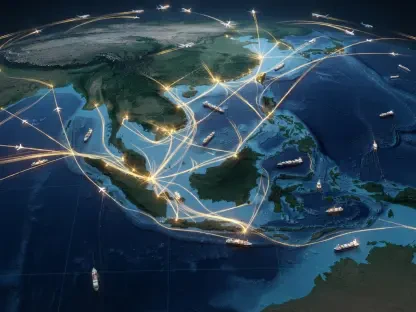
Furthermore, the integration of these networks allows for a more flexible response to market shifts. In the past, if the Express network was underutilized while the Ground network was overwhelmed, there was no easy way to shift volume between the two. By creating a unified system, the company can dynamically allocate resources based on real-time demand. This agility is critical in a world where global supply chains can be disrupted by anything from regional conflicts to sudden spikes in consumer spending. The goal is to move from a rigid, specialized structure to a fluid, holistic logistics lifecycle that can handle any package, regardless of its origin or destination, with the same level of efficiency.
The Operational Mechanics of Unification
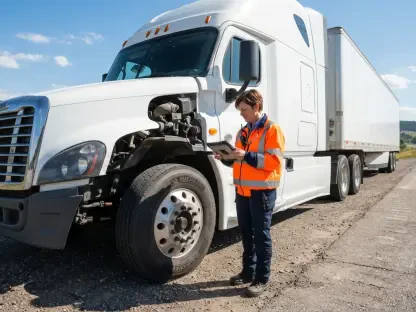
The transformation is far more than a branding exercise; it is a fundamental redesign of how 18 million daily shipments move through the global supply chain. By merging air and surface operations, the company is fundamentally altering the “last mile” of delivery, which is often the most expensive and complex part of the journey. The core of this new model is the elimination of overlapping routes, which is achieved through a “one truck, one neighborhood” philosophy. Instead of multiple vehicles servicing a single neighborhood, a single driver now manages a mix of time-definite Express packages and high-volume Ground shipments. This requires a sophisticated approach to route sequencing, as drivers must meet early morning commitments while still completing a full day of residential stops.
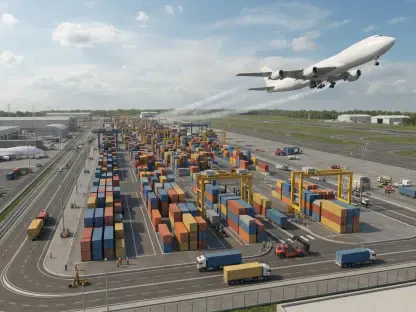
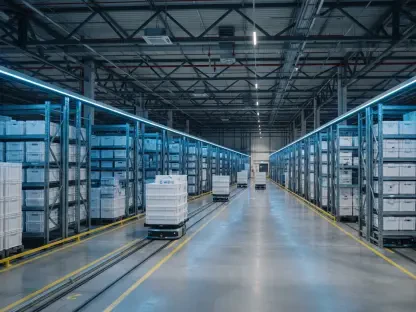
The physical infrastructure of the network is undergoing a similar evolution, with facilities like the hub in Mesquite, Texas, serving as a blueprint for the future. This site handles roughly 100,000 packages daily and has been retrofitted with specific technologies to manage the combined volume of air and ground shipments. One of the most critical upgrades is the installation of caster deck systems, which allow workers to move heavy air cargo pallets alongside standard parcels with ease. Additionally, the facility has integrated specialized cold-chain storage units to handle the high-growth healthcare sector, ensuring that temperature-sensitive medications like GLP-1 drugs are handled with the necessary precision. These infrastructure changes ensure that the facility can act as a single point of entry for all types of freight.
Technological automation is the final piece of the operational puzzle. In facilities like Mesquite, advanced sortation systems now utilize six-sided scanning tunnels and automated belts that process 3,000 parcels per hour. This technology eliminates the need for manual barcode alignment, significantly increasing the speed of the sortation process and reducing the risk of human error. For the independent Contracted Service Providers who handle much of the last-mile delivery in North America, these upgrades are essential. These contractors are now taking on high-stakes Express deliveries that were once the sole domain of company-employed couriers. To succeed, they must return to their hubs by strict evening deadlines to ensure that outbound air cargo makes its scheduled flights, a task that requires absolute logistical precision.
Expert Perspectives and Performance Metrics
Industry analysts and internal leadership suggest that while the transition is incredibly complex, the data from the early phases of the rollout supports the shift toward integration. Raj Subramaniam, the CEO of FedEx, has categorized this effort as one of the most significant industrial transformations in recent memory. He has repeatedly emphasized that the “operational walls” must come down to ensure the long-term survival and profitability of the firm. The leadership team believes that by creating a more unified culture and a more streamlined operation, the company can provide better service at a lower cost, which is the ultimate goal of the Network 2.0 initiative.
The reliability of the network during the most recent holiday peak provides strong evidence that the integration is working as intended. Despite the massive shifts in how packages were sorted and delivered, the company maintained a 95.3% on-time delivery rate. This performance metric suggests that the merging of Express and Ground has not caused the service degradation that many critics originally feared. On the contrary, the density created by the combined volume seems to have strengthened the network’s overall stability. By closing hundreds of smaller, redundant stations and consolidating facilities—as seen with the closure of four stations in the East Texas district—the company is successfully streamlining its physical footprint without losing its reach.
From an economic perspective, the viability of the project is becoming increasingly clear. The consolidation of routes and facilities is directly contributing to the $2 billion annual savings target. Analysts have noted that the reduction in redundant facility leases and the lower maintenance costs for a unified fleet are providing an immediate boost to the bottom line. Moreover, the ability to offer a consistent, seven-day-a-week service across the entire network has allowed the company to capture a larger share of the weekend e-commerce market. This data-driven approach to transformation proves that even a massive logistics giant can pivot toward a more modern, integrated model if the execution is handled with enough technical and organizational rigor.
Strategies for a Successful Transition
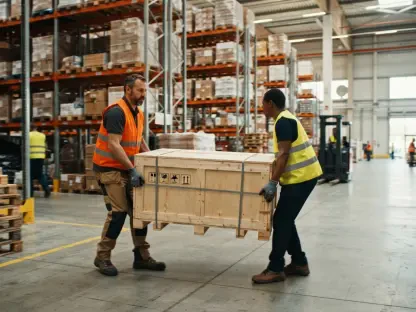
To complete the goal of a 100% integrated network by 2027, the organization is following a rigorous framework of technological and organizational adaptation. One of the primary strategies is to prioritize automation over manual labor whenever possible. By deploying RFID sensors and robotics to handle repetitive sortation tasks, the company allows its human workforce to focus on more complex challenges, such as managing “nonconveyable” items. These items, which include furniture, large electronics, and other oversized goods, make up a significant portion of modern e-commerce volume and require a level of care that automated systems cannot yet provide.
Another critical strategy involves investing in workforce versatility. As the company moves away from specialized “air” and “surface” roles, employees are being trained to manage the diverse needs of an integrated hub. This shift ensures that the team understands the entire logistics lifecycle, from the moment a package is scanned at a retail location to the moment it is delivered to a home. This holistic approach to labor management helps to break down the cultural silos that once existed between the different operating companies. By fostering a sense of shared mission, the organization is creating a more cohesive and motivated workforce that is better equipped to handle the challenges of a unified network.
Finally, the company is focused on scaling its “Seven-Day” model to provide the consistent service that modern consumers demand. By using the density created by the merged network, the organization can offer weekend service at a lower cost than would have been possible under the old, bifurcated system. This is a critical requirement for competing with the logistics infrastructure of other major players in the market. The ability to move packages through the network every day of the week, without interruption, is the ultimate goal of Network 2.0. As the transition nears completion, the organization is positioning itself as a leaner, more agile, and more integrated competitor in the global logistics arena.
The leadership team identified that the next phase necessitated the integration of autonomous line-haul trucks to further reduce operational costs. They concluded that maintaining this momentum depended on the rapid deployment of AI-driven route optimization software that adjusted to traffic and weather in real-time. The organization determined that the path forward necessitated a total commitment to digital twins, allowing managers to simulate network changes before they were implemented on the ground. The focus shifted toward ensuring that every localized hub mirrored the automated efficiency of the flagship Texas facilities. Ultimately, the blueprint required a workforce that was as technologically savvy as it was logistically capable. The transition demonstrated that the only way to secure a future in global commerce was to embrace a model of continuous, data-backed evolution.