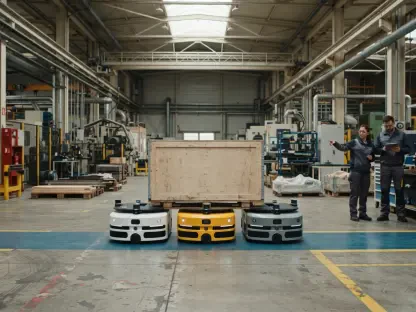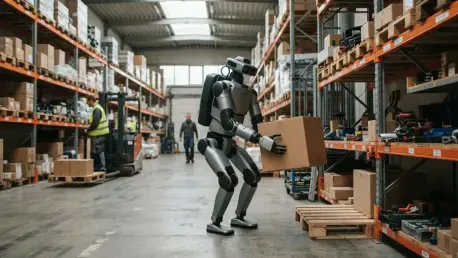

The recent announcement that GXO Logistics will deploy one thousand Apollo humanoid robots signifies a massive shift in how global supply chains manage high-volume warehouse operations through physical artificial intelligence. This expansive partnership with Apptronik represents one of the most ambitious integrations of humanoid technology seen to date, moving beyond small-scale testing into a multi-year phased rollout. By utilizing advanced hardware capable of mimicking human movement, these organizations aim to solve persistent labor shortages while simultaneously increasing the consistency of throughput across North American facilities. The strategy does not merely replace manual effort but seeks to augment existing workflows by introducing machines that can operate within environments originally designed for people. This approach allows for a seamless transition where robots navigate the same aisles and utilize the same workstations as their human counterparts, thereby avoiding the massive costs associated with complete facility redesigns or complex infrastructure overhauls.
Scaling Automation Through Strategic Robotics Models
Flexibility: The Robotics-as-a-Service Framework
Adopting a Robotics-as-a-Service model provides a flexible financial framework that allows large-scale logistics providers to integrate cutting-edge technology without the burden of traditional capital expenditures. This subscription-based approach ensures that the latest software updates and hardware maintenance are managed directly by the manufacturer, reducing the total cost of ownership and accelerating the return on investment. Furthermore, the scalability inherent in this model enables facilities to adjust their robotic fleet size based on seasonal demand fluctuations or specific regional needs. By avoiding heavy up-front investments, companies can remain agile, pivoting their automation strategies as new breakthroughs in machine learning and sensor technology emerge. This shift toward service-oriented procurement reflects a broader trend in the industrial sector, where access to capability is prioritized over asset ownership. As the deployment expands from initial sites to broader networks, the data gathered from daily operations will refine the cost efficiency of every robotic unit.
Intelligence: Deploying Physical AI for Complex Tasks
The core of this technological transition lies in the deployment of physical artificial intelligence, which enables humanoid robots to handle complex, repetitive tasks that were previously difficult to automate. These tasks include goods-to-person picking, case movement, and precision packing, all of which require a high degree of adaptability and spatial awareness within a busy warehouse. Unlike traditional stationary robotic arms, these humanoid units can transition between different work cells, performing a variety of functions throughout a single shift. This versatility is essential for maintaining high uptime and ensuring that automated systems can respond to the dynamic nature of modern e-commerce fulfillment. Extensive data collection at specialized training facilities has allowed these robots to master over fifty unique logistics chores, ensuring they can operate with the speed and reliability required for industrial environments. By offloading physically demanding roles to machines, the workforce can focus on complex problem-solving and supervisory duties that require human intuition.
Evolution: Establishing Benchmarks for Safety and Productivity
The successful integration of these systems required a rigorous adherence to key performance indicators that prioritized safety and seamless collaboration between humans and machines. Management teams established clear benchmarks for technical reliability and operational safety, ensuring that every robotic unit operated within strict tolerances before achieving full deployment. This phased rollout demonstrated that the long-term success of humanoid robotics depended on real-world validation and the continuous refinement of interactive protocols. To maintain this momentum, logistics leaders prioritized comprehensive training programs that prepared the human workforce to supervise and maintain these advanced systems effectively. This transition proved that humanoid robots were not merely experimental tools but essential components of a modern, resilient supply chain strategy. Identifying high-strain tasks through thorough workflow audits allowed organizations to target the most effective areas for robotic intervention. Establishing a standardized safety framework and investing in upskilling programs served as the definitive steps for ensuring long-term value.