
Rohit Laila brings a wealth of experience from the front lines of the logistics and supply chain industries, having spent decades navigating the complexities of delivery networks and global movement. As an advocate for technological integration, he has witnessed firsthand how innovation can either streamline a city’s heartbeat or clog its arteries. With the United Kingdom preparing for its self-driving vehicle pilot scheme in 2026 and the full implementation of the Automated Vehicles Act by late 2027, the focus is shifting from the software inside the cars to the physical spaces they occupy. This interview explores the evolving relationship between autonomous fleets and the urban landscape, examining how the concept of parking is being reinvented to support a multi-billion dollar market. We delve into the risks of “zombie” vehicle congestion, the transformation of car parks into high-tech mobility hubs, and the data-led strategies required to manage the kerbside of tomorrow.
The discussion covers the transition from static vehicle storage to dynamic managed access, the economic implications of a £3.7 billion autonomous service market, and the technological “bridges” like indoor mapping and frictionless payments that are already in use. Rohit also shares insights on the future of private car ownership, the potential for autonomous buses to revitalize rural transport, and the necessity of digital enforcement to maintain urban flow.
With the United Kingdom set to launch its self-driving pilot scheme in 2026 and the full implementation of the Automated Vehicles Act expected by 2027, what do you see as the most critical infrastructure gap that cities are currently overlooking?
The conversation usually begins and ends with the vehicles themselves—the sensors, the AI, and the software that allows a car to navigate a complex intersection. However, from a logistics and supply chain perspective, the most critical gap isn’t how these vehicles move, but what they do when they aren’t moving. We are looking at a future where companies like Arrive are already present in 20,000 cities across 90 countries, yet many urban planners are still thinking of parking as a static, “dumb” asset. When the 2026 pilots begin, featuring operators like Wayve, Uber, and Waymo, the immediate pressure will be on the kerbside. We need to stop thinking about parking as a place where a car sits for eight hours and start seeing it as a live, data-led staging area. If we don’t have a digital layer to manage where these vehicles stop, wait, and charge, we are essentially inviting chaos into our most congested zones.
There is a common assumption that the rise of autonomous “robotaxis” will eventually make parking obsolete because vehicles will always be on the move. Why do you argue that parking isn’t disappearing, but rather changing its fundamental character?
The idea that autonomous vehicles will stay in constant motion is a logistical fallacy that ignores the physical reality of fleet management. Even in a world dominated by shared autonomy, vehicles still have “gaps” between trips where they must pick up passengers, drop them off, charge their batteries, or undergo cleaning and light servicing. Parking is evolving into what I call “managed kerbside space,” where the emphasis shifts from long-term storage to high-turnover utilization. Think about the sensory experience of a city—the smell of rain on asphalt and the sound of delivery vans idling. In the near future, that kerbside needs to be programmed like a computer. If we don’t provide clear, paid places for these autonomous fleets to dwell, the default behavior for a robotaxi will be to circle the block empty, waiting for the next fare. That adds unnecessary miles and creates a massive amount of friction for everyone else.
You’ve highlighted the risk of “empty” autonomous vehicles adding to urban congestion. How significant is this threat, and what practical steps can cities take to ensure that autonomy actually reduces traffic rather than worsening it?
The risk is incredibly high because the economic incentive for a fleet operator is to keep the vehicle “active” and near high-demand areas. If a robotaxi has to choose between paying for a staging spot or driving in circles for free, it will choose the latter every time. This creates what I call “moving congestion,” where thousands of empty vehicle movements clog streets that are already under pressure from buses, emergency services, and deliveries. To prevent this, cities must adopt a data-driven approach to the kerb, utilizing dynamic pricing and real-time occupancy tracking. By turning the kerbside into a “live” part of the transport system, we can create a simple, automated payment infrastructure where the vehicle itself reserves and pays for its dwell time. We have to make the right behavior—stopping in a designated hub—the easiest and most cost-effective behavior for the AI driving the car.
The SMMT has valued the UK’s automated passenger services market at roughly £3.7 billion annually by 2040. In light of such a massive economic opportunity, how should infrastructure owners and investors be rethinking assets like multi-storey car parks today?
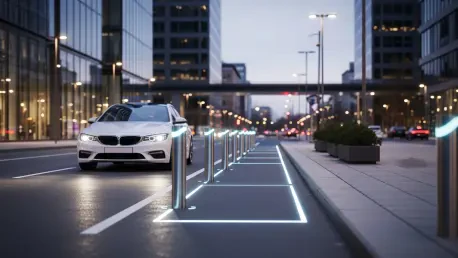
Investors and owners need to stop seeing concrete and start seeing “reconfigurable capacity.” A multi-storey car park in the 2030s shouldn’t just be a graveyard for private sedans; it should be a mobility hub that supports the entire urban ecosystem. This means designing facilities that can quickly pivot—cordoning off sections for EV fast-charging, creating staging areas for robotaxi fleets, or even dedicating floors to light maintenance and cleaning. The commercial center of gravity is moving away from static storage toward dynamic, managed access. If you have a facility that is connected and can show real-time availability to an autonomous fleet’s API, you own a piece of critical infrastructure. Those who continue to treat car parks as fixed, “analog” assets will find themselves holding stranded assets as the market shifts toward this £3.7 billion opportunity.
When we look at a city like London, journeys by taxi and private hire vehicles only account for about 1% of the total 30 million daily trips. Given this small starting point, how do you see the balance between private car ownership and autonomous shared fleets shifting over the next decade?
It is a sobering statistic to remember that while 30 million journeys happen on public transport and 6 million happen in private cars, only 300,000 are in taxis. Even if you replaced every single taxi in London with a robotaxi tomorrow, you’ve only moved the needle by 1%. This tells us that the transition will be a slow burn, not an overnight revolution. We will live in a mixed-fleet world for a very long time. For many, a private car remains a premium lifestyle choice or a necessity for hauling a family to weekend activities. However, the signal we are seeing—especially with younger generations who are increasingly choosing access over ownership—suggests that as robotaxis become more affordable and convenient, the dependency on private ownership will erode. The key is making sure the infrastructure can handle both: the person who still wants to drive their own car and the autonomous fleet that needs to navigate the same street.
What technologies are currently available that act as a “bridge” between our current parking systems and the fully autonomous future you describe?
The most significant bridge we have right now is the digital layer that makes a parking facility “visible” to a vehicle’s computer. Traditionally, a journey is smart and connected until the moment the car enters a parking structure—then it goes dark. Technologies like high-definition indoor mapping and real-time sensor integration are changing that. They allow navigation to continue seamlessly inside the building, guiding the vehicle to a specific EV charger or a reserved staging bay. Another crucial bridge is frictionless, automated payment. We are moving toward a system where the vehicle authenticates itself and handles the transaction without any human intervention. This isn’t just a convenience; it’s a requirement for autonomous fleets. When you combine these with the unified enforcement systems that companies like Arrive are building, you create a framework where rules can be applied consistently across different operators and city borders.
There is often a concern that autonomous technology will favor wealthy urban centers while leaving rural areas behind. How could autonomous technology actually improve mobility for those living outside of major cities?
Actually, the logistics of autonomy make a lot of sense for rural areas where public transport is often infrequent or non-existent. Think about the possibility of autonomous buses increasing the frequency of routes without the massive overhead currently required. In a rural environment, a mixed fleet could mean that smaller, automated shuttles supplement existing human-driven lines, making it easier for people to get around without a private vehicle. Taxis are already a vital lifeline in the countryside; if we can achieve economies of scale through autonomy, we could see a dramatic improvement in accessibility for elderly or non-driving residents. The management tools we use in the city—predicting demand and balancing fleets—are just as applicable in a rural setting to ensure that a vehicle is there when someone needs it, regardless of the population density.
As a logistics expert, what is the one “nightmare scenario” you worry about most as these fleets begin to scale, and how do we avoid it?
My biggest concern is the “zombie car” phenomenon—thousands of empty vehicles prowling the streets because it’s cheaper to keep them moving than to park them. It’s a sensory nightmare: streets filled with the hum of unoccupied cars, blocking the path for emergency vehicles and making bus journeys even slower. We also have to be vigilant about the risk of a “two-tier” city, where a few massive fleet operators monopolize the kerbside, driving up prices and pushing out smaller players or public services. We avoid this by setting clear, digital rules for the kerbside now. We need interoperability, so the same payment and reservation systems work whether you are an Uber, a Waymo, or a local delivery firm. If we treat the kerb as a programmable, fair-access asset, we can ensure the streets keep moving.
What is your forecast for the urban kerbside over the next decade?
I predict that by the mid-2030s, we will no longer use the word “parking” in a professional context; instead, we will speak about “dynamic dwell management.” We will see the kerbside become a living piece of infrastructure that reconfigures itself throughout the day—perhaps it’s a delivery zone from 6:00 AM to 10:00 AM, a passenger pick-up point during the afternoon rush, and an autonomous fleet charging hub overnight. The transition will be fueled by the roughly 88% reduction in accidents that proponents say human-error-free driving will bring, but the real success will be measured by how much “dead time” we can remove from our streets. My forecast is that the most successful cities won’t be the ones with the flashiest cars, but the ones with the smartest, most invisible digital layers managing every square inch of their kerbside.