
The global logistics ecosystem is currently undergoing a tectonic shift that replaces traditional mechanical brute force with a sophisticated neural network of data-driven intelligence. This transformation is not merely a technical upgrade but a fundamental reimagining of how goods move across the planet in a volatile economy. The industry has reached a pivotal juncture where the ability to interpret vast streams of data is as valuable as the physical infrastructure used to move cargo. As the market surpasses a valuation of $36 billion, its essential role in the global economy becomes increasingly undeniable. Every sector, from pharmaceuticals to heavy manufacturing, now relies on these intelligent networks to maintain fluid operations.
The dependency on automated systems has moved from a luxury for the elite to a core requirement for any business seeking to survive in a high-speed, digital-first environment. The focus of innovation has migrated from the muscle of the operation, such as conveyor belts and mechanical sorters, to the brain, which consists of sophisticated software and artificial intelligence. Market leaders like KION Group, Daifuku, and Honeywell are no longer just equipment manufacturers; they are architects of digital ecosystems. By setting international standards for connectivity and automation, these players are defining the future of how supply chains respond to unexpected global shocks and consumer demands.
The Great Transformation: From Physical Labor to Intelligent Supply Networks
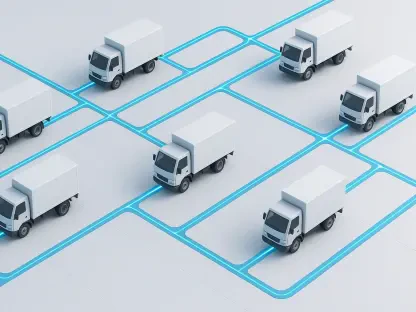
Traditional logistics models relied heavily on manual labor and predictable schedules, but the current landscape demands a more dynamic approach to orchestration. This shift toward intelligent networks allows for a level of agility that was previously impossible to achieve with human oversight alone. By integrating machine learning with physical hardware, facilities can now self-correct in real time, optimizing paths and reducing idle time without human intervention. This intelligence layer ensures that the entire supply chain remains resilient, even when faced with sudden spikes in volume or disruptions in the global transportation grid.
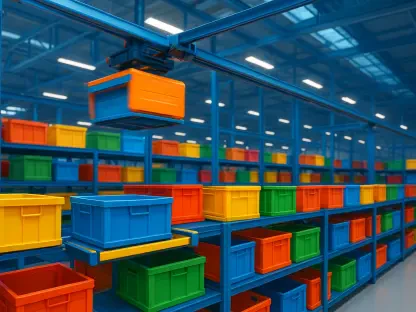
The transition from mechanical systems to software-driven environments is reshaping the workforce and the physical layout of the modern warehouse. High-speed sorters are being supplemented by autonomous units that communicate through the cloud to synchronize their movements. This orchestration transforms a collection of individual machines into a single, cohesive entity that learns from every transaction. As software becomes the primary driver of efficiency, the importance of data quality and real-time processing has moved to the forefront of strategic planning for logistics providers.
The Drivers of Digital Acceleration and Market Expansion
Catalysts for Change: E-commerce, Labor Shifts, and Real-Time Visibility
The paradigm shift in e-commerce has been a primary catalyst, forcing a move from bulk pallet shipments to item-level precision for rapid delivery windows. Consumers now expect near-instant gratification, which creates a logistical burden that cannot be met through traditional sorting methods. To maintain these tight schedules, companies have turned to AI-powered robotics that can handle individual items with the same speed and accuracy as large-scale bulk moves. This level of precision is essential for managing the high volume of returns and the complex inventory requirements of modern retail.
Addressing demographic realities has also become a necessity, as automation helps mitigate labor scarcity across North America and Europe. Aging populations and changing career preferences have left many facilities understaffed, making technology an essential partner rather than just a cost-saving measure. Furthermore, the rise of the digital twin allows operators to utilize sensors and tracking for 360-degree supply chain visibility. This enables managers to simulate various scenarios and predict outcomes before making physical changes to the workflow, significantly reducing the risk of operational errors.
Quantifying Growth: Projections and Economic Indicators Through 2035
Projected growth suggests the market will reach $104.9 billion by 2035, maintaining a strong compound annual growth rate of 11.5 percent from 2026 onward. This economic expansion is fueled by the realization that software and orchestration provide a higher return on investment than static hardware alone. While large enterprises continue to lead in total spending, small and mid-sized businesses are adopting these technologies at an even faster rate to remain competitive. This democratization of technology ensures that even smaller players can access high-level sorting and tracking capabilities through cloud-based platforms.
Retail and e-commerce currently command approximately 36 percent of the market share, reflecting their aggressive pursuit of automation to satisfy consumer expectations. The shifting value proposition indicates that the most significant growth potential lies in the integration of AI with existing warehouse management systems. As the velocity of adoption increases, the gap between automated and manual facilities will continue to widen, creating a clear distinction between market leaders and those struggling to keep pace.
Navigating the Friction: Technical and Financial Hurdles in Automation
One of the most persistent hurdles in this digital evolution is the issue of legacy debt, where modern AI must be integrated with aging ERP systems. Many companies find that their existing digital foundations are too rigid to support the fluid requirements of high-speed automation. This creates a technical friction that requires significant investment in middleware and custom software bridges to ensure seamless communication across different generations of technology. High capital expenditure also remains a concern, particularly for companies that risk inaccurately sizing their systems for future demand.
The brownfield challenge involves modernizing established facilities in mature markets like Germany without disrupting current output. Expanding or retrofitting an active warehouse is far more complex than building a new one from the ground up, as it requires a delicate balance between construction and ongoing operations. To address these financial and technical risks, the industry is moving toward modular, pay-as-you-grow robotics. These scalable solutions allow businesses to automate specific bottlenecks incrementally, reducing the initial financial burden while providing a clear path for future expansion.
The Regulatory Framework and Global Compliance Standards
Data sovereignty and security have become paramount as supply chains become more hyper-connected and reliant on global intelligence networks. Governments are increasingly implementing strict regulations to ensure that the massive amounts of data generated by automated warehouses are handled ethically and securely. This includes protecting sensitive trade information and ensuring that automated decision-making processes remain transparent. Regional policy nuances further complicate the landscape, as the regulatory approaches in North America often differ significantly from those in the Asia-Pacific or the UAE markets.
International labor regulations and safety standards are also evolving to keep pace with the rise of robot-human collaboration. Ensuring that cobots can work safely alongside human personnel requires rigorous testing and adherence to global safety protocols. These standards help build trust between the workforce and the technology, ensuring that automation is viewed as a supportive tool rather than a safety hazard. As AI becomes more autonomous, the need for ethical frameworks to govern its decisions becomes a critical component of corporate compliance and social responsibility.
The Horizon of Logistics: Regional Growth and Emerging Disruptors
Asia-Pacific has emerged as the global engine for this growth, particularly in China where the manufacturing base is expanding at a rate of 12.8 percent. The region benefits from a combination of high-volume digital commerce and a robust manufacturing infrastructure that is eager to adopt the latest technological advancements. In contrast, North America is focusing its efforts on mature fulfillment infrastructure and specialized centers designed to handle the nuances of the domestic consumer market. This regional specialization allows for more tailored automation solutions that address specific local challenges.
The role of startups has become increasingly significant, as specialized players like Locus Robotics disrupt the dominance of legacy vendors. These agile companies often focus on specific niches, such as autonomous mobile robots or the orchestration layer as a service, providing flexible alternatives to massive, end-to-end installations. This competitive environment fosters rapid innovation, forcing established players to evolve their offerings and embrace more open, interoperable architectures. The emergence of these disruptors ensures that the industry remains dynamic and responsive to the changing needs of global trade.
Synthesis: Building a Resilient and Interoperable Future
The synthesis of these developments demonstrated that the move from standalone machinery to a unified digital brain was an essential evolution for global trade. Strategic partnerships became the preferred method for achieving a positive return on investment, as companies realized they could not build these complex systems in isolation. The most successful organizations were those that prioritized interoperability, ensuring that every new piece of technology could communicate with existing infrastructure. This approach reduced the risk of technical silos and allowed for a more fluid exchange of data across the entire supply chain network.
Stakeholders found that prioritizing modularity and workforce transition over total facility overhaul was the most effective way to manage the shift toward automation. Training programs focused on upskilling employees to supervise and maintain robotic systems, ensuring that the human element remained a vital part of the intelligent network. The logistics industry eventually functioned as a cohesive and self-correcting entity, capable of navigating disruptions with minimal human intervention. This shift established a new standard for global commerce, where resilience and intelligence were the primary benchmarks of operational success.