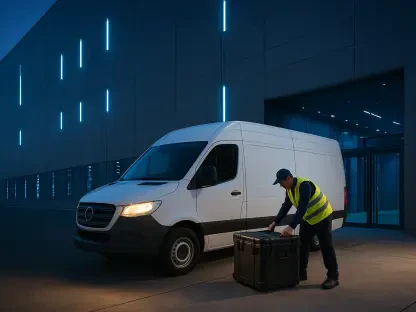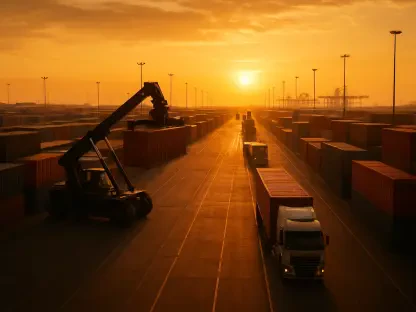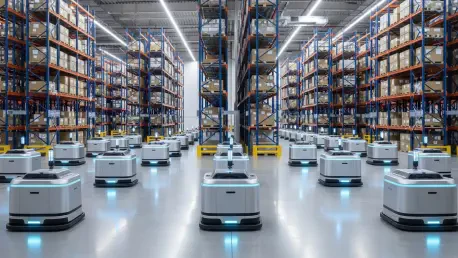

The transition from localized robotic pilots to massive, multi-site industrial deployments represents the single most significant hurdle for logistics providers aiming to maintain a competitive edge in an increasingly volatile global supply chain. While the technical ability for a robot to pick a parcel or palletize a shipment was validated in controlled laboratory environments, the current operational landscape demands a move away from experimental proof-of-concepts toward hardened, large-scale implementation. Success in the modern distribution center is no longer defined by a single machine performing a task under perfect lighting and clean floors; rather, it is measured by the ability of an entire fleet to maintain high uptime amidst the relentless, twenty-four-seven demands of high-volume production. This shift requires a fundamental reassessment of what constitutes performance, moving away from “best day” metrics—peak throughput under ideal conditions—to a “worst day” philosophy that prioritizes resilience. In a laboratory, engineers can optimize for speed by stripping away safety margins and ignoring environmental stressors, but real-world warehouses introduce variable lighting, pervasive dust, and constant mechanical vibrations. A robotic system that operates slightly slower but demonstrates high consistency provides a significantly greater return on investment than a high-speed alternative prone to unpredictable downtime. Reliability has become the true driver of value as automation graduates from a flashy demonstration to a foundational element of continuous industrial production cycles.
The Engineering Standard: Prioritizing Durability and Reliability
Scaling robotics effectively requires a departure from high-performance engineering mindsets, where complex machines require a dedicated team of on-site experts to remain operational throughout a single shift. Instead, developers have begun adopting a commercial vehicle mindset, which prioritizes long-term maintainability and ease of repair from the very first phase of the design process. When serviceability and component durability are treated as secondary concerns rather than core requirements, any attempt to integrate them later results in a patchwork architecture that inevitably fails to meet the strict mean time between failure standards necessary for global scaling. Industrial-grade robots must be built to endure the rigors of a warehouse environment where they are expected to perform millions of cycles with minimal intervention. This means utilizing standardized components that can be easily swapped by facility technicians rather than proprietary parts that require specialized factory service. By designing for the reality of the warehouse floor, manufacturers ensure that their systems can be supported by the existing workforce, thereby reducing the total cost of ownership and increasing the likelihood of a successful long-term rollout.
Real-world scaling often reveals mechanical vulnerabilities that only manifest after hundreds of thousands of duty cycles, such as the gradual fatigue of hydraulic hoses or the calibration drift of optical sensors that appeared perfect during initial stress tests. These failures necessitate the creation of a robust feedback loop between field support teams and design engineers, supported by a sophisticated, global supply chain for spare parts. Furthermore, the rapid evolution of artificial intelligence software has created a hardware lifecycle bottleneck that many operators are still struggling to navigate effectively. Specialized components, such as high-performance GPUs used for real-time edge processing, often have significantly shorter operational lifespans or support cycles than the heavy steel frames and motors they control. This discrepancy forces facility managers to balance the desire for software-driven performance gains against the high capital cost of periodic hardware overhauls. Managing these overlapping lifecycles is essential for maintaining a fleet that remains technologically relevant without becoming a financial burden due to premature obsolescence or frequent mechanical breakdowns.
The Human Element: Balancing Autonomy with Oversight
While the logistics industry frequently discusses the concept of “lights-out” automation as an ultimate end-state, supervised autonomy has emerged as a much more practical and resilient long-term operating model for the current decade. The inherent variability of the human-centric world—where items are packed in non-standardized ways and floor conditions change by the hour—means that robots will always encounter man-made anomalies that defy even the most advanced algorithmic logic. By keeping a human in the loop to remotely manage exceptions across a distributed fleet of robots, companies can leverage human creative problem-solving to ensure that minor errors do not bring an entire automated line to a complete standstill. This approach allows a single technician to oversee dozens of robotic units from a central command center, stepping in only when the machine’s confidence interval drops below a certain threshold. This hybrid model provides a safety net that allows for the deployment of automation in complex environments that were previously considered too unpredictable for purely autonomous systems, ensuring that production continues even when the edge cases occur.
Beyond simple task execution, modern automation serves as a powerful diagnostic tool for uncovering systemic process deficiencies that often go unnoticed in manual operations. Human workers are naturally adept at using their ingenuity to work around inefficient workflows or poorly organized inventory, which frequently masks underlying operational gaps from management eyes. Because a robot is uncompromising and will fail consistently when faced with a process error or a data mismatch, it provides the precise data necessary to identify and rectify facility-wide issues that hinder productivity. In this context, the friction encountered during a robotics deployment can actually serve as the primary catalyst for broader operational improvements across the entire supply chain. By analyzing the specific points where robots struggle or require human intervention, facility managers can redesign workflows to be more streamlined and predictable. This synergy between machine logic and human oversight creates a more robust operational framework that is capable of adapting to the shifting demands of the global market while maintaining a high level of precision.
The Infrastructure Hurdle: Integration in Brownfield Sites
As robotics providers move toward industrial maturity, they have increasingly transitioned from flexible, open-source frameworks to hardened, proprietary software systems that offer greater stability. While open-source ecosystems are excellent for rapid prototyping and early-stage innovation, meeting the strict service level agreements of global logistics providers requires a level of control and cybersecurity that only dedicated proprietary development can reliably offer. This hardening process is a hallmark of a company moving from the experimental stage to becoming a dependable industrial provider capable of supporting mission-critical, twenty-four-seven operations. Hardened software ensures that updates are rolled out without disrupting existing workflows and that the robotic fleet can communicate securely with the facility’s warehouse management system. This level of software maturity is necessary for building the trust required to move from a single-site pilot to a global network of automated facilities, where any software glitch could potentially result in millions of dollars in lost productivity and damaged reputation.
The path to widespread automation is further complicated by the continued dominance of brownfield sites, which are existing warehouses characterized by legacy software and cramped layouts never designed for modern robotics. Integrating AI-powered systems into these decades-old infrastructures is significantly more complex than deploying in newly built greenfield facilities where every square foot is optimized for machine movement. This complexity places a significant burden on system integrators, who must find ways to incorporate emerging technologies into aging designs without jeopardizing the performance schedules of their clients. From 2026 to 2028, the industry will likely see a surge in modular robotic solutions that can be “dropped in” to existing docks and aisles with minimal structural modification. These solutions must be flexible enough to handle the eccentricities of older buildings, such as uneven flooring or limited power overhead, while still delivering the throughput gains expected of modern automation. Navigating these physical and digital constraints is the final step in proving that robotics can scale across the entire spectrum of the logistics industry.
The Strategic Outcome: Establishing Operational Excellence
Industry leaders realized that the era of experimental automation had passed, and they shifted their primary focus toward the grit of operational execution. They recognized that the most successful deployments were those that prioritized mechanical endurance and the seamless integration of hardware lifecycles over the pursuit of technological novelty. By moving toward a standardized maintenance framework, organizations ensured that their robotic fleets remained operational throughout the most demanding peak seasons. They moved away from the idea that robots would replace human intuition entirely, opting instead for a model where machine precision was augmented by remote human oversight. This strategic pivot allowed companies to mitigate the risks associated with edge-case failures and ensured that their automated lines maintained a level of resilience that was previously unattainable with purely autonomous systems. The integration process became a standardized routine rather than a series of custom engineering projects, allowing for rapid expansion across diverse geographic regions and facility types.
Operational teams implemented a series of rigorous testing protocols that focused on long-term consistency, which ultimately stabilized the supply chain against external shocks. They successfully navigated the complexities of brownfield integration by adopting modular software architectures that could bridge the gap between legacy systems and modern AI-driven logic. This transition established a new industry benchmark where success was measured by the total volume processed over months of continuous operation rather than short-term throughput bursts. Moving forward, the focus must remain on the continuous refinement of the feedback loops between the warehouse floor and the design studio. Maintaining an agile supply chain for specialized components and investing in the training of local technicians will be the next logical steps for those looking to harden their infrastructure. The legacy of this period was the transformation of robotics from a high-tech curiosity into a rugged, dependable utility that formed the backbone of global commerce. Leaders who continue to emphasize durability and the synergy of human-machine collaboration will find themselves best positioned to handle the future demands of a globalized economy.