
Adaptability: Moving from Rigid Planning to Real-Time Resilience
The sudden realization that a decades-old logistical blueprint has become a heavy liability is forcing a massive migration toward adaptive infrastructure. Historically, global trade relied on the premise of stability, utilizing periodic planning cycles and manual interventions to manage predictable cargo flows. However, as geopolitical tensions, climate events, and economic shifts become more frequent, these rigid systems are failing to keep pace. This analysis explores the essential transition toward dynamic supply chains—ecosystems designed not for a fixed plan, but for the inherent variance of global commerce. By integrating advanced technology and flexible frameworks, businesses aim to move beyond simple survival toward a model of continuous adaptation.
Current market pressures suggest that the standard linear model is no longer sufficient for maintaining a competitive edge. Shippers now recognize that a “dynamic” approach is not merely a technological upgrade but a fundamental shift in operational philosophy. Instead of trying to predict the unpredictable, organizations are building systems that can absorb shocks and reroute flows without catastrophic delays. The objective is to create a supply chain that reflects the actual state of the world rather than an idealized forecast. This requires a departure from legacy thinking and an embrace of real-time responsiveness.
Market Context: The Historical Transition from Stability to Constant Flux
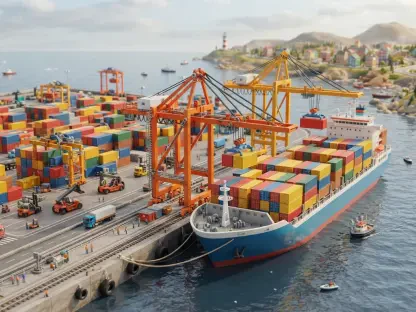
To understand the current urgency, one must look at the historical context of global logistics and how it reached this tipping point. For decades, the industry operated on a “just-in-time” philosophy that thrived in a relatively stable environment with low interest rates and predictable shipping lanes. These developments shaped a landscape where efficiency was prioritized over resilience at every level. However, recent global disruptions have exposed the fragility of these lean, linear models. The background shift from a predictable world to one defined by “permacrisis” has made it clear that historical data is no longer sufficient for future forecasting.
Understanding this shift is vital for grasping why the industry is now pivoting toward systems that can react to change in real-time. In the past, a disruption might have been treated as an outlier to be managed through manual workarounds. Today, disruption is the baseline, requiring a structural reimagining of how goods move across borders. This historical evolution has moved the industry from a focus on cost-minimization to a focus on risk-mitigation. The transition represents a recognition that the old ways of doing business are fundamentally incompatible with a world where volatility is the only constant.
System Design: The Architecture of a Modern Dynamic Supply Chain
A truly dynamic supply chain functions similarly to an autonomous driving system, utilizing intelligence to navigate the complexities of global trade. The core distinction between a traditional and a dynamic model lies in the handling of variance; while a static model is optimized for a specific plan, a dynamic model is architected to sense environmental changes immediately.
Reactive Intelligence: Sensing and Responding Through AI-Powered Ecosystems
A dynamic model requires foundational capabilities including continuous detection of disruptions and the integration of signals to understand operational consequences. When environmental changes occur, the system must evaluate alternative routing or sourcing and execute decisions across disparate partners. Real-world applications show that an “agentic” approach allows firms to model disruptions instantly, generating solutions before a bottleneck can paralyze the entire network. This automation is critical because the speed of modern trade outpaces the capacity of manual human intervention.
Furthermore, these ecosystems thrive on the ability to process unstructured data from diverse sources, such as weather reports, port congestion metrics, and social unrest indicators. By synthesizing this information, a dynamic chain identifies patterns that would be invisible to a human planner. This proactive stance transforms the supply chain from a reactive cost center into a strategic asset that anticipates challenges. The focus remains on maintaining the flow of goods regardless of the obstacles encountered on the planned path.
Progress Scales: The Spectrum of Maturity and Incremental Implementation
Despite the headlines surrounding fully autonomous supply chains, the reality for most cargo owners is more grounded. Approximately 99% of shippers are currently focused on incremental improvements rather than total automation. This highlights a critical trend: dynamic maturity is a spectrum rather than a binary state. Companies are developing capabilities in specific areas, such as enhancing visibility or refining demand planning, rather than overhauling their entire infrastructure at once. This measured approach allows businesses to manage the risks associated with new technology.
This incremental journey is essential because jumping directly to full automation often results in complexity that the organization cannot yet manage. By building digital muscle slowly, firms ensure that their teams are ready to handle increasingly sophisticated tools. This evolutionary path also allows for better alignment between technological investment and actual business needs. Success is found in the steady accumulation of small wins that eventually lead to a fully transformed, responsive network.
Integration Hurdles: Overcoming Fragmentation and Data Silos
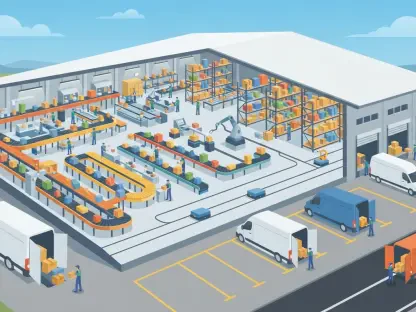
A major hurdle in achieving a dynamic flow is the fragmented technological landscape that many operations inhabit. Most large-scale networks rely on a patchwork of multiple management systems that rarely communicate effectively. Navigating these complexities requires a dedicated orchestration layer that can bridge the gap between silos. By centralizing data flow, companies can reduce decision cycles by half and cut lead times by up to 30%. Addressing the misconception that more software equals more agility is crucial; true dynamism comes from how well these systems are integrated.
Moreover, the lack of a single source of truth often leads to conflicting decisions across different departments. When the warehouse and the transport team see different data, the resulting friction slows down the entire response. A unified orchestration layer eliminates these discrepancies, providing a clear view of the entire operation. This transparency is the bedrock of agility, as it allows for coordinated action during a crisis. Breaking down these silos is perhaps the most difficult but necessary task in the digital transformation journey.
Forward Outlook: The Future of Global Trade and Technological Shifts
Looking ahead from 2026 to 2030, the industry is moving toward a deeper integration of predictive analytics. Emerging trends suggest that while human oversight will remain essential for strategy, tactical adjustments—such as rerouting a shipment due to a port strike—will become increasingly automated. We can expect a shift in regulatory environments as well, with a greater emphasis on data transparency and environmental reporting. Predictions indicate that the next decade will be defined by “supply chain orchestration,” where the focus shifts from managing assets to managing the entire flow of information.
Technological shifts will likely favor companies that treat their digital infrastructure as a flexible platform. The rise of low-code integration and modular software means that firms will no longer be locked into rigid, long-term contracts with a single provider. This flexibility will be paramount as new logistics challenges emerge, from changing trade routes to the demands of a circular economy. The future belongs to those who can pivot their digital strategy as quickly as they pivot their physical shipments. This era will reward the agile and penalize those tethered to legacy systems.
Action Plans: Strategic Recommendations for Achieving Supply Chain Agility
For businesses looking to overcome volatility, the path forward involves several actionable strategies. First, prioritize “data sovereignty” by maintaining ownership of institutional knowledge, even when working with third-party providers. Relying too heavily on a provider’s proprietary platform can lead to vendor lock-in, making it difficult to pivot when market conditions change. Ownership of data ensures that the intelligence generated by the supply chain remains an internal asset.
Second, focus on incremental ROI by identifying specific bottlenecks where technology can provide immediate relief. Rather than attempting a complete digital overhaul, firms should target areas like last-mile delivery or warehouse optimization where AI can produce measurable gains. These targeted improvements build confidence and provide the necessary capital for further investment. A focused approach prevents the organization from becoming overwhelmed by the scale of the transition.
Finally, foster a collaborative environment where technology supports human decision-making. Ensure that your workforce is trained to interpret AI-generated insights rather than just following automated prompts. The goal is to augment human expertise with machine speed, creating a hybrid model that is both intelligent and strategic. This balance ensures that the supply chain remains under human control while benefiting from the efficiencies of automation.
Resilience Summary: Building Strength in an Unpredictable World
The transition to dynamic supply chains represented an essential evolution for any organization navigating the current market environment. By prioritizing data sovereignty and incremental technological growth, firms established the necessary framework to withstand external shocks. Leaders who embraced orchestration and cross-silo transparency effectively future-proofed their operations against the next wave of global disruptions. This journey toward agility required a departure from outdated metrics and a commitment to continuous adaptation across every level of the network.
Organizations eventually recognized that agility was not a product to be purchased but a capability to be cultivated through internal expertise and modular technology. Successful strategies focused on decentralizing decision-making and empowering teams to react to regional shocks with confidence. This approach transformed the supply chain from a vulnerable cost center into a resilient source of competitive strength. Ultimately, the transition to dynamic models proved that adaptability was the most valuable asset in a fluctuating global economy, ensuring long-term viability in a world that never stopped changing.