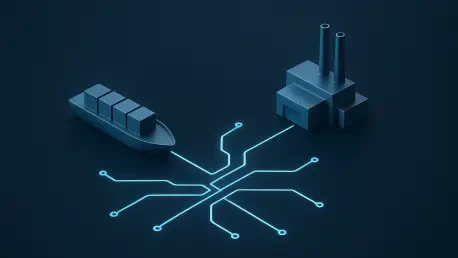

The global materials industry is currently navigating a period where the efficiency of a factory floor no longer guarantees the success of a business if the distribution network remains opaque. For decades, manufacturers focused on optimizing the internal metrics of production while treating international logistics as a secondary concern managed by third parties. However, recent disruptions have exposed the fragility of this fragmented approach, leading to a desperate need for a bridge between the industrial plant and the shipping vessel.
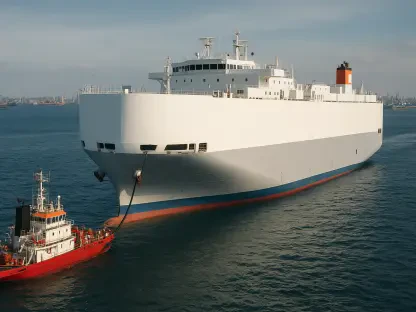
Yokogawa, a leader in industrial automation, has joined forces with BuyCo, a French tech innovator, to address this specific vulnerability within the materials and chemical sectors. By combining high-level automation with advanced Transportation Management Systems, they aim to create a seamless link between production schedules and maritime distribution. This strategic move responds to a landscape defined by geopolitical instability and fluctuating demand, where the ability to adapt in real time is the only way to maintain a competitive edge.
Bridging the Chasm Between Industrial Automation and Maritime Logistics
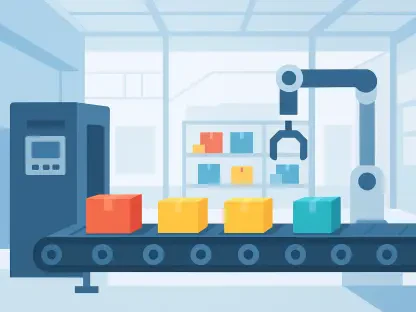
The current state of global trade is characterized by a significant divide between what happens inside a manufacturing facility and what occurs once a container leaves the port. Industrial Automation (IA) has reached a state of high maturity, yet the handoff to Transportation Management Systems (TMS) often remains a manual and error-prone process. This fragmentation causes delays that ripple through the supply chain, affecting inventory costs and customer satisfaction.
Japanese giant Yokogawa and BuyCo are focusing their efforts on the materials and chemical sectors, where the complexity of cargo is at its highest. This collaboration leverages Software-as-a-Service (SaaS) technology to provide a unified platform that manages both the production data and the logistical requirements of international trade. By integrating these segments, companies can finally view their operations as a single, continuous flow rather than a series of disconnected events.
The Digital Shift Toward Integrated Visibility and Maritime Efficiency
Emerging Paradigms in End-to-End Supply Chain Management
Digital Transformation (DX) has evolved from a buzzword into a functional necessity for modern maritime logistics. The focus has shifted away from simple tracking toward sophisticated ecosystems that integrate door-to-door visibility with automated shipping line selection. This allows companies to optimize their transport routes based on real-time data, ensuring that cargo moves along the most efficient paths possible.
Sustainability has also become a core component of this digital evolution. Modern platforms now visualize and track CO2 emissions across the entire maritime journey, providing the data necessary to meet increasingly strict environmental targets. For the chemical industry, this visibility is even more critical because it ensures the integrity of hazardous materials while providing transparent reporting on the carbon footprint of every shipment.
Market Growth Projections and the Rise of Logistics Tech
The demand for integrated TMS solutions is surging within the $2 trillion global materials market. As the industry moves from 2026 to 2030, the reliance on SaaS-based logistics platforms is expected to grow as companies seek to mitigate the risks seen during recent supply chain crises. Centralizing data management is no longer just about convenience; it is a proven method for reducing inventory levels and lowering logistics expenditures.
Performance metrics indicate that companies adopting these integrated platforms see a marked improvement in their operational efficiency. Forward-looking forecasts suggest that the digital services segment of the materials business will continue to expand as manufacturers prioritize resilience over low-cost, high-risk logistics models. The ability to predict delays before they happen has become a high-value asset in the eyes of global investors.
Navigating the Volatility of Global Trade and Operational Barriers
One of the most persistent challenges in the industry is closing the gap between the manufacturing floor and the final customer delivery. Historically, production teams and logistics departments operated in silos, rarely sharing data that could prevent delivery delays or cargo deterioration. Unifying these disparate data sets requires overcoming significant technical hurdles, as plant operations software and international shipping line platforms often use incompatible languages.
Strategies for overcoming this silo mentality involve a cultural shift within traditional manufacturing firms. By implementing a centralized digital booking system, companies can ensure that logistics risks are considered during the production planning phase. This proactive approach mitigates the risk of cargo sitting in ports for extended periods, which is vital for temperature-sensitive chemical products that are prone to degradation.
The Regulatory Framework and Compliance in International Shipping
Navigating the web of international maritime laws requires a robust digital infrastructure that can handle complex compliance standards. Stricter environmental mandates now demand detailed carbon reporting for every leg of a journey, making manual calculations nearly impossible. Digital platforms solve this by providing transparent, audit-ready data that aligns with global safety protocols and hazardous goods regulations.
Security measures within these digital systems have also been heightened to protect sensitive industrial and trade data from cyber threats. Ensuring that shipping schedules and cargo details are secure is a top priority for companies handling specialized chemicals. By using secure SaaS environments, the industry can maintain adherence to safety standards while streamlining the bureaucratic hurdles of international border crossings.
The Future of Interconnected Optimization and Smart Distribution
The next phase of supply chain maturity will be defined by AI-driven demand forecasting and automated scheduling that reacts to global events in real time. Large-scale infrastructure projects and the pivot toward green energy, such as eSAF production and PFAS-free processing, are creating new logistical requirements. These shifts demand a higher degree of transparency and specialized handling that only an interconnected digital ecosystem can provide.
Market disruptors like Internet of Things (IoT) sensors are now converging with maritime logistics platforms to provide live updates on cargo conditions. This level of detail allows for “smart distribution,” where the system automatically reroutes shipments if it detects a potential delay or a threat to cargo integrity. Future growth will be concentrated in these niche markets where specialized handling and high transparency are non-negotiable requirements for doing business.
Final Verdict on the Yokogawa-BuyCo Strategic Alliance
The strategic alliance between Yokogawa and BuyCo addressed the long-standing fragmentation of the global materials industry by merging plant-side data with maritime logistics. This partnership moved beyond the traditional four walls of the factory to provide a holistic management model that stakeholders in the chemical industry found essential for survival. It set a new standard for resilient and sustainable logistics, demonstrating that digital adoption was the primary path to overcoming the logistical silos of the past.
Stakeholders who prioritized the adoption of these integrated platforms secured a significant advantage in operational stability and carbon compliance. The collaboration proved that the convergence of industrial automation and maritime technology was not just a technical upgrade but a necessary evolution in trade. Moving forward, the industry looked toward even deeper integrations where every point of the supply chain functioned as a singular, data-driven organism.