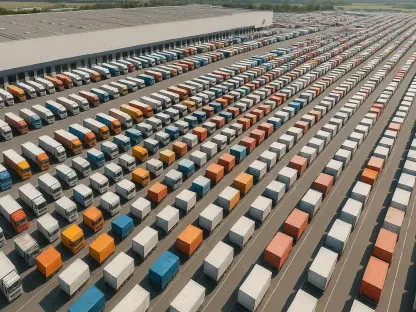

A heavy-duty truck idling at a distribution center represents a significant loss of potential revenue and a direct hit to the driver’s professional quality of life during every minute that passes without movement. Historically, the logistics industry viewed these delays as a fixed, if regrettable, cost of doing business, yet the modern landscape has shifted toward a more rigorous, data-driven methodology. This transformation is fueled by the realization that detention is not merely an inconvenience but a systemic failure that compromises safety and fleet efficiency across the entire supply chain. By integrating advanced analytics into daily operations, carriers are moving away from a reactive stance to a proactive model where every minute of dwell time is tracked and analyzed. This shift allows logistics providers to treat dwell time as a manageable variable rather than an unavoidable burden. As profit margins tighten, the ability to pinpoint precisely where a truck is stalled has become the primary differentiator for many successful fleets.
Harnessing Technology for Operational Visibility
Utilizing Telematics for Precise Automated Tracking
The implementation of electronic logging devices and sophisticated telematics systems has provided the trucking industry with an objective, indisputable record of a vehicle’s duty cycle. Gone are the days of manual logs and disputes between drivers and warehouse managers regarding arrival and departure times. These digital systems capture data points with GPS precision, recording the exact moment a truck crosses a geofenced boundary and enters a facility’s yard. This level of automation ensures that the detention clock begins ticking exactly when it should, creating a baseline of truth that serves as the foundation for all subsequent analysis and billing. Beyond just tracking time, these systems monitor engine status and fuel consumption during idle periods, highlighting the hidden environmental and operational costs of prolonged wait times. By removing the human element from timekeeping, carriers can provide shippers with high-fidelity data that is difficult to contest fairly in a business setting.
Consistent data capture allows for the identification of patterns that were previously invisible to human dispatchers managing hundreds of different loads simultaneously. When telematics data is aggregated over months, it reveals specific days of the week or times of day when specific facilities consistently experience bottlenecks. This longitudinal view is essential for developing a comprehensive understanding of facility performance, as it filters out the noise of one-off delays and highlights chronic inefficiencies. For instance, a carrier might discover that while a warehouse is efficient during morning shifts, the transition to afternoon shifts consistently causes a two-hour delay in trailer processing. Armed with this granular evidence, fleet managers can begin to negotiate better windows or adjust their routing to avoid peak congestion times. Furthermore, this transparency encourages shippers to improve their internal processes, as they are now held accountable by the data they once ignored.
Integrating Predictive ETA Tools and Geofencing
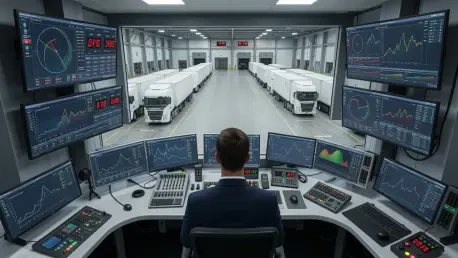
The industry is currently seeing a significant convergence of predictive tools like live ETA trackers and geofence-triggered workflows to streamline the arrival process. These technologies allow facilities to see exactly when a truck will arrive, factoring in real-time variables like traffic congestion, weather conditions, and the driver’s remaining hours of service. Geofencing provides door-level accuracy, ensuring that facility managers know exactly where every asset is located within their yard at any given moment. This high-resolution visibility eliminates the confusion that often occurs during the check-in process, as the system can automatically alert the warehouse staff when a vehicle is nearby. By preparing the loading dock and the necessary labor before the truck even reaches the gate, facilities can drastically reduce the time a driver spends waiting in a queue. This proactive preparation is essential for maintaining a high-velocity supply chain where every minute counts toward the bottom line.
Furthermore, the integration of real-time traffic data with driver hours of service allows for more realistic appointment scheduling that accounts for the human element of trucking. Predictive ETA tools can suggest adjustments to appointment times in real-time, allowing dispatchers to communicate delays to the facility before they become a problem. This reduces the likelihood of a driver missing their window and being forced to wait for hours as a “work-in” load. Geofencing also helps in validating the exact time spent at a specific dock door, providing a second layer of verification for detention billing. When a facility manager can see a live map of their yard populated with incoming and outgoing assets, they can make better decisions about labor allocation and space management. The result is a more fluid operation where trucks move through the facility with minimal friction, maximizing the driver’s available driving time and ensuring that every segment is handled efficiently.
Driving Efficiency through Granular Insights
Decomposing Dwell Time into Actionable Phases
Solving the detention crisis requires a deep dive into the specific components of time spent at a facility, moving far beyond the simple metrics of arrival and departure. Leading fleets have started decomposing dwell time into distinct phases, such as the period from gate arrival to dock assignment and the time from load completion to the final gate exit. By isolating these segments, carriers can pinpoint exactly where the breakdown in communication or labor occurs within a shipper’s operation. For example, if a truck is consistently assigned a dock quickly but then sits for four hours while being loaded, the issue is likely related to warehouse floor efficiency or labor shortages. Conversely, long delays at the gate indicate a problem with administrative check-in procedures or yard management. This level of detail transforms a vague complaint into a specific, actionable insight that can be addressed directly with the facility manager. It allows for a surgical approach to problem-solving.
This phased analysis also helps in identifying the difference between physical loading delays and administrative holdups, such as waiting for paperwork or bill of lading signatures. In many cases, the actual loading process is relatively fast, but the driver remains detained because the office staff is backlogged or communication between the warehouse and the gate is fractured. By quantifying the paperwork delay, carriers can suggest digital solutions like electronic bills of lading or automated check-out systems to help streamline the process. Furthermore, this data provides a clear picture of how yard congestion impacts driver movement, revealing if drivers are being trapped in a queue simply because of poor traffic flow within the facility. Understanding these nuances is critical for developing a holistic strategy to reduce detention, as it prevents carriers from wasting resources on the wrong solutions. When every minute is accounted for and categorized, the path toward excellence is much clearer.
Enhancing Accountability with Shipper Facility Scorecards
The introduction of facility scorecards has revolutionized the way carriers interact with their shipping partners by replacing anecdotal evidence with hard, verifiable metrics. These scorecards benchmark every location within a carrier’s network, ranking them based on average detention times, frequency of excessive delays, and the accuracy of their scheduled appointment windows. This transparent ranking system allows carriers to have more productive, data-driven conversations with shippers during quarterly business reviews or contract negotiations. Instead of making general claims about poor service, a carrier can present a report showing that a specific facility has a higher detention rate than the regional average. This level of accountability often motivates shippers to investigate their own internal failures, as they realize that their inefficiency is directly impacting their shipping costs and capacity. In a market where high-quality carriers are selective, a poor scorecard can be a significant liability for a warehouse.
The industry successfully pivoted toward this analytical framework, which resulted in a marked decrease in the systemic delays that previously plagued the trucking sector. Logistics providers implemented these strategies to foster a culture of mutual respect and operational efficiency, where data served as the primary bridge between carrier expectations and shipper performance. By prioritizing transparency and granular reporting, fleets realized significant gains in driver satisfaction and overall asset utilization across their entire networks. These advancements demonstrated that while detention was once considered an immutable part of the freight business, it was actually a solvable problem when approached with the right technological tools and a commitment to evidence-based management. Carriers that embraced these innovations gained a significant competitive edge, as they optimized their operations and minimized safety risks. This transition ensured that the freight market would be defined by precision and accountability.