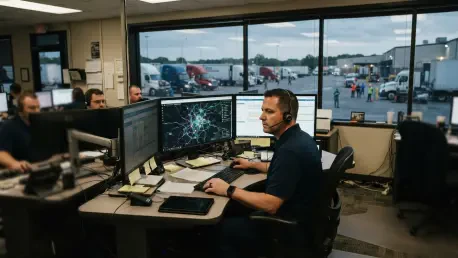

The relentless velocity of modern logistics has transformed the traditional truck dispatcher from a coordinator of phone calls into a data architect who must navigate a sea of instantaneous information. This transition marks a departure from the era of heavy spreadsheets and toward an integrated ecosystem where every mile is accounted for in real-time. Carriers today face a critical crossroads where the efficiency of operations depends less on the horsepower under the hood and more on the processing power of the central software platform. The digital landscape is no longer a static backdrop but an active participant in the survival and profitability of a trucking business in the current market.
Digital Transformation: Enhancing Global Freight Efficiency
The transportation management system (TMS) functions as the central nervous system of any modern carrier, managing the complex lifecycle of every load from inception to settlement. In the current operational climate of 2026, this platform is no longer just a digital filing cabinet for records; it is the engine that drives visibility, communication, and financial health. The effectiveness of a TMS is measured by its ability to synchronize dispatch, accounting, safety, and maintenance data into a single, coherent narrative. Without this central hub, a fleet risks descending into operational chaos, where manual errors and fragmented communication lead to missed opportunities and increased overhead.
The industry has moved decisively away from manual data silos toward a world of interconnected, real-time ecosystems. Historically, information flowed through the office in bursts, often delayed by hours or days as paperwork moved from trucks to terminals. Modern standards demand that data be available the moment it is generated. This shift requires a system capable of receiving electronic load tenders, updating driver schedules via telematics, and initiating billing processes immediately upon delivery verification. This connectivity ensures that every stakeholder, from the driver to the customer, has an accurate view of the cargo status, reducing the friction that typically slows down the supply chain.
The market currently sees a fascinating dynamic between established legacy providers and cloud-native startups. Legacy systems often possess deep functional breadth, having been built over decades to handle every imaginable trucking scenario, yet they can sometimes struggle with the agility required for modern integration. In contrast, newer entrants offer sleek, browser-based interfaces and open architectures that simplify the process of connecting with external third-party applications. This competition has forced a general modernization across the sector, as carriers weigh the stability of long-standing software against the innovation and flexibility of newer, more adaptable platforms.
Regulatory requirements continue to shape the development and deployment of these management tools, with a landscape defined by a rigorous focus on compliance ranging from electronic logging device (ELD) mandates to increasingly complex requirements for secure data exchange with government agencies. A modern TMS must not only track hours of service but also provide a secure environment that protects sensitive freight information from cyber threats. As regulations evolve, the burden of proof for safety and operational compliance falls more heavily on the software, making a robust and secure digital foundation an absolute necessity for any carrier looking to maintain its operating authority.
Technological Evolution and Market Projections in Logistics
Key Technological Trends Redefining Freight Operations
The current phase of technological evolution is characterized by a fundamental shift in how different software programs interact. Application Programming Interface (API) connectivity has largely replaced the antiquated batch processing methods of the past. Instead of waiting for a daily file import to see fuel transactions or location updates, APIs allow for instantaneous data synchronization. This means that when a driver fuels up or a trailer sensor detects a temperature change, the information is reflected on the dispatch screen immediately. This level of responsiveness is essential for managing the high-pressure demands of modern shippers who expect minute-by-minute updates.
The architectural foundation of these systems has also undergone a major transformation, moving toward browser-based and cloud-native environments. This transition has liberated fleet managers from the constraints of on-premises servers and localized desktop software. A cloud-native TMS allows staff to access the platform from any location, facilitating remote work and providing the scalability needed to handle seasonal surges in volume. These environments are inherently more agile, allowing software providers to push updates and new features continuously rather than requiring cumbersome annual installations. This ensures that the fleet always has access to the latest security patches and operational tools.
Artificial intelligence and machine learning have moved from the realm of theory into practical, daily applications within the TMS. Specialized AI agents, sometimes referred to as “TruckGPT” applications, are now capable of performing automated data extraction from unstructured sources. For instance, these systems can read an emailed rate confirmation or a PDF load tender and automatically populate the corresponding fields in the TMS with high accuracy. This automation reduces the administrative burden on dispatchers and billing clerks, allowing them to focus on managing exceptions and building relationships rather than retyping data. System intelligence also enables better load matching by analyzing historical performance and driver preferences to suggest the most profitable assignments.
Market Data and Performance Indicators for TMS
Market trends from 2026 to 2030 indicate a steady and significant increase in investment toward Software as a Service (SaaS) logistics platforms. Carriers are increasingly moving away from large capital expenditures on hardware and toward subscription-based models that offer predictable costs and lower barriers to entry. This growth is driven by the realization that the cost of maintaining outdated, inefficient software far outweighs the monthly subscription fees of a modern platform. The market is also seeing a consolidation of data, as carriers prefer platforms that can aggregate information from multiple sources, providing a single source of truth for the entire organization.
The impact of these technological investments is clearly visible in key efficiency benchmarks across the industry. One of the most critical metrics is the reduction in Days Sales Outstanding (DSO), which measures how long it takes for a company to get paid after a load is delivered. By automating the capture of delivery documents and the generation of invoices, modern systems have slashed the billing cycle from weeks to just a few days. Furthermore, the automation of routine tasks has led to a noticeable reduction in administrative labor hours per load. This efficiency allows fleets to scale their operations and handle more freight without necessarily increasing their office headcount.
Looking ahead, the industry is transitioning from the “all-in-one” platform mentality toward “best-of-breed” integrated ecosystems. While the TMS remains the central hub, carriers are increasingly using APIs to plug in specialized applications for specific tasks, such as advanced route optimization, freight tracking, or driver retention tools. This modular approach allows a fleet to build a customized tech stack that addresses its unique operational challenges. The forecast suggests that the most successful carriers will be those that embrace this flexible architecture, allowing them to swap out individual components as technology continues to advance without needing to replace the entire core system.
Navigating the Complexities of System Overhauls and Optimization
The integration paradox remains one of the most significant challenges for fleet managers as they look to modernize their software systems. This phenomenon occurs when a carrier utilizes multiple specialized tools for maintenance, dispatch, and billing that struggle to communicate effectively with one another. The friction created by these disconnected systems often results in data being entered multiple times across various platforms, which increases the likelihood of human error. Overcoming this hurdle requires a strategic focus on data flow, ensuring that information entered in the maintenance shop is immediately visible to the dispatcher attempting to assign a load to that specific vehicle.
Implementation is a process fraught with hidden costs that go far beyond the initial purchase price of the software. Carriers must account for the extensive training required to get staff up to speed on a new system, which can temporarily decrease productivity. There is also the significant risk associated with data migration, as moving years of historical records from a legacy system to a new platform is a complex technical undertaking. Operational downtime during the transition can further strain the business, making it essential to have a detailed implementation plan that includes contingencies for technical glitches and user resistance.
Before committing to a total system replacement, many fleets find success by implementing process improvement strategies and optimizing their current workflows. They often discover that a legacy transportation management system (TMS) possesses powerful features that have never been activated or that staff members have not been properly trained to use. Evaluating whether to purchase a new module or optimize existing tools is a critical decision. In many cases, adding a specific integration or improving data entry processes can yield significant efficiency gains without the massive disruption of a full system overhaul. A deep dive into current bottlenecks often reveals that the problem lies within the process rather than the software itself.
Overcoming data silos requires a unified strategy for creating a seamless flow of information across disparate fleet management tools. This involves mapping out every touchpoint where data is generated and determining how it can be shared more effectively. For example, integrating telematics data directly into the billing workflow can provide automatic proof of delivery based on geofencing, eliminating the need for manual verification. By prioritizing interoperability, carriers can create an environment where data moves effortlessly between the shop, the truck, and the back office, providing a comprehensive view of the entire operation and enabling more informed decision-making.
The Regulatory Environment and Industry Standards
Data security and compliance have become top priorities for TMS providers as the threat of cyberattacks against the logistics sector continues to rise. Modern systems must meet stringent standards for cybersecurity to protect sensitive customer data and operational details. This includes the implementation of multi-factor authentication, data encryption, and regular security audits. Carriers are increasingly vetting their software vendors based on their ability to defend against data breaches and their commitment to freight privacy. A secure TMS is not just a technical requirement but a vital component of a carrier’s reputation and long-term viability.
The role of software in meeting evolving regulations for electronic documentation cannot be overstated, especially as the industry moves toward a paperless environment that requires sophisticated verification and storage capabilities for everything from digital signatures to electronic bills of lading (eBOL). A TMS must be able to handle these digital documents in a way that meets legal and regulatory standards for billing and verification. This transition simplifies the administrative burden on drivers and office staff while providing a more transparent and auditable record of every transaction. These standards are essential for maintaining compliance with both government regulations and the increasingly digital demands of shippers.
Integrated systems simplify the creation of audit trails and enhance transparency across the organization; whether for regulatory reporting or an internal audit of driver compensation, having all data stored in a single, accessible system makes the process much more efficient. Modern platforms automatically generate reports that track every change made to a record, providing a clear history of who performed each action and when. This level of transparency is crucial for resolving disputes with drivers or customers and for ensuring that the fleet operates within the law and company policy.
The Future of Fleet Management Technology
The move toward headless architecture represents a significant shift in how TMS platforms are built and customized. By decoupling the back-end data engine from the front-end user interface, software providers can offer ultimate flexibility in how information is displayed and how users interact with it. This approach allows fleets to create custom dashboards and mobile applications tailored to the specific needs of their users without risking the integrity of the core system. This modularity is becoming a standard expectation for larger carriers who want to differentiate their services through proprietary digital tools while still relying on a proven, stable back-end.
Automation of the “life of a load” is being driven by predictive analytics that aim to reduce empty miles and optimize load selection. By analyzing vast amounts of historical and real-time data, modern systems can predict where the most profitable freight will be and suggest routes that maximize equipment utilization. This level of planning goes beyond simple dispatching; it involves orchestrating the entire fleet to minimize waste and maximize revenue. As these predictive tools become more accurate, the role of the human dispatcher will shift more toward managing the complex exceptions that the software cannot resolve on its own.
The integration of the Internet of Things (IoT) and smart trailers provides a new level of granular detail to the dispatch workflow. Sensors now offer real-time updates on cargo temperature, tire pressure, and trailer load status. When this data is fed directly into a Transportation Management System (TMS), it enables proactive fleet management. For example, if a trailer’s refrigeration unit fails, the system can instantly alert the dispatcher and reroute the truck to a repair facility or a nearby cold storage warehouse. This real-time visibility into equipment status helps prevent cargo damage and reduces the time spent on manual inspections.
Emerging market disruptors are primarily focused on how AI-driven exception management will redefine the human element of dispatch. In a highly automated environment, the routine tasks of load booking and tracking are handled by the system, allowing human dispatchers to focus their expertise on solving problems that require intuition and negotiation. This might include managing driver emergencies, negotiating rates in volatile markets, or resolving complex delivery delays. This shift in responsibilities will require a new set of skills for office staff, emphasizing problem-solving and technical literacy over administrative speed.
Strategic Recommendations for Fleet Modernization
A successful modernization effort begins with a clear assessment of business objectives, prioritizing the resolution of operational bottlenecks over the allure of new features. A fleet should identify the specific areas where it is losing time or money—whether in billing, dispatch, or maintenance—and look for solutions that target those issues directly. It is important to remember that technology is a tool to support the business, not an end in itself. By focusing on measurable outcomes, a carrier can ensure that its investment in software will provide a tangible return on investment.
The vetting framework for evaluating vendors must be rigorous, focusing on technical depth, AI validation, and data portability. Carriers should ask critical questions about how a system handles data exceptions and what kind of support is available during the implementation phase. It is also vital to understand how easily data can be moved out of the system if the fleet decides to change providers in the future. A software demonstration should go beyond basic functions to test how the system handles the messy, real-world scenarios that dispatchers face every day, such as route changes or disputed invoices.
The final verdict on whether to upgrade or replace a system often comes down to the tipping point where the limitations of the current software become a fundamental barrier to growth. If an existing system cannot integrate with the tools necessary to stay competitive, or if the cost of manual workarounds exceeds the cost of a new platform, then a replacement is likely necessary. However, if the current system is stable and the provider is actively innovating, an incremental upgrade or a strategic integration may be the more prudent path. The decision should always be based on a cold calculation of long-term operational efficiency and the ability to meet the future demands of the freight market.
The strategic transition from monolithic software toward agile, integrated frameworks characterized the industry’s progress in recent years. Analysis indicated that the most successful fleets were those that viewed their transportation management systems not as static products, but as evolving ecosystems. Organizations that prioritized data flow and eliminated manual silos achieved significantly lower administrative costs and higher driver satisfaction. The movement toward cloud-native environments and API-first architectures ensured that carriers remained adaptable to rapid market changes. Ultimately, the focus on solving specific operational bottlenecks proved more effective than simply chasing the newest technological trends. These steps established a foundation for continued growth and resilience in a digital-first logistics landscape.