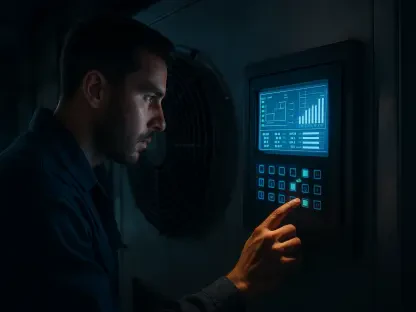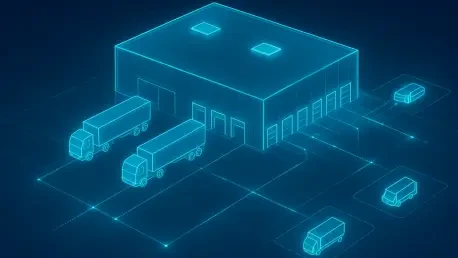

The modern supply chain stands at a crossroads where the hyper-efficient robotics of the warehouse floor collide with the analog chaos of the exterior pavement, creating a friction point that costs the global economy billions annually. This analysis identifies a profound market paradox: while internal warehouse operations and external transportation networks have achieved high levels of digitization, the yard remains a persistent bottleneck. Currently, Warehouse Management Systems (WMS) maintain an adoption rate of 49%, and Transportation Management Systems (TMS) stand at 27%, yet Yard Management Systems (YMS) linger at only 16%. This digital gap prevents companies from achieving a truly seamless flow of goods, as the lack of visibility between the facility and the road leads to unnecessary delays and escalating costs. The objective of this examination is to evaluate the strategic importance of the yard in a modern logistics network, exploring how the transition from manual logs to integrated digital hubs is becoming a primary focus for supply chain leaders from 2026 to 2030. By addressing this “final frontier,” businesses can finally unlock the latent value trapped within their perimeter fences.
From Clipboards to Connectivity: The Evolution of Yard Operations
Traditionally, the yard was treated as a low-tech staging area where manual intervention was the standard operating procedure. For many decades, yard spotters and gate security personnel relied heavily on physical clipboards, handwritten logs, and walkie-talkie communication to track the location of trailers and the movement of freight. This legacy approach was sufficient when global trade moved at a more deliberate pace and consumer expectations were lower. However, the surge in high-velocity e-commerce and the demand for rapid delivery times have exposed the fragility of these manual methods. While the “four walls” of the warehouse saw immense investment in automation, the yard was frequently bypassed during digital transformation initiatives.
This historical neglect created a “whiplash” effect at the loading dock. As internal warehouse processes became faster and more automated, the manual processes at the gate and in the yard could not keep pace, leading to congestion and idle equipment. Understanding this evolution is essential because it reveals why current supply chain friction is so concentrated in this specific area. The shift toward a more connected yard is not merely about replacing paper with tablets; it is about integrating the yard into the broader digital ecosystem to ensure that velocity gains achieved inside the building are not immediately lost the moment a trailer departs the dock. This maturation of yard operations marks a critical phase in the industry, where the “analog gap” is finally being closed to support the 24/7 demands of the modern consumer.
Bridging the Efficiency Gap through Digital Transformation
Closing the technological divide requires a multifaceted approach that addresses both financial leakage and operational synchronization. The market is currently seeing a rapid shift in how organizations perceive the yard, moving from viewing it as a cost center to seeing it as a source of competitive advantage. The digital transformation of this space involves deploying sensors, real-time location systems (RTLS), and centralized software platforms that capture every movement of a trailer or tractor. These tools allow for a granular level of control that was previously impossible, providing the data necessary to optimize movements and reduce dwell times across the entire network.
The High Cost of Operational Invisibility
The primary driver for YMS adoption is the elimination of the “major blind spot” that exists outside the warehouse doors. Without real-time visibility, trailers are frequently misplaced, leading to wasted time as yard drivers search for specific assets. This invisibility has severe financial implications, particularly in the form of demurrage and detention charges. Companies that cannot track carrier equipment accurately often pay thousands of dollars in penalties because they are unaware of how long a trailer has been sitting on their property. This financial erosion is often hidden within larger logistics budgets, but digital tracking brings these costs to the surface, allowing management to take corrective action before fees accumulate.
Moreover, the lack of visibility creates significant risks for temperature-sensitive cargo. In the food and pharmaceutical sectors, a failure in a refrigerated unit (reefer) that goes unnoticed in a manual yard can result in the total loss of the shipment. Modern YMS platforms address this by integrating with reefer monitoring systems, providing automated alerts if temperatures fluctuate beyond pre-defined thresholds. This proactive monitoring ensures product safety and reduces insurance claims. By providing a single source of truth for all on-site assets, companies can transform their yard from a chaotic parking lot into a highly organized and visible component of the production cycle.
Synchronizing the “Supply Chain Elbow”: The Power of Integration
The yard functions as the essential joint, or “elbow,” where the warehouse connects to the transportation network. When this joint is stiff or uncoordinated, the entire flow of goods is compromised. Market analysis indicates that the effectiveness of high-speed warehouse automation is directly capped by the efficiency of the yard. If a warehouse can pick an order in fifteen minutes but the trailer is not at the dock door for an hour, the internal efficiency is irrelevant. To resolve this, businesses are increasingly adopting “triadic integration,” where the WMS, TMS, and YMS work in a unified loop to synchronize labor and equipment.
This synchronization ensures that the right trailer arrives at the correct door at the exact moment the warehouse team is ready to load. This level of coordination maximizes the return on investment for all connected systems. Furthermore, integrating these systems allows for better appointment scheduling and carrier management. When the YMS communicates directly with the TMS, carriers can be notified of delays or ready loads in real-time, reducing the time drivers spend idling at the gate. This predictive capability turns the yard into a proactive engine of the supply chain rather than a reactive bottleneck, allowing for higher throughput without increasing the physical footprint of the facility.
Navigating Complexity and Market Nuances: System Selection
Choosing the right technology for the yard involves balancing operational complexity with investment costs. Many enterprises start with basic yard modules provided by their existing Enterprise Resource Planning (ERP) or WMS vendors. While these add-ons may suffice for simple operations with low volumes, they often lack the sophisticated logic required for high-velocity environments. Specialized, “best-of-breed” YMS solutions offer advanced features like automated shunter tasking, gate automation, and detailed carrier performance analytics. The market shows a clear trend: as facilities move toward higher gate activity and stricter fulfillment requirements, the demand for these dedicated systems increases.
Another critical factor is the human element, specifically the ongoing driver shortage. A facility that is difficult to navigate or has long wait times becomes a low-priority destination for carriers. By implementing a digital YMS, companies improve the driver experience through streamlined check-in processes and reduced wait times. This makes the organization a “preferred destination,” ensuring they can secure transportation capacity even when the labor market is tight. Improving the flow of information to drivers not only increases operational speed but also enhances the brand reputation of the shipper within the carrier community, which is a vital strategic asset in the current economic landscape.
Innovations Shaping the Autonomous Yard
The next frontier for yard management is defined by the rapid deployment of autonomous technologies and artificial intelligence. AI-driven computer vision systems are currently being deployed at gates to automatically capture trailer numbers, license plates, and even assess physical damage as vehicles enter and exit. This removes the need for manual data entry and significantly speeds up gate throughput. Furthermore, predictive analytics are being used to simulate yard movements, allowing managers to anticipate congestion before it occurs and adjust shunter schedules accordingly. This transition from descriptive to predictive data is a hallmark of the modern yard.
Perhaps the most disruptive innovation is the rise of autonomous terminal tractors. These vehicles are designed to move trailers between parking spots and dock doors without a human operator, directly addressing the labor challenges associated with yard work. When combined with “digital twin” technology—a virtual 3-D replica of the physical yard—management can oversee autonomous movements from a remote command center. These digital twins allow for real-time simulation and optimization, enabling companies to test different gate and dock configurations in a virtual environment from 2026 to 2028 before implementing them in the real world. This move toward an autonomous, self-optimizing yard represents the ultimate goal of digitization.
Strategic Framework for Implementation: Maximizing ROI
For a YMS implementation to be successful, organizations must move away from reactive problem-solving and adopt a strategic framework focused on data accuracy. A thorough audit of current operational “leakage” points is the first step in building a business case. This includes quantifying the cost of detention fees, lost inventory, and the labor hours spent on manual yard checks. Industry benchmarks suggest that if a facility requires two or more shunter drivers per shift, the return on investment for a dedicated YMS is typically realized within eighteen months. Prioritizing data accuracy at the point of entry is critical, as the entire system depends on the “gate-to-gate” visibility of every asset.
Best practices also emphasize the importance of selecting a system that offers seamless integration with the existing tech stack. The data generated in the yard must flow effortlessly into the WMS for labor planning and the TMS for transportation updates. Organizations should also prioritize vendor solutions that offer mobile accessibility for yard drivers and gate guards, ensuring that the frontline workforce is empowered with real-time information. By focusing on these core areas—automation of data capture, seamless integration, and labor optimization—businesses can transform their yard from an overlooked expense into a strategic hub of efficiency and transparency.
Closing the Visibility Loop: Strategic Takeaways
The transition from manual yard management to a fully integrated digital system was identified as the final hurdle in achieving end-to-end supply chain visibility. This analysis demonstrated how the persistent “digital gap” outside the warehouse walls led to significant financial losses and operational bottlenecks. Organizations that prioritized the implementation of YMS successfully eliminated the invisibility of their assets, thereby reducing detention fees and improving the efficiency of their cold chain operations. The integration of the yard into the broader triadic ecosystem proved essential for maintaining the high velocity required by modern e-commerce fulfillment and just-in-time manufacturing.
As enterprises looked toward the next phase of growth, the adoption of autonomous vehicles and artificial intelligence provided the necessary tools to navigate persistent labor shortages. The strategic move away from paper-based logs enabled managers to focus on predictive analytics rather than reactive fire-fighting. In the long term, the digitized yard emerged as the connective tissue that allowed the warehouse and transportation networks to function as a single, cohesive unit. For decision-makers, the path forward required a focus on technological integration and data-driven decision-making to ensure that the yard remained a driver of value rather than a source of friction in the global marketplace.