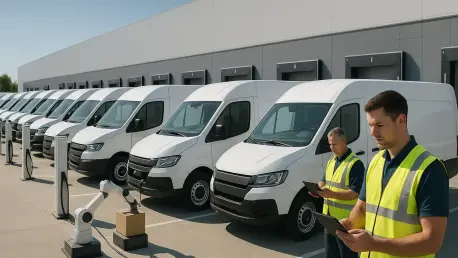

The global logistics sector currently stands at a critical crossroads where the necessity for immediate decarbonization meets the unrelenting pressure for bottom-line growth in a hyper-competitive market. This high-stakes environment is particularly evident in the last-mile delivery segment, where razor-thin margins and intense competition dictate the survival of the fittest. Traditional courier services that once relied on manual manifests and driver-led route planning are rapidly becoming obsolete as the industry pivots toward a tech-driven model that prioritizes precision and speed above all else.
Navigating the Modern Logistics Landscape: Efficiency, Scope, and Global Significance
The transition from manual workflows to digital enterprises has fundamentally altered the scope of delivery services. In the current 2026 landscape, the logistics industry has evolved from a back-office support function into a primary economic engine that sustains the global e-commerce and healthcare sectors. Companies that previously operated with paper-based manifests now utilize sophisticated cloud platforms to coordinate thousands of daily movements, ensuring that the friction of human error is minimized. This digital leap is not just about speed; it is about expanding the capacity of the existing infrastructure to meet the explosive demand of a 24-hour delivery culture.
Moreover, the global significance of this transformation is most visible in specialized segments like medical logistics. The ability to track temperature-sensitive assets in real-time has enabled the safe distribution of vaccines and biological samples on a global scale. This shift toward high-tech coordination has allowed small and medium enterprises to scale their operations without a proportional increase in headcount, thereby maintaining profitability despite rising operational overhead. The result is a more resilient supply chain that can withstand localized disruptions while continuing to serve as the lifeblood of modern commerce.
Analyzing Market Dynamics and the Digital Revolution in Supply Chains
The digital revolution in supply chains is defined by a shift from reactive problem-solving to proactive, data-driven strategy. Currently in 2026, market participants are moving away from passive sustainability—where green outcomes were accidental results of cost-cutting—toward intentional ecological stewardship. This evolution is spurred by a combination of technological maturity and a more sophisticated understanding of global logistics networks. Companies that previously viewed digital infrastructure as a secondary support function now recognize it as the primary engine of market differentiation.
Transformative Trends: Real-Time Optimization and the Rise of Green Logistics
A primary driver of modern efficiency is the adoption of Dynamic Vehicle Route Planning (VRP), which differs from static scheduling by recalculating paths in real-time. This technology accounts for shifting traffic patterns and new delivery requests instantly, ensuring that the fleet remains productive throughout the working day. Beyond simple delivery, the industry is seeing a surge in reverse logistics for the circular economy. By managing the collection of used goods for refurbishment or recycling, logistics providers are extending the lifecycle of products and meeting the evolving demands of consumers who prioritize circularity.
Performance Metrics and Economic Projections for Tech-Enabled Logistics
Data indicates that the implementation of advanced VRP systems can increase delivery capacity by as much as 30 percent while simultaneously reducing monthly fuel consumption by one-fifth. These metrics are not just environmental wins; they represent substantial direct additions to the bottom line. Economic projections for the period from 2026 to 2028 suggest that firms with proprietary tech stacks will see a 15 percent higher market share growth compared to those relying on legacy systems. This correlation between digital adoption and financial health is becoming the primary metric for investor confidence in the sector.
Overcoming Operational Bottlenecks and Structural Hurdles in Global Delivery
The industry continues to grapple with volatile fuel costs and a persistent shortage of skilled labor, which creates significant structural hurdles. One of the most damaging inefficiencies is “wasted mileage,” where vehicles travel long distances with partial or empty loads. Automation provides a solution by optimizing load factors and ensuring that every mile driven contributes to revenue. This high-tech coordination allows firms to maintain operational resilience even when external factors, such as global supply chain shocks or regional labor strikes, threaten to disrupt the flow of goods.
Operational bottlenecks are also being addressed through the automation of routine administrative tasks, such as manifest generation and billing. By removing these burdens from the operations staff, companies can redirect their human capital toward complex coordination and customer service. This shift not only improves the internal working environment but also enhances the reliability of the service for the end consumer. As a result, the industry is seeing a reduction in the overhead costs that previously inhibited the growth of smaller logistics providers.
The Regulatory Environment and the Push for Environmental Compliance
The regulatory landscape is becoming increasingly stringent, with Environmental, Social, and Governance (ESG) criteria now forming a mandatory part of procurement processes for large-scale corporate contracts. Transparent carbon reporting has moved from a voluntary disclosure to a standard requirement, forcing logistics providers to implement granular mileage and emission tracking. Compliance is no longer just about avoiding fines; it is about securing the ability to compete for high-value contracts in a marketplace that demands environmental accountability.
Specialized sectors like healthcare have even higher standards, requiring documented cold-chain integrity and waste management protocols. To meet these demands, firms are utilizing specialized medical-grade cooler boxes and non-refrigerated delivery methods that maintain temperature without the high fuel consumption of traditional refrigerated trucks. This innovation demonstrates how regulatory pressure can spark creative solutions that align with both compliance and profitability. In this environment, the ability to provide data-backed proof of sustainability is as valuable as the delivery service itself.
Charting the Path Forward: Artificial Intelligence, Electrification, and Innovation
The trajectory of the logistics industry is currently defined by the rapid integration of Electric Vehicles (EV) and the refinement of Artificial Intelligence. Early trials of fleet electrification have shown a staggering 75 percent reduction in fuel-related operating costs, suggesting that the transition to a green fleet is a sound financial investment rather than a purely altruistic move. Furthermore, AI is being deployed to predict demand patterns, allowing companies to position their assets more effectively and reduce idle time. This level of innovation will define the next generation of logistics providers.
Routine automation is also evolving to include autonomous sorting and loading, which further minimizes the time goods spend in transit. The combination of carbon tracking and AI-driven efficiency will allow firms to navigate the green economy with precision, turning environmental data into a competitive asset. As the industry moves toward 2027, the focus will likely shift toward fully integrated digital ecosystems where every touchpoint in the delivery process is recorded and optimized. This path forward promises a future where logistics is both invisible to the consumer and indispensable to the planet.
Synthesizing the Nexus of Profitability and Environmental Stewardship
The evidence gathered during this period suggested that the strategic integration of technology was the only viable path for logistics firms to achieve long-term viability. The analysis showed that companies that invested in proprietary software not only lowered their fuel costs but also improved their market positioning by meeting the rigorous ESG standards of the modern economy. The historical trade-off between profit and the environment was effectively debunked as efficiency became the common denominator for both goals. This transformation indicated that the most successful firms were those that viewed sustainability as a technical challenge rather than a financial burden.
Moving forward, the primary recommendation for stakeholders involved the expansion of data-sharing partnerships to further reduce waste across the entire supply chain. The industry observed that transparency in carbon reporting served as a new form of currency, enabling smaller providers to win contracts that were previously reserved for larger corporations. Ultimately, the synthesis of profit and stewardship proved that a green fleet was a more productive fleet. The industry discovered that by aligning operational goals with environmental responsibility, it could build a more resilient and profitable global infrastructure.