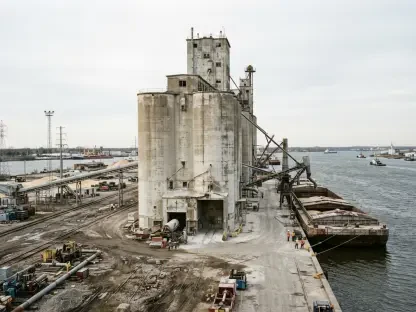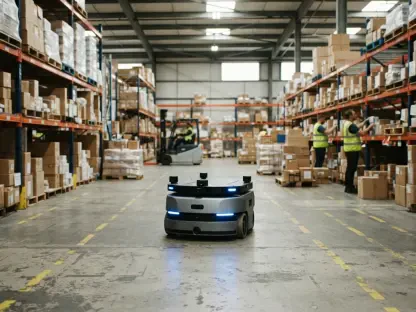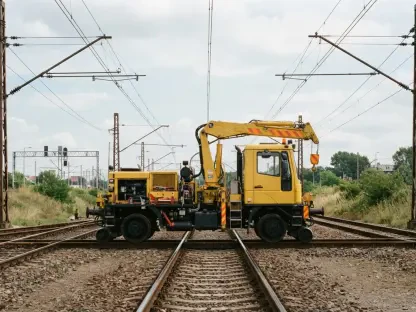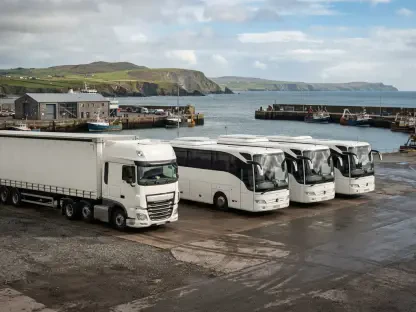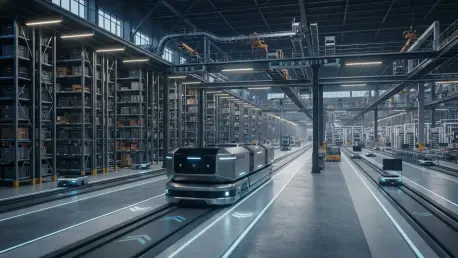

Navigating the chaotic environments of loading docks and port terminals requires a sophisticated blend of 360-degree cameras, lidar, and imaging radar technology. While the broader autonomous vehicle industry has often prioritized the high-profile challenge of transcontinental long-haul trucking, San Francisco-based Humble Robotics is intentionally narrowing its lens to focus on regional logistics. By targeting short-radius freight movements between ports, rail yards, and distribution centers, the company is addressing the specific inefficiencies found in the middle mile of the supply chain. This deliberate shift reflects a growing realization within the logistics sector that the most immediate commercial value for self-driving technology resides in high-repetition, localized segments. These routes are characterized by predictable patterns and returning to central hubs, making them ideal for the first wave of autonomous electrification. Through this focused approach, the company is successfully sidestepping the massive infrastructure hurdles that have stalled long-haul adoption.
Capturing the Middle-Mile Opportunity
The Strategic Shift: Regional Route Specialization
The decision to focus on regional freight is supported by compelling logistics data, which reveals that nearly 87% of all domestic truck tonnage moves within distances of less than 250 miles. This massive market segment offers a far more controlled environment for the deployment of autonomous systems compared to the unpredictable nature of transcontinental travel across diverse climates and terrains. Because these regional routes are highly predictable and vehicles return to central hubs daily, companies can effectively bypass the limitations of public highway charging networks. Operating within a constrained geographical radius allows for more precise mapping and operational planning, reducing the number of variables the autonomous software must navigate. This strategy acknowledges that the backbone of American commerce is not just long-distance hauling, but the constant, rhythmic movement of goods between local nodes in a complex industrial web.
Furthermore, the regional model aligns perfectly with the current capabilities of battery-electric propulsion. By focusing on trips that fall well within the range of modern heavy-duty battery packs, Humble Robotics eliminates the range anxiety that has historically hindered the adoption of zero-emission trucks in the broader industry. The ability to return to a home depot or a dedicated distribution center every evening ensures that vehicles have access to consistent, private charging infrastructure. This operational cycle not only simplifies the transition to electric power but also allows fleet managers to optimize energy costs by charging during off-peak hours. The predictability of these routes means that energy consumption can be calculated with high precision, ensuring that the vehicles maintain high uptime without the need for the sparse and often unreliable public charging stations found along major interstates.
Electrification: Solving the Range Anxiety Puzzle
The transition to autonomous electric regional freight promises to fundamentally alter the cost structure of the logistics industry by removing the volatility of diesel prices and the high maintenance requirements of internal combustion engines. Electric motors have significantly fewer moving parts than traditional diesel powertrains, which translates to fewer mechanical failures and lower long-term service costs for fleet operators. In the high-intensity world of regional freight, where trucks are expected to operate nearly twenty-four hours a day, the reliability of an integrated electric platform becomes a massive competitive advantage. Humble Robotics is positioning its technology as a solution to the rising operational expenses that have squeezed the margins of regional carriers. By lowering the total cost of ownership, the company is making a compelling financial case for the rapid adoption of its specialized, cabless autonomous haulers.
Beyond the immediate financial benefits, the integration of autonomous software with an electric drivetrain enables a level of precision in energy management that was previously unattainable. The self-driving system can be programmed to optimize acceleration and braking patterns, further extending the battery range and reducing wear on the braking components. This synergy between the brain of the vehicle and its electric heart allows for a seamless flow of data that improves performance over time. As the system gathers more information from repetitive regional routes, it can fine-tune its power delivery to account for specific inclines, traffic patterns, and weather conditions. This level of optimization is particularly valuable in industrial zones where heavy loads and frequent stops are the norm, ensuring that every kilowatt-hour is utilized as efficiently as possible to move freight.
Engineering the Future of Autonomous Hauling
Unified Autonomy: Integrating Software and Steel
Humble Robotics distinguishes itself through a concept known as unified autonomy, where the vehicle and its self-driving software are developed as a single, integrated unit from the earliest design phases. Their flagship vehicle, the Humble Hauler, is a cabless electric truck that abandons traditional design constraints to prioritize aerodynamic efficiency and freight capacity. By removing the driver’s cabin entirely, the company can optimize the vehicle’s structure for maximum payload and energy conservation. This ground-up approach ensures that sensors and computing hardware are embedded directly into the chassis rather than being added as secondary components. This integration potentially offers greater reliability and lower maintenance costs than the industry-standard method of retrofitting existing diesel trucks, which often creates points of failure between the vehicle’s original systems and the added autonomous technology.
The removal of the human-centric cabin also opens up new possibilities for vehicle architecture that were previously impossible. Without the need for windshields, seats, or climate control for a human operator, the Humble Hauler achieves a lower center of gravity and a more streamlined profile. This reduction in air resistance is critical for electric vehicles, as it directly translates to increased range and efficiency at highway speeds. Furthermore, the absence of a heavy cab allows for a more favorable weight distribution, which is essential for maintaining stability when hauling heavy containers through tight turns in warehouse districts. This engineering philosophy suggests that the future of freight is not just about making trucks drive themselves, but about fundamentally reimagining what a truck should look like when the limitations of human biology are no longer part of the design equation.
Technical Architecture: Navigating Industrial Complexity
To navigate the complex environments of ports and warehouses, the Humble Hauler utilizes a sophisticated multi-modal sensing suite featuring 360-degree cameras and imaging radar technology. This redundant array allows the vehicle to maintain high situational awareness even in low-light or adverse weather conditions common in industrial settings. While the core of the system relies on vision-based artificial intelligence, Humble incorporates strict rules-based logic to handle the intricate maneuvers required at loading docks and busy terminals. This balanced software architecture is designed to manage the edge cases of human-machine interaction that occur frequently in localized freight hubs. By combining the flexibility of deep learning with the reliability of hard-coded safety constraints, the system ensures that the vehicle can respond predictably to the presence of human workers and other heavy machinery.
The software stack is specifically tuned for the low-speed, high-precision tasks that define regional logistics. Navigating a crowded shipping terminal requires a different set of skills than cruising on an open highway; it demands minute adjustments in steering and speed to dock a trailer perfectly every time. Humble’s imaging radar provides a high-resolution view of the environment that is less susceptible to interference from dust or heavy rain, which are frequent challenges in maritime and rail environments. This robust sensor fusion ensures that the vehicle maintains a constant 360-degree safety bubble, allowing it to detect and react to obstacles that a human driver might miss. This technological foundation is what enables the Humble Hauler to operate safely in environments where the margin for error is nearly zero, proving that autonomous systems can handle the most demanding parts of the supply chain.
Strategic Pathways: The Road to Market Readiness
The momentum behind Humble Robotics is fueled by significant financial backing and an executive team with deep roots in both the technology and automotive sectors. With a recent fifty-one million dollar Series A funding round, the company’s total capital has reached seventy-five million dollars, providing a solid foundation for its ambitious manufacturing and deployment goals. The leadership team includes veterans from industry giants such as Tesla, Apple, and Waymo, blending expertise in high-volume hardware manufacturing with advanced autonomous software development. This concentration of talent suggests a pragmatic approach to the dual challenges of building heavy machinery and perfecting the logic required for commercial use. By leveraging their collective experience, the team has avoided the common pitfalls that have slowed down earlier entrants in the autonomous trucking space.
Humble Robotics prioritized strategic partnerships and pilot programs to demonstrate that their unified vision could meet the grueling demands of real-world logistics. Stakeholders in the maritime and rail industries recognized the potential for autonomous electric haulers to reduce congestion and emissions at major transport hubs. The company focused on validating its technology through rigorous testing in controlled industrial environments, ensuring that the safety protocols were robust before moving toward public road operations. Carriers and logistics providers began exploring how to integrate these cabless vehicles into their existing fleets, focusing on the specialized charging infrastructure needed at their main terminals. These early adopters provided the critical feedback necessary to refine the system for large-scale commercial use, ultimately paving the way for a more efficient and sustainable regional freight network.