
Mapping the Modern Logistics Ecosystem and the Final Frontier
Commercial logistics systems have reached a historic tipping point as the global e-commerce market expands beyond the four trillion dollar mark, fundamentally altering how goods move through urban corridors. This shift from traditional brick-and-mortar shopping to a digital-first economy has placed unprecedented pressure on the final stage of the supply chain. The last mile, which covers the movement of items from a regional distribution center to the end user, has emerged as the most expensive and operationally complex phase of the entire logistical journey. It remains a bottleneck that dictates the success or failure of modern retail enterprises.
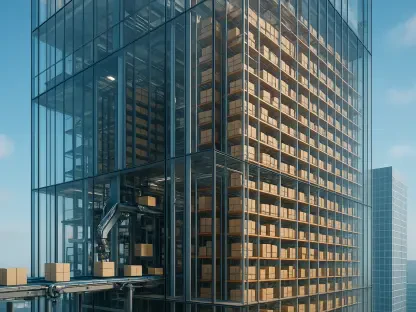
The industry is currently witnessing a dual-track evolution that pits established legacy carriers against a new breed of in-house logistics giants. Traditional providers like UPS and FedEx continue to leverage their deep-rooted infrastructures, yet they are increasingly challenged by Amazon, which has built a proprietary delivery network of massive proportions. This competition has forced a reimagining of distribution, moving away from centralized mega-warehouses toward a more localized approach. Small-scale urban hubs are now the primary engine of the fragmented drop model, where speed is prioritized over bulk transport efficiency.
Establishing these localized hubs requires a sophisticated understanding of metropolitan regulatory frameworks and infrastructure capacity. City planners and logistics firms are currently collaborating to integrate delivery zones into high-density neighborhoods without crippling traffic flow. This localized distribution model is not just a trend but a structural necessity for handling the sheer volume of parcels generated by the modern consumer. Without these regional touchpoints, the transit time and fuel consumption required for individual deliveries would become economically unsustainable.
Driving Forces and the Quantifiable Growth of Automated Fulfillment
Emergent Technologies and Shifting Consumer Expectations
The demand for instant gratification has fundamentally redefined the baseline for shipping standards, with same-day delivery now serving as the expected norm rather than a premium perk. This shift has necessitated the integration of the gig economy into formal supply chains, using platforms like Uber Direct and DoorDash Drive to bridge the gap between warehouses and doorsteps. These platforms provide a flexible labor pool that can scale up or down based on real-time demand, allowing retailers to bypass the limitations of a fixed delivery fleet.
Behind the scenes, the transition from manual dispatching to AI-driven route optimization has changed the mathematics of the industry. Complex algorithms now process millions of data points, including weather patterns, local events, and road closures, to determine the most efficient path for every driver. This mathematical modeling reduces idling time and maximizes the number of drops per hour. Furthermore, the rise of green logistics is pushing the industry toward the electrification of urban fleets, as companies seek to align their operations with decarbonization goals and stricter city emission standards.
Deciphering the Numbers: Market Projections and Performance Metrics
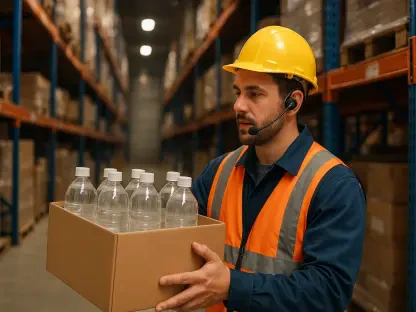
The persistent labor gap remains the most significant numerical hurdle for the logistics sector, with projections indicating a shortfall of approximately 237,000 drivers across the United States. This shortage has accelerated the search for automated alternatives, as the cost of human labor continues to climb alongside recruitment challenges. In terms of parcel volume, the landscape has shifted dramatically; Amazon logistics now handles a higher percentage of domestic deliveries than several legacy providers combined, proving that controlling the end-to-end supply chain is a winning statistical strategy.
Investment trends are currently flowing toward specialized AI software that monitors fleet health and provides real-time geospatial tracking. By utilizing predictive maintenance, companies can anticipate mechanical failures before they occur, thereby reducing the downtime that plagues large-scale operations. Financial forecasts suggest that the integration of autonomous and robotic solutions could reduce the average cost-per-package by over thirty percent within the next few years. This reduction is critical for maintaining profit margins in an era where consumers are increasingly resistant to high shipping fees.
Navigating the Critical Bottlenecks of Urban and Suburban Distribution
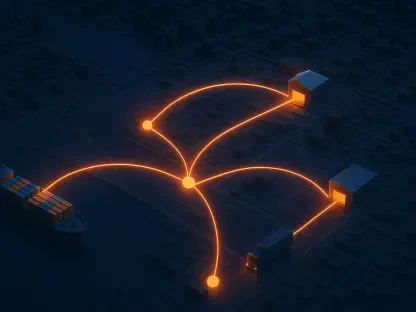
The last-mile problem is primarily defined by the intersection of traffic congestion, fuel price volatility, and the difficulty of reaching disparate delivery points. In suburban areas, the distance between stops increases fuel consumption, while in urban centers, the lack of available parking for delivery vans leads to significant delays and municipal fines. These inefficiencies create a financial drain that limits the scalability of traditional delivery methods. To counter this, heavy-duty autonomous trucking is being deployed to handle the middle-mile haul, allowing automated dispatching systems to synchronize arrivals with local delivery windows.
Strategically converting physical retail stores into micro-fulfillment centers has become a primary method for minimizing the distance between the product and the consumer. By using existing storefronts as mini-warehouses, retailers can reduce the final leg of the journey to just a few miles or even blocks. This strategy turns a liability—the high cost of retail real estate—into a logistical asset. However, this model also introduces new technical hurdles, particularly when navigating pedestrian paths and unpredictable residential environments that were not originally designed for heavy commercial activity.
Robotic systems designed for sidewalk navigation face a unique set of challenges compared to vehicles on the open road. These machines must account for erratic human behavior, temporary obstacles like construction debris, and varying curb heights. While AI vision systems have improved significantly, the complexity of a crowded city sidewalk remains a formidable barrier to full autonomy. Overcoming these environmental variables requires a combination of high-definition mapping and real-time sensory processing to ensure that delivery robots can operate safely without constant human intervention.
The Regulatory Framework Governing Autonomous Mobility and Data Security
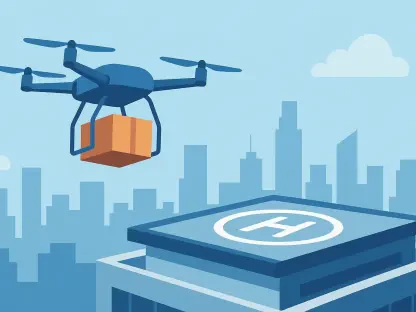
Navigating federal and local laws is currently a top priority for companies looking to deploy drone technology and sidewalk robots at scale. Regulators are tasked with balancing the need for commercial innovation with public safety and airspace security. Drone delivery, while technically feasible, is often restricted by line-of-sight requirements and noise ordinances in residential zones. Similarly, sidewalk robots must navigate the legal gray area regarding right-of-way and liability in the event of a collision with a pedestrian or a pet.
The impact of labor union negotiations cannot be overlooked, as social concerns regarding job displacement remain a sensitive political topic. Unions are advocating for protections that ensure the transition to automation does not leave thousands of drivers without viable employment. At the same time, companies must comply with stringent data privacy standards for real-time tracking and consumer notifications. Ensuring that the location data of millions of packages remains secure is a significant cybersecurity challenge that requires constant vigilance and robust encryption protocols.
Safety protocols for AI-driven vehicles in high-density urban zones are becoming more standardized as local governments demand greater transparency. Many cities now require autonomous operators to share data on “near-miss” incidents and performance metrics in various weather conditions. This data-sharing environment helps build public trust and allows for the gradual expansion of autonomous testing zones. As these safety frameworks mature, they provide a roadmap for the broader adoption of robotic delivery across different municipal jurisdictions.
The Road Ahead: Toward a Fully Autonomous and Decarbonized Supply Chain
The industry is currently transitioning from small-scale pilot programs to mass-scale aerial and robotic delivery networks. While early tests were limited to specific neighborhoods or university campuses, the goal is now to create a seamless, low-intervention logistics web that covers entire metropolitan areas. New disruptors are emerging in the form of autonomous heavy-haulers and specialized medical drones capable of delivering life-saving supplies to remote or congested areas. These technologies represent a broader shift toward a supply chain that is both faster and more resilient to external shocks.
The convergence of AI, robotics, and 5G connectivity is the catalyst for this transformation. High-speed data networks allow for near-instant communication between delivery units and central command hubs, enabling real-time adjustments to routes and schedules. This interconnectedness ensures that the logistics chain can react to delays elsewhere in the network, maintaining a steady flow of goods. Moreover, the focus on decarbonization remains a driving force, with many companies committing to fully electric autonomous fleets to meet sustainability targets.
Global economic conditions and fluctuations in fuel prices will continue to dictate the speed of technological adoption. When traditional fuel costs rise, the ROI for electric and autonomous systems becomes much more attractive to investors. Conversely, economic downturns may slow the pace of capital-intensive robotic deployments. Despite these fluctuations, the long-term trajectory is clear; the move toward a predictive, automated future is fueled by the need for efficiency in a world where e-commerce is the dominant form of consumption.
Final Verdict: Assessing the Viability of a Tech-Driven Logistics Revolution
The findings of this report indicated that the integration of AI and robotics was no longer a luxury but a fundamental requirement for the survival of large-scale retail. It was observed that companies which failed to invest in route optimization and automated sortation struggled to maintain the delivery speeds demanded by the market. The correlation between logistical efficiency and long-term brand loyalty became increasingly evident as consumers consistently chose providers who offered the most reliable and transparent delivery experiences.
The transition toward autonomous infrastructure proved to be the only viable solution to the chronic labor shortages and rising operational costs that plagued the industry. Strategic recommendations focused on the necessity of building flexible, localized distribution networks that could accommodate both human and robotic workers. Retailers that utilized their physical footprints as fulfillment nodes gained a significant competitive advantage by shortening the last mile. This shift allowed for a more resilient supply chain that was less susceptible to the volatility of traditional transport markets.
Ultimately, the analysis showed that the future of logistics belonged to those who embraced a data-driven, predictive model of distribution. The industry’s trajectory moved away from reactive scheduling and toward a proactive system where AI anticipated demand before it even manifested. The successful deployment of these technologies required a delicate balance between engineering excellence and regulatory compliance. As the supply chain became increasingly decarbonized and automated, the logistics sector prepared itself for a new era of efficiency that redefined the relationship between the seller and the doorstep.