
The U.S. trucking industry is increasingly looking toward autonomous solutions to address rising labor costs and a persistent shortage of long-haul drivers. This shift has culminated in the debut of the Capacity Grid, a proprietary logistics platform designed by the Houston-based firm Bot Auto. By moving beyond the traditional role of a software developer, the company has positioned itself as a direct carrier that manages a structured marketplace for driverless freight. This strategic pivot allows shippers and freight brokers to secure dedicated autonomous capacity through a reservation-based system, providing much-needed stability in a market often characterized by volatile pricing and inconsistent availability. The platform functions as a commercial interface that synchronizes customer demand with predetermined routes, ensuring that the technology is not just an experimental tool but a reliable utility for large-scale transportation. By establishing fixed-price agreements and focusing on long-term contracts, the firm is fundamentally changing how logistics managers plan their supply chain operations across the region.
Strategic Partnerships: The Foundation of Commercial Scale
To validate this commercial model, the company has already amassed significant industry support, securing agreements that cover a staggering 200 million miles of autonomous operations. A central component of this volume is a landmark partnership with FreightVana, a Phoenix-based logistics specialist that has committed to 50 million miles of service. This massive volume of guaranteed work provides the necessary financial foundation to scale the fleet and infrastructure rapidly. By locking in these high-volume commitments, the firm reduces the market risks typically associated with launching a new technology in a competitive field. It also signals to the broader industry that major logistics players are ready to integrate autonomous solutions into their primary workflows. These partnerships are not merely transactional but represent a deep integration of technologies, where the carrier and the broker work in tandem to optimize the movement of goods across thousands of highway miles, setting a new benchmark for collaborative freight management.
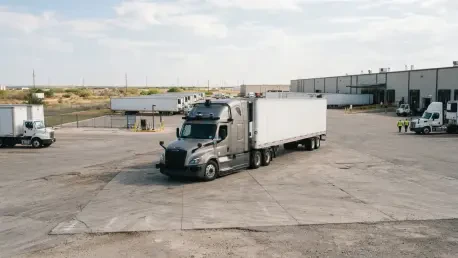
Within these partnerships, the company utilizes a power-only logistics model, which has proven to be highly efficient for autonomous systems. In this arrangement, the firm provides the driverless tractor while the client or broker maintains responsibility for the trailer pools. This allows the trucks to connect to pre-loaded trailers and depart almost immediately, effectively eliminating the lengthy wait times and downtime that often plague manual loading operations. By leveraging committed trailer pools, the autonomous fleet can maintain a high tempo of departures and arrivals, maximizing the productivity of each vehicle. Brett Suma, the company’s Chief Operating Officer, has noted that this synergy between humanless trucks and established logistics workflows creates significant economic benefits. It allows for improved margins without requiring shippers to completely overhaul their existing transportation infrastructure. This approach demonstrates a pragmatic understanding of the freight industry, focusing on solving immediate operational bottlenecks through automation.
Economic Viability: Analyzing Costs and Regulatory Impact
Empirical evidence from a recent commercial journey has provided a clear picture of the economic advantages inherent in this driverless model. In a landmark 231-mile run from Houston to Hutchins, near Dallas, an autonomous truck successfully delivered cargo for Ryan Transportation without a human occupant in the cab. The data collected during this operation revealed that the driverless trip cost approximately $1.89 per mile to execute. When compared to the estimated cost of $3.78 per mile for a human-driven operation within the same business structure, the savings are undeniable. This 50 percent reduction in operating expenses highlights the transformative potential of automation in the logistics sector. The revenue generated from the shipment reached $2.70 per mile, indicating a healthy operating margin that supports the long-term sustainability of the business. These figures serve as a powerful proof of concept, demonstrating that once the initial technology and infrastructure costs are properly managed, the day-to-day operation is profitable.
Beyond the direct labor savings, the economic profile of these operations is bolstered by the avoidance of federal Hours-of-Service regulations. Under current laws, human drivers are restricted to 11 hours of driving followed by a mandatory 10-hour rest period, which creates natural bottlenecks in long-haul delivery schedules. Autonomous trucks, however, are not bound by these biological limitations. They can operate nearly 24/7, pausing only for refueling, preventive maintenance, or freight transfers. This capability allows the company to offer much tighter delivery windows and more consistent service, particularly during overnight hours when highway congestion is minimal. By utilizing these off-peak periods, the fleet can achieve higher average speeds and more predictable arrival times, which is a major selling point for shippers with time-sensitive cargo. The ability to maintain continuous operation transforms the truck from a limited labor resource into a constant production asset, significantly increasing the volume of freight that can be moved.
Operational Scale: Pilot Programs and Future Insights
Currently, the operational scale of the firm includes a fleet of 12 autonomous trucks running along major commercial corridors in Texas, serving over 25 customers including industry giants like J.B. Hunt. In addition to highway logistics, the firm is exploring specialized use cases such as a pilot program at Fort Hood, where driverless vehicles transport goods between warehouses. This environment requires the technology to operate within a highly controlled and secure perimeter. By successfully navigating the logistics requirements of a military base, the company is proving that its system can be adapted for government and defense applications, opening new revenue streams outside of traditional trucking. These secure-site operations provide a controlled testing ground for new features before they are deployed on public roads. This multi-pronged approach ensures that the technology is utilized in a variety of settings, each providing valuable insights that contribute to the overall robustness and safety of the autonomous stack.
The launch of the Capacity Grid marked a decisive shift in the autonomous vehicle industry, moving the conversation from experimental testing to repeatable commercial performance. By securing long-term mileage agreements and focusing on network management, the company established a business model that addressed the core economic pressures facing modern logistics. The integration of power-only operations and the removal of biological driving constraints offered a glimpse into a more efficient supply chain. Stakeholders recognized that the primary challenge shifted from software development to the deployment of physical infrastructure and high-uptime fleet maintenance. Moving forward, the industry needed to focus on standardizing communication protocols between autonomous carriers and traditional brokers to ensure seamless data exchange. Investing in specialized training for the next generation of logistics technicians also became a priority, as the demand for remote fleet oversight grew. This strategic evolution suggested that success depended as much on operational frameworks as it did on AI.