
The global supply chain has reached a critical juncture where the traditional separation of long-haul trucking and regional sorting centers no longer meets the demands of modern commerce. Speed is no longer a luxury but a fundamental expectation of the digital economy, forcing major logistics providers to rethink how packages move between large fulfillment centers and local delivery stations. By consolidating the often-overlooked middle mile into a singular, cohesive operational framework, companies are finding ways to eliminate the friction that typically slows down high-volume shipping. This shift involves more than just buying new trucks; it requires a fundamental restructuring of how sorting nodes communicate with transportation fleets in real-time. The goal is to create a seamless flow that minimizes idle time and maximizes the utility of every trailer on the road. This evolution represents a departure from the fragmented legacy systems. Efficiency gains are now realized through integration.
Operational Synergy: Merging Technology and Transit
Technological unification serves as the backbone of this logistics transformation, allowing for a level of transparency that was previously impossible to achieve with siloed data. Instead of relying on manual handoffs between different software platforms, a singular interface now manages everything from load planning to driver scheduling and route optimization. This centralized approach enables the system to predict bottlenecks before they manifest, utilizing machine learning algorithms to re-route shipments dynamically based on weather or traffic conditions. By removing the barriers between individual logistics units, the organization can view the entire middle-mile journey as a single, continuous process rather than a series of disconnected steps. This visibility is crucial for maintaining the tight windows required for overnight deliveries, which have become the benchmark for success. Furthermore, the integration allows for better resource allocation, ensuring that no truck leaves a facility half-empty.
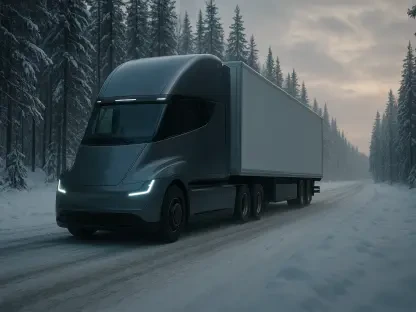
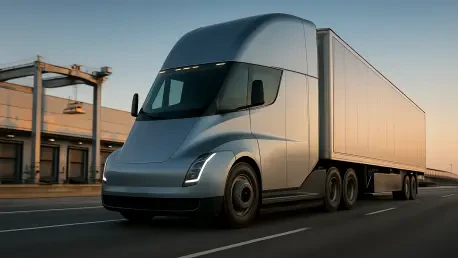
Transitioning to a unified fleet management model requires a significant investment in telematics and automated communication systems that connect every vehicle to the central grid. Drivers no longer need to wait for verbal instructions at sorting hubs because the digital platform provides automated check-ins and dock assignments upon arrival at a facility. This reduction in dwell time directly translates to lower operational costs and increased capacity for the entire network, allowing for more frequent departures without adding more physical assets. The shift also involves the deployment of sustainable transportation solutions, such as electric heavy-duty trucks, which are easier to manage within a digitized ecosystem. As these vehicles are integrated into the unified middle mile, their charging schedules and range limitations are factored into the routing logic automatically. Consequently, the organization achieves a balance between environmental goals and the demand for speed.
Network Resiliency: Building Adaptive Infrastructure
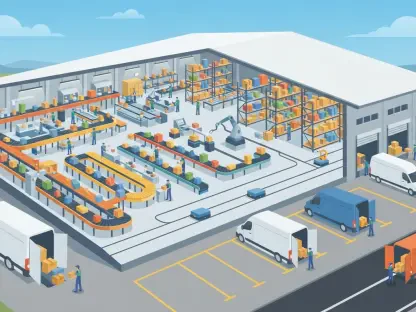
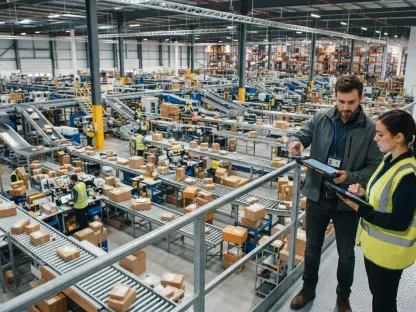
The physical configuration of sorting centers is undergoing a parallel transformation to accommodate the streamlined flow of goods across the middle mile. Modern facilities are designed with high-speed automation that can process thousands of packages per hour, feeding them directly into the appropriate transport lanes without manual intervention. These hubs function as high-velocity exchange points where incoming loads from fulfillment centers are rapidly broken down and re-sorted for their specific regional destinations. By standardizing the layout and technology across all centers, the logistics network can maintain a consistent pace regardless of geographic location or parcel volume. This standardization also simplifies the training process for employees and technicians, as the systems they interact with are identical across the entire country. Building this level of consistency into the infrastructure ensures that the network remains robust even during peak seasons when the volume of shipments can double.
Logistics leaders recognized that the only way to sustain rapid growth was to break down the traditional walls between transportation and warehousing. They moved away from fragmented vendor contracts and moved toward a proprietary, end-to-end control model that prioritized data fluidity and asset utilization. This transition proved that the middle mile is not just a link between points A and B, but a strategic lever for competitive advantage in an increasingly crowded market. For businesses looking to emulate this success, the first step involved auditing existing data silos and identifying where information was being lost during transitions between departments. Investing in a unified digital layer that connects all physical assets became the non-negotiable requirement for future scalability. Companies discovered that by optimizing the middle mile, they could reduce pressure on the final delivery stage. Moving forward, the focus should remain on deepening predictive analytics and expanding autonomous transport.